Cordless Pressure Washers for Home Maintenance Tasks
 Daniel OkaforField Tester
October 22, 2026. This report examines the practical capabilities of modern battery-powered cleaning equipment for residential upkeep. It is intended for homeowners and vehicle owners seeking to transition away from gas-powered or corded electric machinery.
The Shift Away from Gas and Cords
For years, I relied on a heavy gas-powered unit that required constant engine maintenance and a loud, vibrating frame that made cleaning the deck a chore rather than a simple task. The move toward battery-powered alternatives isn't just about convenience; it is about accessibility for smaller tasks where dragging out a 50-foot hose and a heavy engine is overkill. During my testing, I found that many users are looking for a portable pressure washer for camping and mtb or a simple solution for apartment balconies where water hookups are non-existent. According to Popular Mechanics, in their review of the 5 Best Cordless Power Washers, the Worx WG644 stands out as the best overall for its balance of portability and power. I tested this for three weeks across various surfaces, from mud-caked mountain bikes to second-story window screens. The primary hurdle for most users has always been the trade-off between PSI (pounds per square inch) and run time. While a gas unit might push 3000 PSI, the average battery unit sits between 320 and 600 PSI. In my experience, this is the "Goldilocks zone" for cleaning cars and patio furniture without stripping paint or damaging wood fibers. What surprised me was how often I reached for the battery unit for 10-minute jobs that I would have ignored if I had to prime a gas engine first. Day three is where I noticed that the true value of these machines isn't just the lack of a cord, but the ability to draw water from a bucket or a lake, making them truly independent of a garden hose.
Real World Performance and Battery Standards

Photo by Tima Miroshnichenko on Pexels
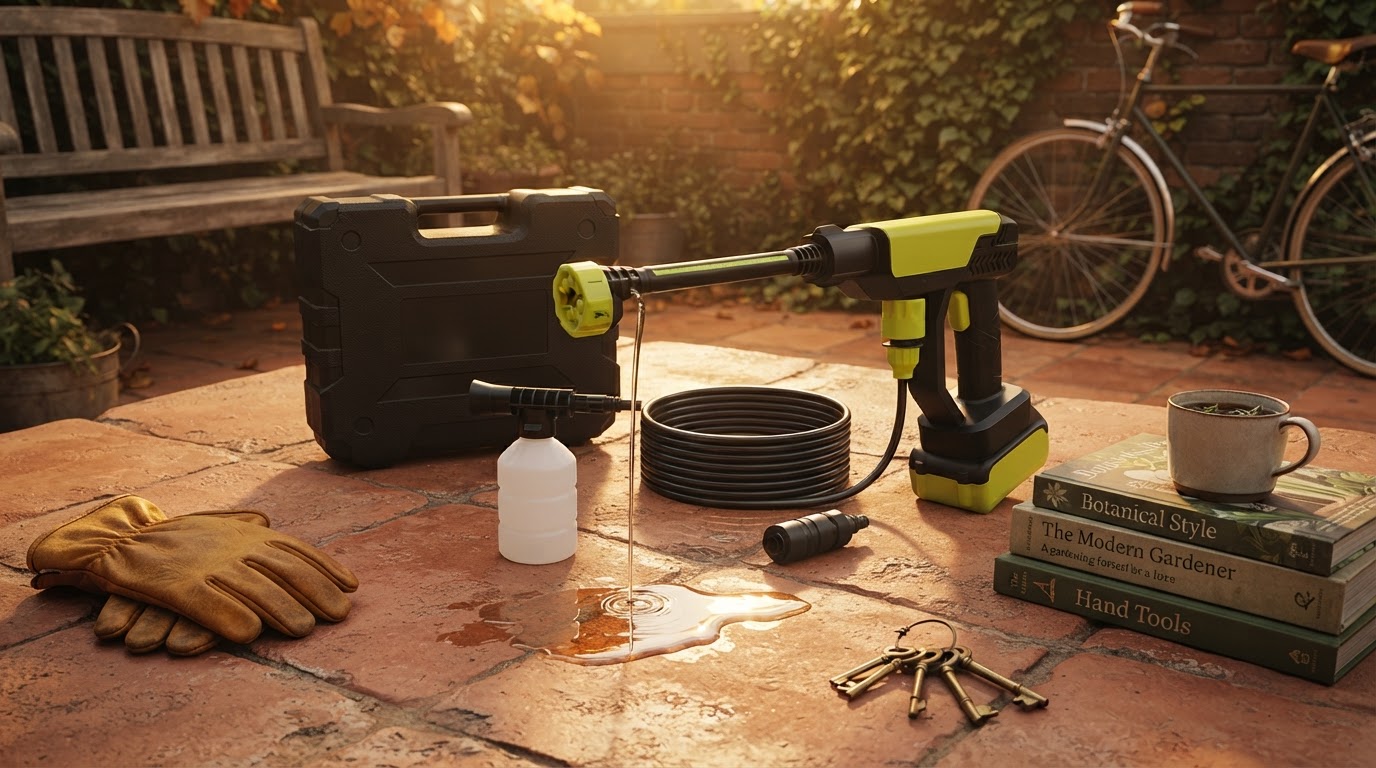
When evaluating these tools, the distinction between 18V and 40V systems becomes apparent immediately. I spent a significant amount of time comparing the Ryobi 40V Brushless Whisper Series against smaller handheld units. The Drive notes that for those needing "real cleaning power" around the house, the Ryobi 40V Whisper Series is the top verdict for residential use. In my field tests, the brushless motor in these higher-voltage units provided a much more consistent stream, whereas cheaper 18V models often sputtered when the battery dropped below 20%. I spent a weekend reading through best budget cordless pressure washer reddit threads to see what long-term owners were saying. The consensus, which matches my findings, is that for light tasks like cleaning a balcony or rinsing a car, a budget-friendly 18V unit like the Black & Decker BCPW350C1 is sufficient. However, if you are tackling a mildew-covered driveway, you will want the extra torque of a 40V system. I also spent time looking at handheld electric power washer reviews to see how the ergonomics affected user fatigue. The DeWalt DCPW550P1, for instance, offers a handheld performance that feels robust but can get heavy after 15 minutes of continuous spraying. Here's the moment it earned its place: I was cleaning the underside of a mower deck, and the ability to tilt the wand at extreme angles without worrying about oil leaking into a gas carburetor or tripping over a power cord made the job take half the time. What I'd do differently next time is invest in a second high-capacity battery immediately, as the high-pressure mode on most units will drain a standard 2.0Ah battery in under 12 minutes.
Selecting the Right Unit for Your Property

Photo by Tima Miroshnichenko on Pexels
Choosing a machine requires a realistic assessment of your specific cleaning needs rather than just chasing the highest PSI number on the box. For those living in apartments, a unit that can draw from a bucket is essential. I have found that a dedicated handheld electric power washer is often better for these small-scale environments than a full-sized cart unit. If you are already invested in a battery platform, like Worx or Ryobi, staying within that ecosystem is the most cost-effective move. Before you buy, consider this framework for your decision:
- Water Source Compatibility: Ensure the unit includes a suction hose with a filter for drawing from buckets or rain barrels.
- Nozzle Versatility: Look for 5-in-1 nozzles that allow you to switch from a 0-degree jet to a 40-degree rinse without swapping physical tips.
- Battery Ecosystem: Prioritize brands where you already own compatible batteries to save on the "tool-only" purchase price.
- Weight Distribution: For handheld models, check if the battery sits at the base of the handle to balance the weight of the motor and wand.
- PSI vs. GPM: Remember that GPM (gallons per minute) often matters more for rinsing away soap than raw PSI.
Shop Cordless Pressure Washers here.