Mastering Off-Grid Pressure Washing: A Comprehensive Guide to Water Sources
 Maya ChenContributing Editor
Mastering Off-Grid Pressure Washing: A Comprehensive Guide to Water Sources
Table of Contents
- The Freedom of Off-Grid Cleaning with Cordless Pressure Washers
- Key Considerations for Any Off-Grid Water Source
- A Deep Dive into Off-Grid Water Sources
- Overcoming Common Challenges: Pressure, Gravity, and Filtration
- Matching the Water Source to Your Cordless Pressure Washer Task
- Conclusion: Unlocking True Cleaning Freedom
- Related Reading
The Freedom of Off-Grid Cleaning with Cordless Pressure Washers
Photo by Nothing Ahead on Pexels
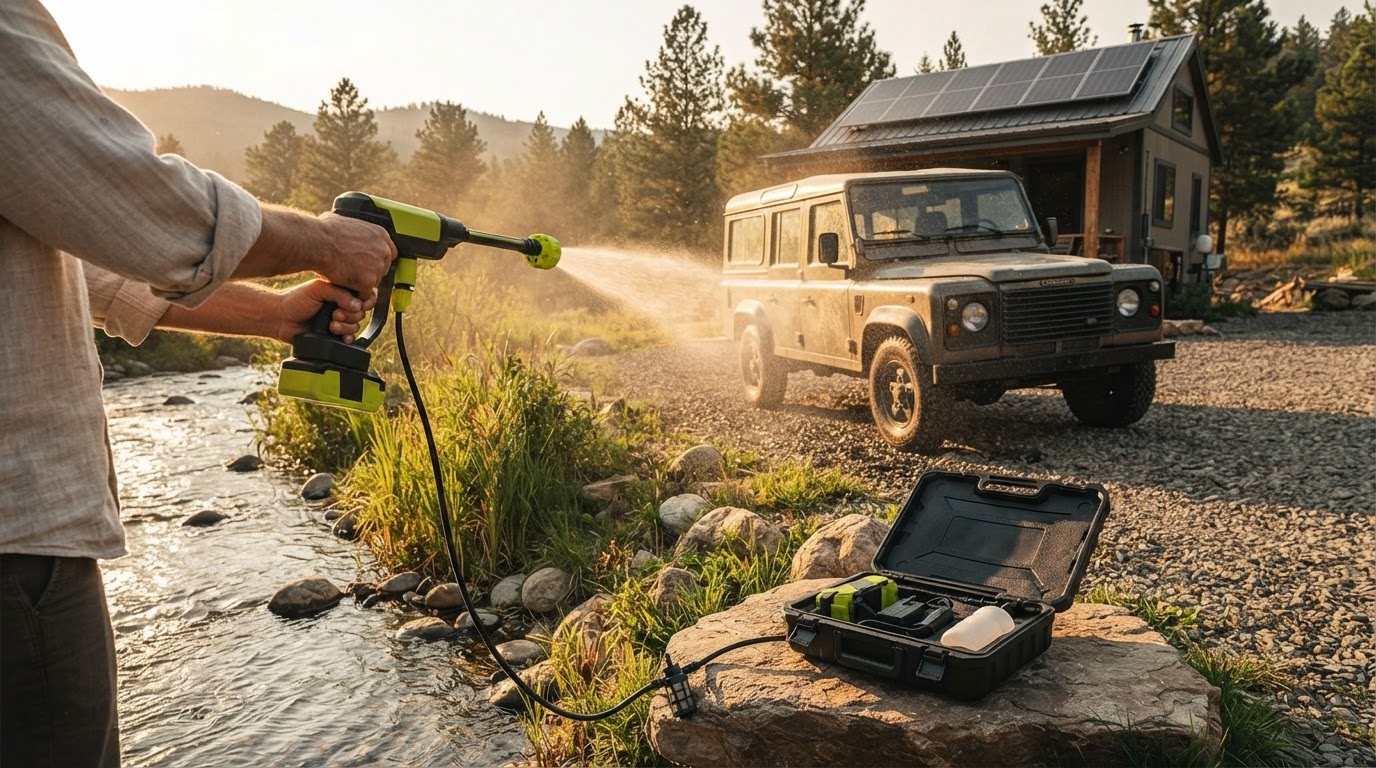
Imagine the possibilities: cleaning your boat right at the dock, washing your muddy ATV deep in the woods, or deep cleaning the siding of your remote cabin without access to a spigot. This is the promise of off-grid pressure washing. It's about taking powerful cleaning capabilities wherever they're needed most, untethered from the constraints of traditional power outlets and garden hoses.
The revolution in battery technology has made this more achievable than ever. Modern tools, like the versatile lineup from Cordless Pressure Washers, deliver impressive power and portability, eliminating one half of the utility equation. The other half, however, remains crucial: a reliable water source.
Without a ready supply of water, even the most advanced pressure washer is useless. This guide will walk you through everything you need to know about selecting, setting up, and managing water sources for effective off-grid cleaning, ensuring you get the most out of your equipment.
Key Considerations for Any Off-Grid Water Source
Before you simply dunk a hose into the nearest pond, it's vital to understand the fundamental requirements of a pressure washer. Neglecting these factors can lead to poor performance, equipment damage, and a lot of frustration.
Water Volume and Flow Rate (GPM)
Every pressure washer has a specific Gallons Per Minute (GPM) rating. This figure indicates how much water the machine is designed to use while operating. A typical cordless unit might use between 0.5 to 2.0 GPM. This means for every ten minutes of continuous cleaning with a 1.5 GPM machine, you will consume 15 gallons of water.
Your chosen water source must be able to supply water at a rate equal to or, ideally, greater than your machine's GPM. If the pump tries to draw water faster than your source can provide it, a phenomenon called cavitation can occur. This is when air bubbles form and collapse inside the pump, causing a hammering effect that can quickly destroy internal components. This is why you cannot simply use a small-diameter hose over a long distance; the flow becomes too restricted.
Water Quality and Filtration
When you connect to a municipal water supply, you're using water that has been filtered and treated. Off-grid sources are a different story. Water from ponds, rivers, or even open-top rain barrels can contain sand, silt, algae, leaves, and other debris.
Sucking this debris into your pressure washer is a recipe for disaster. Small particles can clog nozzles, wear down O-rings, and score the sensitive pistons inside the pump, leading to costly repairs. Any off-grid water strategy must include a robust filtration plan. At a bare minimum, this means a weighted screen filter on the end of your intake hose. For maximum protection of your investment in a high-quality machine from Cordless Pressure Washers, a secondary inline filter is highly recommended.
Portability and Logistics
The final consideration is practical logistics. How will you get the water to your cleaning site? Water is heavy, weighing approximately 8.34 pounds per gallon. A 55-gallon drum, a common choice for mobile cleaners, holds over 450 pounds of water, not including the weight of the drum itself.
Your choice of water source will be a trade-off between capacity and portability. For washing a mountain bike on a trail, a 5-gallon jug might be perfect. For cleaning the entire hull of a boat, you'll need a much larger, more stationary solution like an IBC tote or multiple barrels. You must factor in the vehicle, equipment (like dollies or hand trucks), and physical effort required to manage your chosen water supply.
A Deep Dive into Off-Grid Water Sources
With the core principles in mind, let's explore the most common and effective water sources for off-grid pressure washing.
Portable Water Tanks and Containers
This is the most common and reliable method. It involves bringing a known quantity of clean water with you.
- IBC Totes (Intermediate Bulk Containers): These are the titans of mobile water storage. Typically holding 275 or 330 gallons, an IBC tote provides more than enough water for almost any residential or commercial pressure washing job. They are often available secondhand from food or agricultural businesses. An IBC tote acts as a perfect "buffer tank," providing a large, stable water supply that you can elevate to create a gravity feed. As demonstrated in professional setups, a simple ball valve at the bottom allows for easy connection to your pressure washer's intake hose Source. These are ideal for large, semi-permanent projects like cleaning a cabin, large deck, or multi-vehicle fleet.
- 55-Gallon Barrels/Drums: A step down in size but a step up in portability, 55-gallon drums are a popular choice. They can often be transported in the back of a pickup truck or utility trailer. You might need two or three to complete a larger job like washing an entire car or a long fence, but they are far more manageable than an IBC tote for smaller, more mobile operations.
- Water Bladders: These are collapsible bags made from durable, puncture-resistant material. Their key advantage is portability when empty. A 50-gallon bladder can be folded or rolled up to take up minimal space in your vehicle. Once you arrive at a location where you can fill it (like a remote spigot or a friend's house), it becomes a substantial water reservoir.
- 5 to 7-Gallon Jugs and Buckets: For maximum portability and small-scale tasks, nothing beats a simple sealed water jug or even a standard 5-gallon bucket. The siphoning hoses that come with many Cordless Pressure Washers are designed to draw water directly from any open container. This setup is perfect for quickly rinsing off gear, cleaning a small patio area, or spot-washing a vehicle.
Natural Water Sources
Harnessing water from the environment can be an excellent option, but it requires the most caution.
- Lakes, Ponds, and Rivers: The allure of an unlimited water supply is strong, but there are significant hurdles.
- Rainwater Harvesting: This is an eco-friendly and surprisingly effective method. Rainwater is naturally soft and free of the minerals found in hard well or city water, which is better for your pump in the long run. A simple rainwater harvesting setup involves directing gutter downspouts into one or more 55-gallon barrels. As pointed out by rainwater harvesting experts, this collected water is ideal for tasks like pressure washing, reducing your reliance on treated municipal water Source. A screen on top of the barrel is crucial to keep leaves and mosquito larvae out.
Hauling Water from a Municipal Source
This is the simplest, most foolproof method in terms of water quality. You simply fill your chosen tanks (IBC, barrels, jugs) with water from the spigot at your home or shop before heading to the off-grid location. You have peace of mind knowing the water is clean and free of debris. The only challenge is the logistical one of transport, but it is often the best-balanced solution for ensuring the longevity of your pressure washing equipment.
Overcoming Common Challenges: Pressure, Gravity, and Filtration

Photo by Tima Miroshnichenko on Pexels
Simply having a tank of water isn't always enough. You need to deliver that water to the pressure washer in a way that helps, rather than hinders, its performance.
The Gravity-Feed Method
The easiest way to ensure your pressure washer gets an adequate water supply is to use gravity. By elevating your water source above the pressure washer, you create "head pressure." This gentle, positive pressure feeds water into the machine's pump, so it doesn't have to work hard to suck a supply in. This prevents pump starvation and the risk of cavitation.
A good rule of thumb is that every 2.31 feet of elevation provides 1 PSI of head pressure. Even placing a 55-gallon drum on a sturdy tailgate, just a few feet above your Cordless Pressure Washers unit on the ground, can make a significant difference in performance and pump longevity. For an IBC tote, placing it on a small, purpose-built platform or a natural incline yields excellent results.
Using an Auxiliary Transfer Pump
What if elevating a 2,000-pound IBC tote isn't practical? For professionals and serious hobbyists, the solution is a small auxiliary transfer pump. This is typically a low-cost 12-volt pump that runs off your vehicle's battery.
You place the transfer pump between your water tank and your pressure washer. The transfer pump's job is to pull water from the tank (which can now sit at ground level) and push it to the pressure washer's inlet with consistent, low pressure (e.g., 20-40 PSI). This perfectly simulates the pressure from a home spigot, guaranteeing your pressure washer has an ideal water supply no matter the scenario.
Essential Filtration Strategies
We mentioned filtration before, but it's worth repeating: do not skip this step. Protecting the pump of your pressure washer is the single most important part of any off-grid water plan.
- Primary Intake Filter: This is the filter that sits at the end of the hose inside your water source. It's usually a weighted, cylindrical screen designed to block larger debris like leaves, twigs, and pebbles. It should be cleaned regularly.
- Secondary Inline Filter: This is a small canister filter, often with a clear housing, that you install in the water line right before it enters the pressure washer. This filter catches finer particles like sand and silt that may have gotten past the primary screen. The clear housing allows you to visually inspect it and see when it needs cleaning. This small, inexpensive part is the best insurance policy you can buy for your equipment.
Matching the Water Source to Your Cordless Pressure Washer Task
There is no single "best" off-grid water source. The right choice depends entirely on your specific needs.
- Small, Mobile Tasks: Cleaning dirt bikes, outdoor furniture, or small sections of siding.
- Medium, Vehicle-Based Tasks: Washing a car, an ATV, or a small boat on a trailer.
- Large, Stationary Projects: Cleaning an entire RV, a long fence line, large decks, or the siding of a remote building.
Conclusion: Unlocking True Cleaning Freedom
Going off-grid with your pressure washer opens up a new world of cleaning possibilities. The key to success lies in thoughtful planning around your water source. By understanding the principles of flow rate, filtration, and pressure, you can create a reliable system that works with you, not against you.
Whether you're using a simple bucket for a quick rinse or a massive IBC tote for a multi-day project, the right water source will protect your equipment and deliver outstanding results. Paired with the power and convenience of modern battery-powered tools, like those from Cordless Pressure Washers, a well-managed water supply is the final piece of the puzzle, granting you the freedom to clean anything, anywhere.
---