Why is my cordless pressure washer losing water pressure?
 Jordan HaleStaff Writer
May 31, 2026 — Most pressure loss in cordless pressure washers stems from air trapped in the intake hose or a drop in battery voltage that prevents the motor from reaching its required RPM.
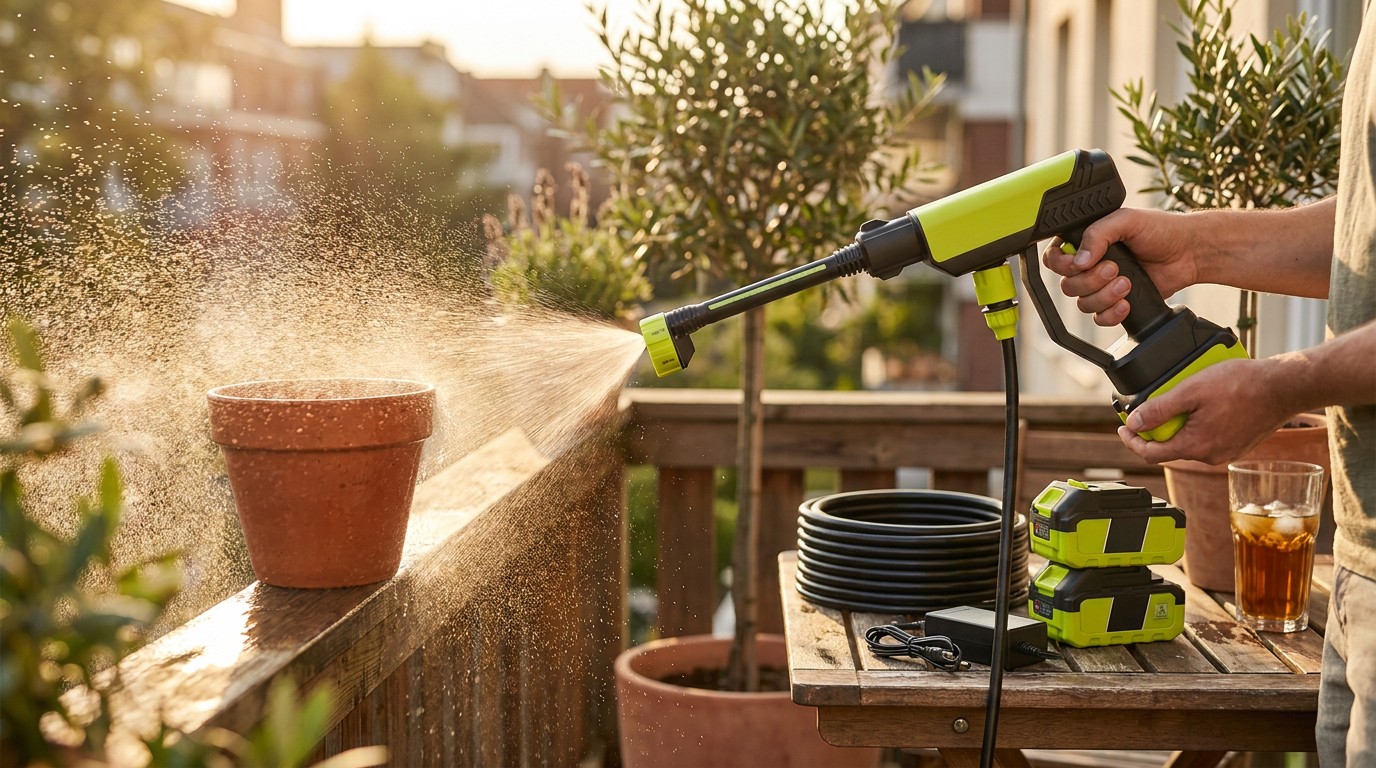
I remember standing on my balcony last Saturday, the sun hitting the glass, ready to blast away a week's worth of city dust with my portable sprayer. The first thing I noticed was the rhythmic, hollow thrum of the motor spinning, but only a pathetic trickle escaped the nozzle. It turns out that even the most reliable battery-operated jet washes require a specific sequence of priming and power management to perform at their peak.
Why does the motor run but no water comes out?
The most common cause for a cordless pressure washer failing to spray is an airlock within the pump or intake hose, which prevents the unit from creating a vacuum. According to Yard Force technical support, users should ensure the intake hose is fully submerged and that all connectors are clicked firmly into place, as even a pinhole air leak can break the suction required for the self-priming pump to function. I found that holding the trigger down for up to 30 seconds without the nozzle attached often clears the trapped air much faster. If you are drawing water from a bucket rather than a pressurized tap, the vertical distance the pump has to lift the water also plays a role; keeping the water source at the same level as the machine reduces the strain on the internal motor. Visual inspections of the intake filter are also vital, as small debris from garden ponds or rain barrels can easily clog the fine mesh screens used in these portable units.
How does battery health affect cleaning performance?

Photo by Tima Miroshnichenko on Pexels
Loss of cleaning power is frequently tied to "voltage sag," where a battery under load cannot provide the consistent amperage required to maintain the pump's torque. Fanttik research indicates that as lithium-ion cells age or reach low charge levels, the brushless motor firmware may throttle performance to protect the hardware, resulting in a noticeable drop in PSI. I keep coming back to the importance of using a fully charged, high-capacity pack for larger jobs like car detailing or patio cleaning. When the battery is nearly depleted, the motor might sound like it is spinning at full speed, but it lacks the actual torque to drive the hydraulic pump against the resistance of the high-pressure nozzle. Proper storage is equally critical; if the unit was left in a freezing garage over the winter, the internal seals might have cracked, or the battery chemistry could be permanently compromised, leading to the very performance issues many homeowners mistake for a mechanical motor failure.
Quick answers
Photo by David McElwee on Pexels
Q: How do I fix a pulsating spray pattern? A: This is usually caused by a restricted water supply or a partially blocked nozzle tip. Use a small needle to clear the nozzle orifice and ensure your intake hose is not kinked, as most cordless units require a steady flow of at least 2 liters per minute to maintain a consistent stream.
Q: Why is my pressure washer leaking from the battery compartment? A: This typically indicates a failure of the internal O-rings or a cracked pump housing, often due to improper winterization. If water has entered the electronics, Yard Force recommends immediately removing the battery and allowing the unit to dry for 48 hours before attempting a restart.
Q: Can I use any garden hose with a portable pressure washer? A: While many units are compatible with standard 1/2-inch hoses, using a hose longer than 25 feet can cause an intake delay. For best results, use the manufacturer-supplied weighted siphon hose, which is designed to prevent buoyant air gaps during operation.
Q: What should I do if the motor won't turn on at all? A: First, verify that the battery is clicked fully into the housing, as many models like those from Fanttik have a safety interlock that prevents operation if the seal isn't watertight. Check the battery's onboard LED indicator; if it flashes rapidly, the thermal protection may have triggered, requiring a 15-minute cool-down period.
Maintaining your equipment involves more than just fixing immediate breaks. Understanding the nuances of extending lifespan of lithium ion washer batteries can prevent many of these power-related stalls before they start. Additionally, following a strict routine for winterizing your portable pressure washer ensures that internal components don't crack during the off-season. For those dealing with persistent pressure drops, checking for systematic pump scaling is the next logical step in DIY repair.
Learn more about Cordless Pressure Washers at https://cordlesspressurewasher.com.