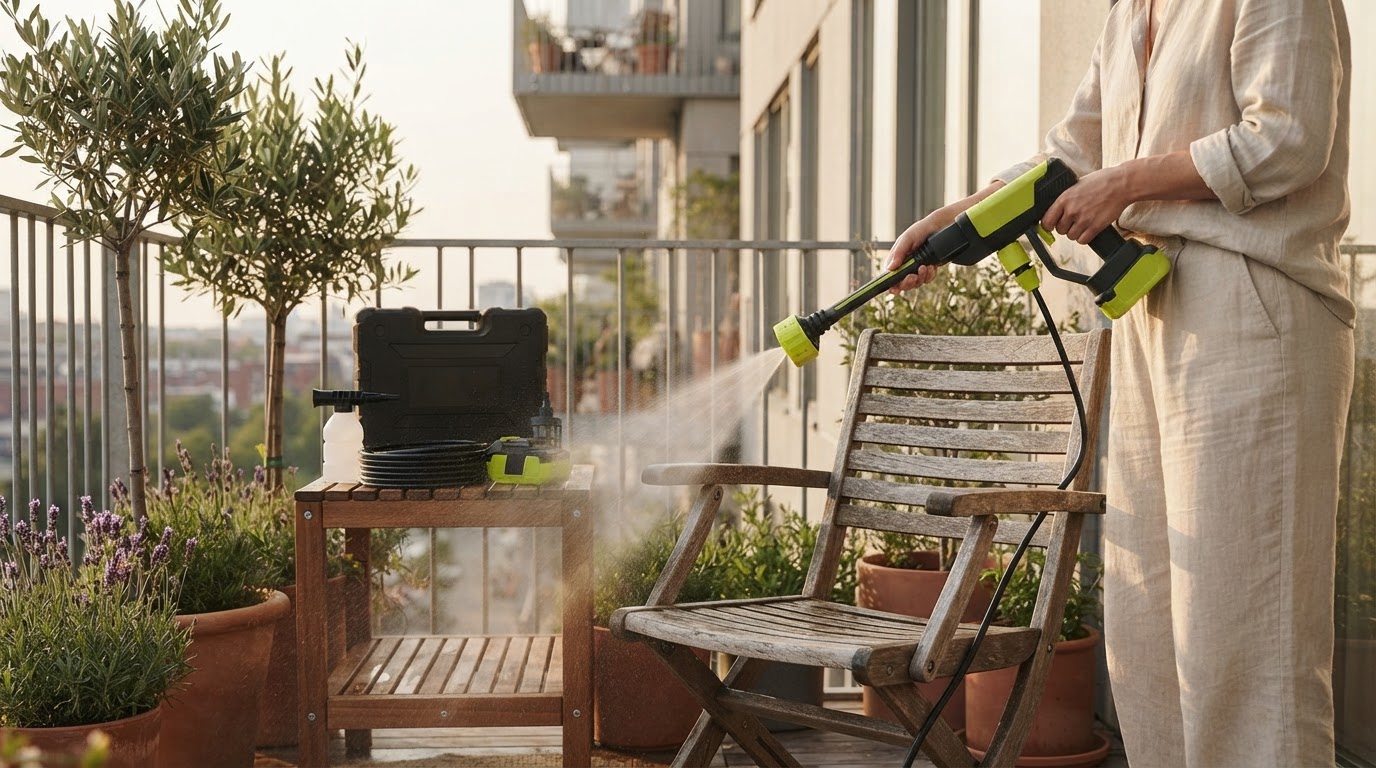
Is a Battery Operated Jet Wash Powerful Enough for Cars?
 Maya ChenContributing Editor
August 24, 2026 — While battery operated jet wash systems offer unmatched portability for remote tasks, most consumer-grade units deliver significantly less than 600 PSI, making them supplemental tools rather than primary cleaning solutions.
The conventional wisdom says that any device labeled as a pressure washer should be able to strip paint or deep-clean concrete, but the reality for cordless users is far more constrained. Homeowners often seek these out for apartment balconies or car detailing where a garden hose is inaccessible. However, the performance gap between a standard 1,500 PSI electric unit and a handheld battery model is vast, requiring a shift in expectations from "blasting" to "rinsing."
How does PSI compare across battery operated jet wash models?
Most battery operated jet wash units operate between 350 and 550 PSI, which is roughly five to eight times the pressure of a standard garden hose but a fraction of a corded machine. Here's the part nobody talks about: the flow rate (GPM) is often just as limited as the pressure, frequently hovering below 1.0 GPM. According to specifications detailed by Popular Mechanics, the Worx Hydroshot 20V delivers only 350 PSI at 0.5 GPM, which is suitable for rinsing mud off a mountain bike but will struggle with baked-on brake dust. Even higher-voltage options like the 40V Ryobi only reach 450 PSI on their high setting, illustrating that doubling the battery voltage does not linearly scale the cleaning power. For those seeking more robust performance, selecting cordless pressure washers for home maintenance requires looking at heavy-duty 56V or 60V platforms that can bridge the gap to 2,000 PSI, though these lose the handheld form factor.
Can a battery jet wash effectively clean a vehicle?
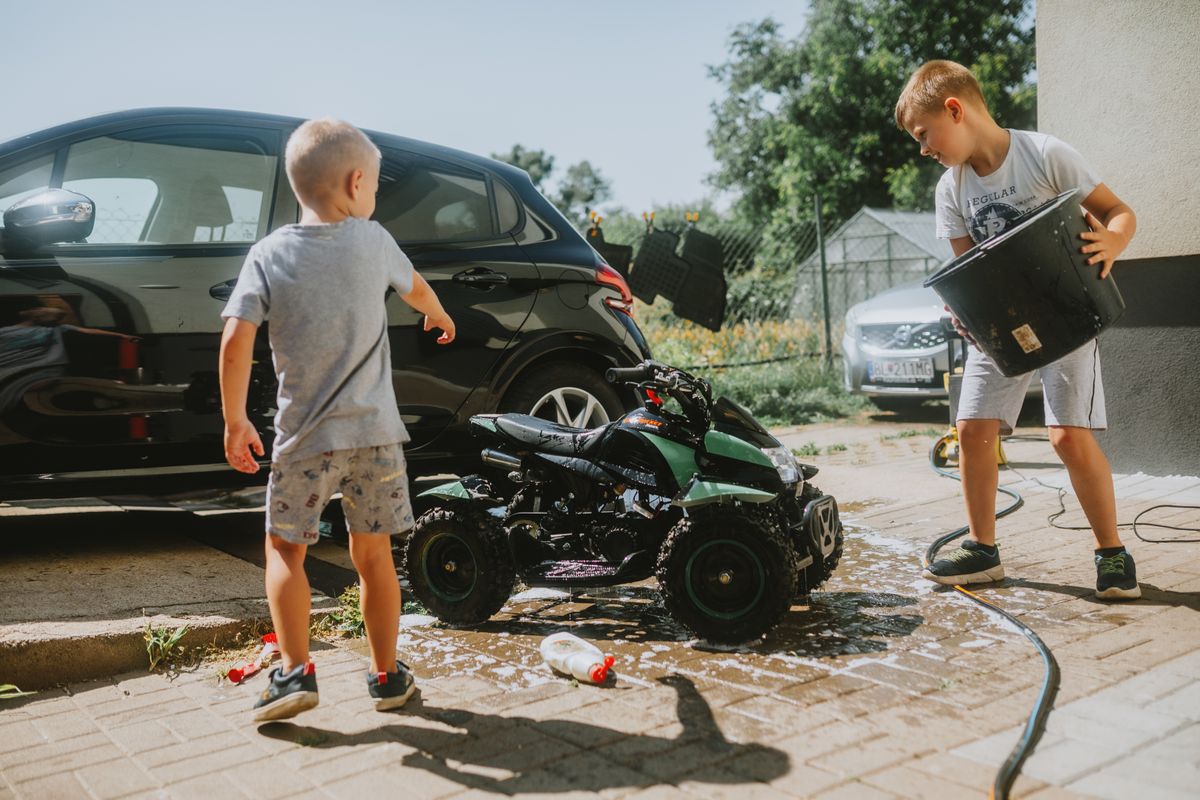
Photo by Helena Jankovičová Kováčová on Pexels
A battery operated jet wash is an effective tool for car detailing only when used for pre-rinsing and soap application, as it lacks the mechanical force to remove traffic film without physical agitation. Run the math: a professional car wash typically uses high-pressure systems exceeding 1,000 PSI to safely lift grit, whereas a DeWalt 20V Max system provides 550 PSI, which DeWalt notes is intended for "quick jobs" and "versatility" rather than heavy-duty restoration. The primary advantage is the ability to draw water from a bucket or lake, a feature commonly highlighted in handheld electric power washer reviews as the deciding factor for urban dwellers. While the EGO Power+ 56V unit reaches a competitive 2,100 PSI, it weighs 40 pounds, effectively negating the "handheld" appeal that drives most consumer interest in the category. I’ll change my mind when sub-10lb handheld units can consistently maintain 1,000 PSI for a full 20-minute cycle without thermal throttling.
Quick answers
Q: How long does the battery typically last on a jet wash? A: Most 20V systems using a 2.0Ah battery provide between 10 to 15 minutes of continuous runtime on high pressure. Units like the Sealey SV20 utilize a 20V 2.0Ah battery specifically for these short-burst cleaning tasks.
Q: Can I use a battery operated jet wash with a garden hose? A: Yes, most models feature a quick-connect fitting that accepts a standard garden hose, though they also include a suction hose to draw from stagnant water sources like a bucket. Using a pressurized hose often slightly increases the perceived output but does not change the machine's rated PSI.
Q: Are these units safe for cleaning windows and screens? A: The lower 350-550 PSI range of handheld units is actually safer for delicate surfaces like window screens and older wood siding than high-powered gas units. The lack of extreme pressure reduces the risk of seal damage or water penetration into wall cavities.
Learn more about Cordless Pressure Washers at https://cordlesspressurewasher.com.
Sources
Photo by Helena Jankovičová Kováčová on Pexels
- The 5 Best Cordless Power Washers for When Portability is Key
- The Best Cordless Pressure Washer? - YouTube
- Cordless Pressure Washers - DeWalt