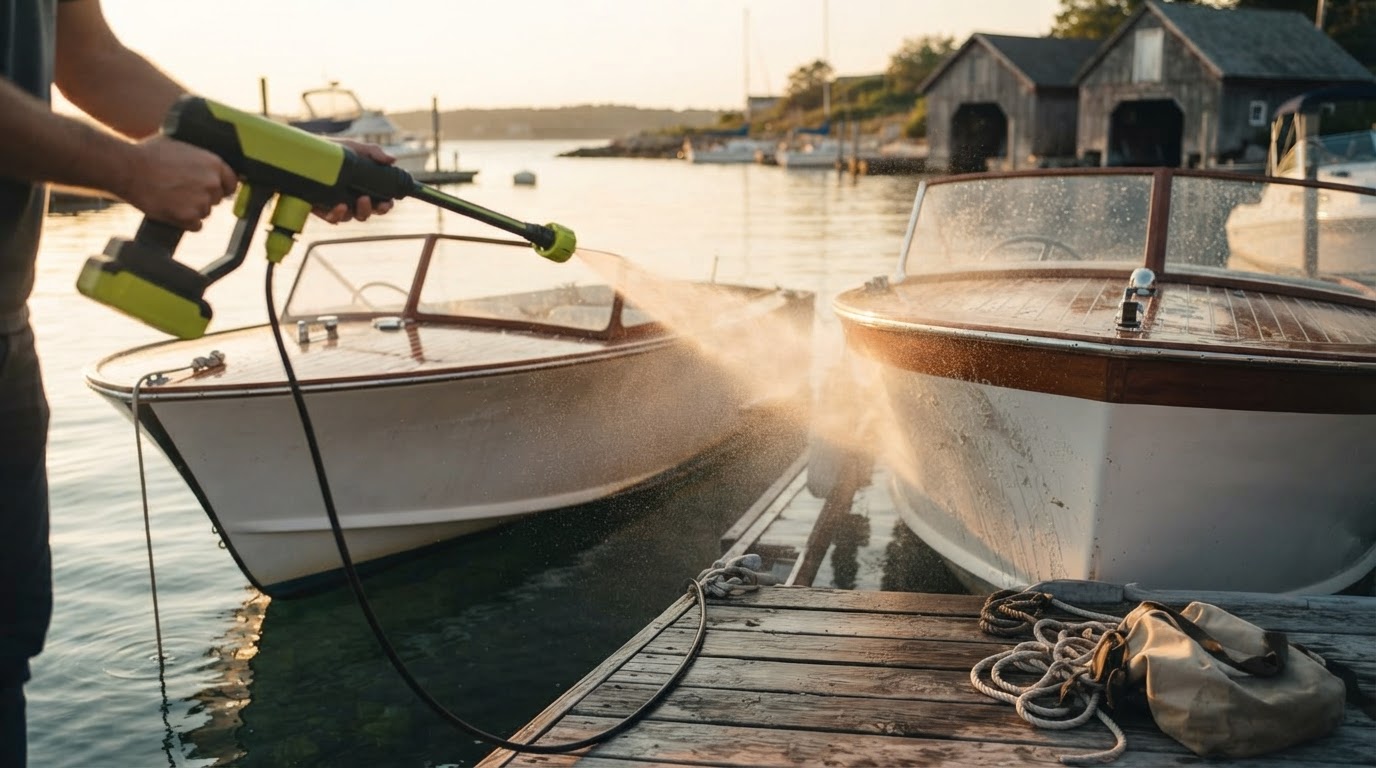
Can I use Cordless Pressure Washers for boat cleaning?
 Jordan HaleStaff Writer
November 13, 2026 — Cordless Pressure Washers are highly effective for routine boat maintenance and salt removal provided the unit delivers at least 300 PSI and utilizes a siphon hose for dockside water access.
I remember standing on the dock last July, the sun beating down on the gelcoat of my center console, watching the salt spray dry into a stubborn, white crust. The first thing I noticed was the sheer impracticality of dragging a 50-foot heavy-duty hose across a slippery finger pier just to rinse the gunwales. For most boat owners, the challenge isn't just the grime; it's the logistical nightmare of cord management and water access in a marina environment.
Which Cordless Pressure Washers handle marine environments best?
The most effective cordless units for marine use are those that balance portability with a high-flow brushless motor to combat corrosive salt buildup. It turns out that specialized models like the Ryobi ONE+ HP 18V Brushless EZClean are specifically designed for these scenarios, offering 600 PSI at 0.7 GPM, which is sufficient for lifting surface contaminants without stripping away expensive marine wax. According to a review by Motor Boat & Yachting, some cordless designs optimized for boats even feature integrated tanks or the ability to draw from a 4.5L container, providing nearly 40 minutes of continuous runtime on a single charge. This portability is essential when you're anchored out or on a mooring where traditional power outlets are non-existent. While they lack the raw power of a 3000 PSI gas unit, they are the best cordless pressure washer option for maintaining the waterline and deck throughout the season.
Is the water pressure safe for fiberglass and teak?
Cordless pressure washers are generally safer for delicate marine surfaces than high-powered electric or gas alternatives because their output typically caps at a manageable 600 PSI. I keep coming back to the versatility of adjustable nozzles; using a 40-degree spray pattern ensures you won't gouge the wood grain of a teak swim platform or delaminate decals. Powerboating.com notes that tools like the Hydroshot provide a two-speed trigger that can drop pressure as low as 58 to 94 PSI for gentle rinsing, or ramp up to 320 PSI for more intensive power cleaning. This range is critical because high-pressure spikes can force water into fiberglass through microscopic cracks, leading to osmotic blistering over time. For those who frequently move between the dock and the trailhead, the same portable pressure washer for camping and mtb can often be repurposed for the boat, provided you use a fresh water source to prevent internal corrosion of the pump.
Quick answers
Q: Can I draw water directly from the lake or ocean? A: Yes, most units include a siphon hose with a filter, though you must flush the machine with fresh water after any salt water use to prevent the 600 PSI pump from seizing. Using a portable pressure washer with water tank for camping is often a cleaner alternative, as it ensures you are always using a pre-filled fresh water supply.
Q: Will a cordless washer remove barnacles? A: No, battery-operated units typically max out around 600 PSI, which is insufficient for calcified growth; you will need a commercial-grade gas washer or a scraper for hull fouling. These tools are strictly for salt, bird droppings, and surface slime.
Q: How long does the battery last during a full boat wash? A: On average, a 4.0Ah battery provides 20 to 30 minutes of trigger time, which is enough to rinse a 22-foot boat. For larger vessels, users often switch to the DeWalt cordless system which offers multiple power settings to conserve energy during lighter rinse cycles.
Learn more about Cordless Pressure Washers at https://cordlesspressurewasher.com.
Sources
- Best pressure washers for boats: 8 top options for a ...
- Boat Cleaning MIRACLE (Total Game Changer) Ryobi 600 PSI ...
- Boat cleaning … silly question but looking a pressure ...