Best Cordless Pressure Washer for Garden Tools (2024 Guide)
Picture this: you have just finished mowing the lawn and digging fresh garden beds, but your lawnmower deck is choked with wet clippings and your steel spade is caked in sticky clay. A standard garden hose lacks the force to clear it, yet dragging out a heavy gas pressure washer feels like overkill—and risks stripping paint or destroying delicate engine seals.
The best cordless pressure washer for garden tools delivers between 300 and 500 PSI at 0.8 to 1.2 GPM, powered by a 20V/24V 4.0Ah battery. Paired with a multi-angle nozzle (specifically 25° for steel tools and 40° for wood or plastic), this setup provides optimal power to blast away dried mud and organic debris without damaging gaskets, stripping coatings, or splintering handles.
Key Selection Criteria for Yard & Garden Equipment Cleaning
A 300–500 PSI self-priming cordless pressure washer equipped with a 4.0Ah battery offers the sweet spot for everyday garden tool and mower deck maintenance.
Best choice for
- 400–500 PSI Washer with 25° Fan Nozzle & 4.0Ah Battery — Provides enough concentrated impact force to dislodge dried soil without damaging metal coatings or spindle seals.
- Self-Priming Washer with Siphon Hose & Intake Filter — Draws water directly from rain barrels, 5-gallon buckets, or water totes without needing a pressurized hose spigot.
- 300–350 PSI Washer with 40° Wide Spray Nozzle — Gently removes dirt and moss without gouging unsealed wood or cracking fragile pottery.
- You expect to strip heavy rust or flaking industrial paint off old iron farm equipment (requires 2,500+ PSI gas washer).
- You plan to wash a 2,000 sq ft concrete patio on a single battery charge.
- Standard Garden Hose with High-Pressure Spray Nozzle — Suitable for light rinsing, but requires manual scraping with a putty knife for caked mud and grass.
To find your ideal setup, evaluate your garden layout, proximity to water spigots, and the types of tools you maintain most often.
Garden Tool Safety & Pressure Matrix: Tool Specs vs Safe Washer Specs
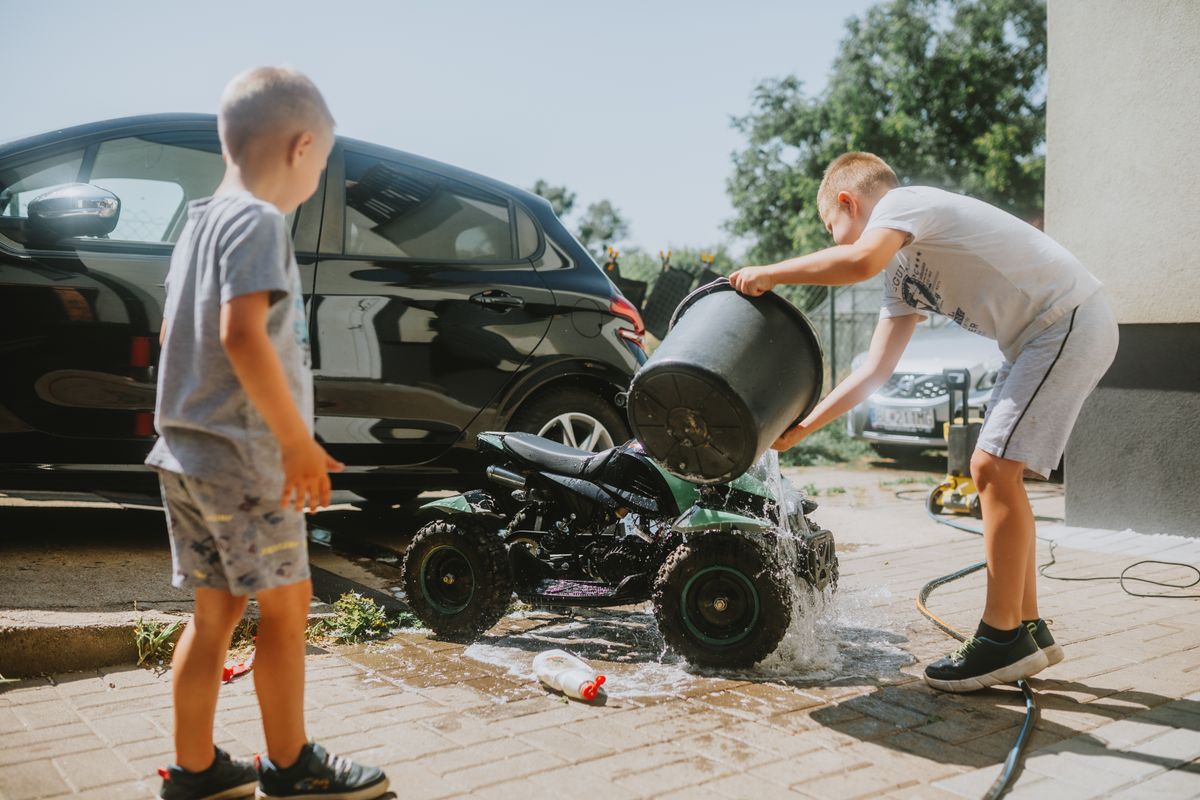
Photo by Helena Jankovičová Kováčová on Pexels
| Tool / Surface Type | Safe PSI Range | Optimal Nozzle Angle | Recommended Water Source | Critical Risk Zone |
| --- | --- | --- | --- | --- |
| Lawnmower Decks & Blades | 350 – 500 PSI | 25° Yellow Fan | Spigot or Clean Bucket | Carburetor intake, air filter, wheel hubs & spindle seals |
| Steel Spades, Shovels & Tiller Tines | 400 – 500 PSI | 15° or 25° Fan | Rain Barrel or Bucket | Soft rubber hand grips & fiberglass connections |
| Wooden-Handled Hoes & Pruners | 300 – 400 PSI | 40° White Fan | Bucket or Spigot | Unsealed wood grain (prevents splintering) |
| Terracotta & Ceramic Planters | 250 – 350 PSI | 40° or Gentle Shower | Rain Barrel or Bucket | Aged hairline fractures & decorative rim glazes |
| Resin Tool Sheds & Plastic Totes | 300 – 450 PSI | 40° Fan or Soap Foam Cannon | Garden Hose / Spigot | Clear vinyl window panels & thin door latches |
Using the wrong pressure or spray angle can cause irreversible damage to sensitive yard equipment. Use this side-by-side technical matrix to pair your garden tools with safe PSI limits, nozzle angles, and water sources.
Pro Tip: Preventing Water Intrusion in Mower Engine Seals
When washing grass clippings from beneath a walk-behind lawnmower deck, always tilt the mower so the spark plug points UP toward the sky. Tilting the mower with the spark plug facing down causes engine oil to flood the air filter and carburetor.
Keep your spray nozzle angled at 25 degrees and maintain a minimum distance of 12 to 18 inches from engine components. Avoid directing high-pressure streams directly into the blade spindle housing or wheel bearing caps, as pressurized water can bypass rubber dust boots and wash away essential bearing grease.
Which Cordless Pressure Washer Setup Fits Your Garden Workflow?
- Do you need to clean tools far away from an outdoor spigot? → Yes: Select a self-priming model with a siphon hose and weighted intake filter basket. (Go to Question 2). No: A standard dual-connection model (spigot or bucket) works great. (Go to Question 2)
- Does your routine include cleaning heavy lawnmower decks or multiple muddy tillers? → Yes: Choose a 400–500 PSI unit paired with a 4.0Ah battery for 25–30 minutes of continuous power.. No: A compact 300–350 PSI unit with a 2.0Ah battery (12–15 min runtime) is lightweight and sufficient.
- Do you work with delicate wooden handles, ceramic pots, or vintage garden decor? → Yes: Ensure your model includes a 5-in-1 adjustable nozzle with a 40° wide spray fan setting.. No: A basic 2-in-1 or quick-connect nozzle package will meet all your metal tool cleaning needs.
Pros & Cons of Cordless Pressure Washers for Lawn Equipment Maintenance
Pros
- Zero power cords or heavy garden hoses to drag across delicate flower beds.
- Self-priming capability lets you clean directly from rain barrels, buckets, or water totes.
- Controlled 300–500 PSI range blasts away caked mud without blowing out bearing seals or splintering wood.
- Compact and lightweight (typically under 5 lbs) for easy storage on garage shelves or in garden sheds.
- Instant push-button start with no gasoline mixing, oil checks, or pull cords.
- Runtime is limited by battery Ah rating (requires a 4.0Ah battery for larger multi-tool sessions).
- Lower total pressure output than heavy gas units (not intended for stripping concrete driveways or heavy rust).
Editor's Pick: The Ideal All-Around Cordless Washer for Gardeners
For homeowners looking for an effortless way to maintain lawnmowers, spades, and patio planters, this versatile cordless pressure washer delivers the ideal combination of power, portability, and self-priming convenience.
Essential Buying Takeaways for Lawn & Garden Cleaning
- Target 300–500 PSI: This pressure window easily removes dried mud, sap, and clippings without stripping powder coatings or ruining spindle seals.
- Opt for a 4.0Ah Battery: A 4.0Ah battery provides 25–30 minutes of continuous spraying under load, compared to 12–15 minutes on a standard 2.0Ah pack.
- Prioritize Self-Priming Intake: A siphon hose with a fine-mesh filter basket lets you tap into rain barrels or 5-gallon buckets anywhere in the yard.
- Use the 25° Nozzle for Metal & 40° for Wood: Match the nozzle fan angle to the material to prevent wood splintering and paint chipping.
Top-Rated Cordless Pressure Washer Configurations for Garden Care
Select the battery capacity and intake configuration that matches your property size and tool inventory.
Pre-Cleaning & Safety Checklist for Garden Tools
- Disconnect the spark plug boot on gas lawnmowers before tilting the deck.
- Scrape off heavy loose clumps of dirt or grass with a wooden spatula or putty knife.
- Inspect wooden handles for pre-existing cracks that high pressure could expand.
- Ensure the water intake filter screen is securely attached to the siphon hose.
- Select the 40° wide nozzle for delicate items or the 25° nozzle for metal blades.
Seasonal Garden Tool & Equipment Cleaning Schedule
Photo by Doğan Alpaslan Demir on Pexels
- Early Spring (Pre-Season Setup) — Wash off accumulated dust and protective storage grease from shovels, hoes, and mower decks using 300 PSI and a 40° fan nozzle.
- Summer (Weekly Mowing & Digging) — Blast wet grass clippings from mower decks immediately after use (at 400 PSI) before they dry into hardened clumps.
- Late Fall (End-of-Season Storage Prep) — Deep clean all metal tools at 500 PSI (25° nozzle), dry thoroughly with a towel, and apply a light coat of boiled linseed oil to handles and mineral oil to blades.
- Winter (Equipment Winterization) — Flush clean water through your cordless pressure washer pump, run it dry for 5 seconds, and store the lithium battery indoors at room temperature.
Battery Capacity & Runtime Estimator for Yard Cleanup Tasks
| Battery Pack Capacity | Average Voltage | Continuous Runtime (Full Load) | Estimated Tool Output per Charge | Ideal Yard Task Match |
| --- | --- | --- | --- | --- |
| 2.0 Ah | 20V / 24V | 12 – 15 Minutes | 4–6 Hand tools + 2 Planters | Quick post-gardening rinses & boot cleaning |
| 4.0 Ah | 20V / 24V | 25 – 30 Minutes | Mower deck + Wheelbarrow + 8 Hand tools | Full yard cleanup & lawnmower maintenance |
| 6.0 Ah / Dual Battery | 20V / 40V | 40 – 50 Minutes | Mower deck + Riding mower + Fence panels + Garden cart | Large acreage estates & heavy seasonal prep |
Battery Ah (Amp-hour) ratings directly dictate how long you can spray continuously before needing a recharge. Use this matrix to match battery size with your typical workload.
4 Costly Mistakes to Avoid When Washing Garden Tools
Steer clear of these common pitfalls to keep your power tools, wooden handles, and pressure washer operating reliably season after season.
Frequently Asked Questions About Pressure Washing Garden Tools
Clear up common doubts regarding nozzle choices, off-grid water sources, lawnmower deck safety, and battery life.
Mid-Guide Action Plan: Choosing Your Pressure Washer
Your decision: Determine your garden tool cleaning setup based on water source access, yard layout, and equipment surface sensitivity.
Do this next: Select a 300–500 PSI self-priming cordless pressure washer equipped with a 4.0Ah battery and a multi-angle nozzle for versatile outdoor cleanup.
Related resource: Explore our full cluster guide on Outdoor Surface Maintenance for more specialized patio, lawn care, and garden equipment advice.
Check out the main Cordless Portable Water Cleaner with self-priming intake hose for quick, hassle-free garden tool maintenance.
Ready to streamline your post-gardening cleanup? Take these practical steps to choose the right cordless washer configuration for your home and garden routines.