Cordless Pressure Washer Storage & Maintenance Guide
Follow the 50/50 Rule to extend the lifespan of your cordless pressure washer: store your lithium-ion battery at 50% charge (2 out of 4 indicator LEDs) in a room kept between 50°F and 70°F, and drain all water from the pump within 300 seconds (5 minutes) after finishing your cleaning tasks. Never run the pump dry for longer than 3 seconds, and always apply a pump protector fluid before temperatures drop below 32°F.
Essential Care & Storage Rules at a Glance
- 50% Charge Standard: Never store 20V or 40V lithium-ion batteries fully depleted (0%) or fully charged (100%) for more than 30 days to avoid permanent capacity degradation.
- 3-Second Dry Purge Limit: Running a portable pressure washer dry for more than 3 seconds will overheat pump impellers and damage internal rubber seals.
- 32°F Thermal Threshold: Trapped water expands when frozen, cracking internal manifold housings. Always flush with pump saver anti-freeze if storing in unheated sheds.
- 0 Petroleum Products: Lubricate O-rings strictly with food-grade silicone grease. Petroleum jelly (Vaseline) degrades nitrile rubber O-rings within 60 days.
- 60-Day Battery Refresh: Check stored batteries every 60 days and top off to 50% to offset natural self-discharge.
The 5-Minute Post-Use Storage Checklist
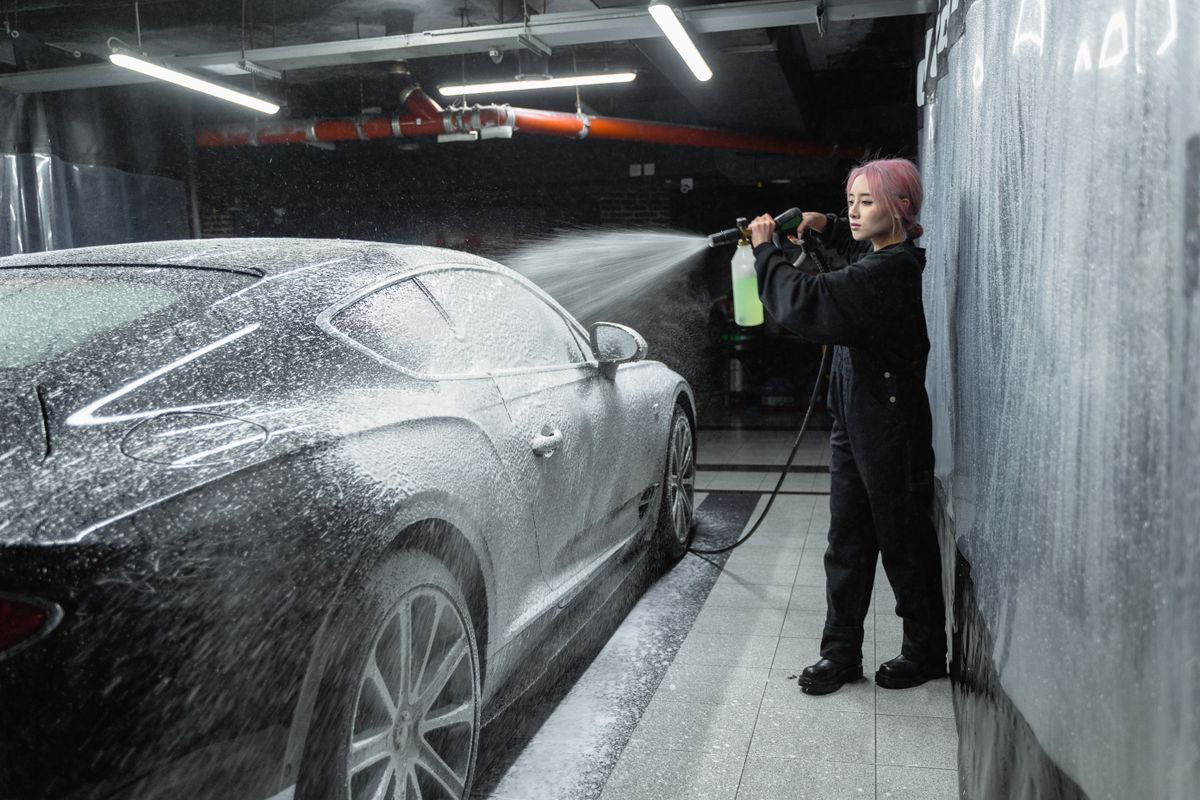
Photo by Tima Miroshnichenko on Pexels
Perform these 7 steps immediately after completing any cleaning session to prevent water mineral accumulation and seal degradation.
Printable Quick-Reference Maintenance Card
- POST-USE: Release pressure -> Remove battery -> 3-sec pump purge -> Drain hose -> Clean filter.
- BATTERY CARE: Store at 50% charge (2 LEDs). Keep between 50°F and 70°F. Never store on active charger.
- PUMP PROTECTION: Add 2 oz pump saver fluid before storage below 32°F. Never run dry over 3 seconds.
- O-RING CARE: Silicone grease only. Inspect rubber seals every 5 uses for cracks or flat spots.
- NOZZLE CARE: Clear 6-in-1 nozzle selector with stainless needle if pressure drops or spray pattern splutters.
Expert Tip: Thermal Management & Winterizing
Lithium-ion batteries operate via liquid electrolyte chemistry. Storing your 20V or 40V battery in an unheated garage where temperatures plummet below 32°F causes internal impedance to spike, leading to premature cell micro-cracking and up to 30% irreversible loss of runtime.
Likewise, portable pressure washers utilize compact internal pump chambers with tight internal tolerances. Even 1/2 teaspoon of trapped water freezing inside the pump head will generate up to 20,000 PSI of internal expansion force—cracking the internal composite valve housing. Always store batteries inside your home's living area during winter months and flush the pump with non-toxic propylene glycol pump protector fluid.
Recommended Storage & Maintenance Gear
Maintaining a compact, handheld cordless pressure washer requires minimal equipment, but using the right tools ensures reliable performance for years. Explore our top recommended maintenance essentials below.
Keep your portable washer running like new! Browse our full range of compact cordless pressure washers and accessories at https://cordlesspressurewasher.com.
- 16 oz Pump Protector & Anti-Freeze Solution: Protects internal valves against mineral deposits and freeze damage down to -25°F.
- Food-Grade Silicone O-Ring Grease: Preserves quick-connect rubber seals without causing chemical breakdown or swelling.
- Stainless Steel Nozzle Cleaning Needle Kit: Safely dislodges hard water minerals and grit from tiny quick-connect nozzle orifices.
- Vented Microfiber Battery Tote Bag: Safely houses up to two high-capacity lithium-ion batteries in a temperature-stable indoor environment.
Routine Cordless Pressure Washer Maintenance Schedule
- After Every Use (100% of the time) — Depress trigger to relieve line pressure, disconnect battery pack, drain intake hose, and perform 3-second pump purge.
- Every 5 Uses (or Monthly) — Inspect siphon hose intake screen for debris, clean nozzle orifices with needle kit, and apply silicone grease to O-rings.
- Every 60 Days during Non-Use — Check battery charge level; top off to 50% state-of-charge if indicator drops below 2 bars.
- Seasonal / Winterization (>30 Days Idle) — Flush pump with 2 oz pump protector, store washer unit in climate-controlled garage, and bring battery into heated house.
5 Storage Mistakes That Ruin Portable Washers
Photo by David McElwee on Pexels
Avoid these frequent maintenance missteps to save money and keep your equipment running at peak performance:
Seasonal Storage Timeline: Fall Prep to Spring Startup
- October / Late Fall — Inspect intake filter, wash exterior body with damp cloth, flush pump with 2 oz pump protector solution, and disconnect battery.
- November – February — Store battery indoors between 50°F and 70°F. Perform a quick 60-day battery LED check in January and top off to 50% if needed.
- March / Spring Prep — Recharge battery to 100%. Inspect intake hose O-rings, apply silicone lubricant, and submerge siphon hose to verify priming suction.
- April / Active Season — Execute 5-minute post-use care after every vehicle or patio rinse; keep spare O-rings and nozzle needle in carrying case.
Frequently Asked Questions: Cordless Washer Care & Storage
Answers to the most common maintenance, storage, and troubleshooting queries from portable pressure washer owners.
Your Immediate Next Maintenance Actions
Your decision: Determine whether your cordless pressure washer will be stored in an unheated shed or a climate-controlled space this season.
Do this next: Purge all remaining water from the pump body today using a 3-second dry burst, wipe the battery terminals, and move your lithium-ion battery indoors to a room kept between 50°F and 70°F at 50% charge.
Related resource: Cordless Pressure Washer Routine Maintenance: 5 Steps to Extend Equipment Life
Protect internal pump valves against freeze cracking and mineral buildup with a dedicated 16 oz Pump Protector fluid before winter storage.
Taking 5 minutes today to service your equipment will prevent costly pump replacements and dead batteries next season.