The 4-Point Field Test for Cordless Pressure Washers
 Priya RamanSenior Analyst
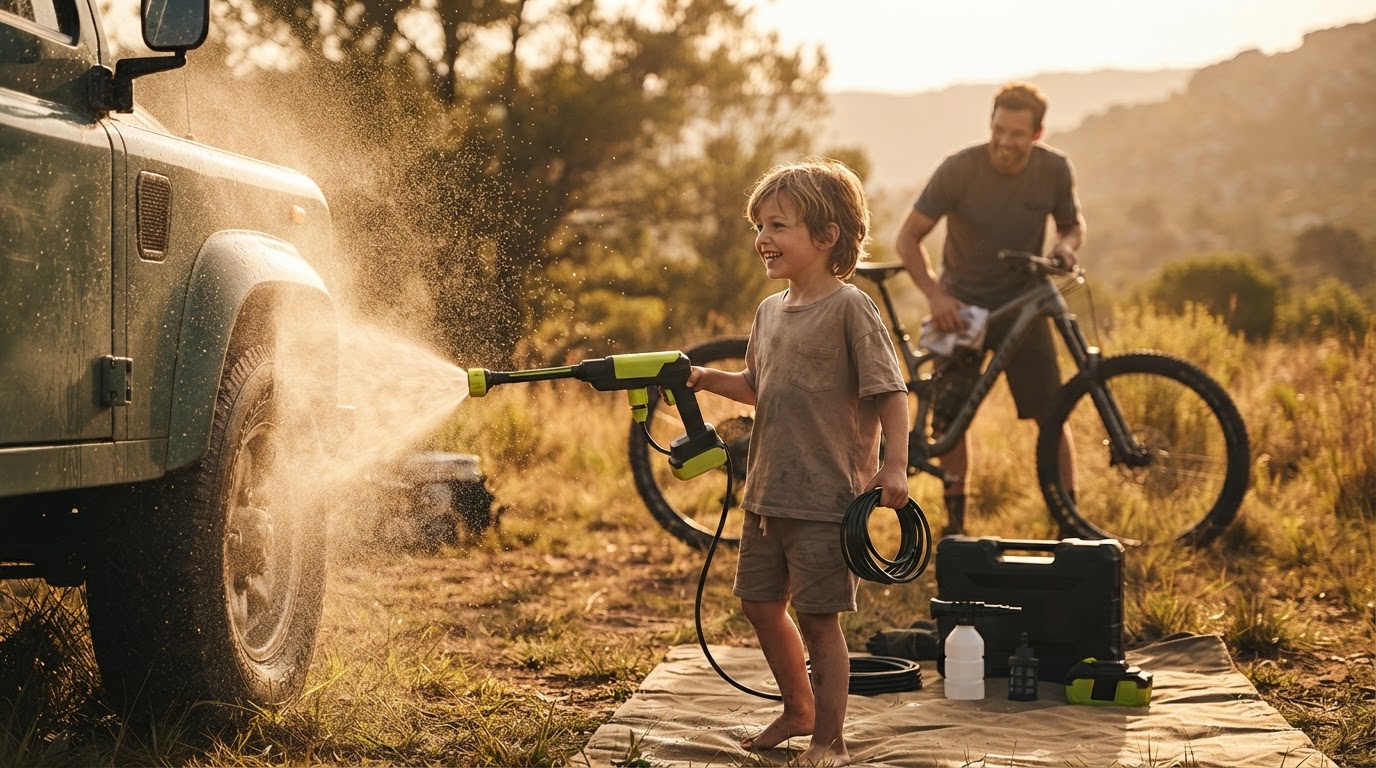
November 12, 2026 — The rise of high-capacity lithium-ion technology has transformed the utility of Cordless Pressure Washers for remote recreational use. As enthusiasts seek to maintain expensive equipment in the field, these tools have moved from luxury items to essential components of a mobile maintenance kit.
When evaluating equipment for backcountry use, think of it as a matrix of portability versus output efficiency. According to technical reviews from MBR, the Worx Hydroshot stands as a benchmark for this category, weighing just 1.85kg while providing the necessary pressure to clean mountain bikes without damaging delicate bearings. This balance is critical for users who must manage limited vehicle space alongside the need for effective grime removal after a trail session. Selecting the right tool requires a structured approach to ensure the hardware survives the rigors of the trail.
The 4-Point Field Test
To determine if a specific model meets the demands of camping and mountain biking (MTB), users should apply the 4-point field test framework: Source, Output, Runtime, and Ergonomics. First, the water source flexibility is paramount; a field-ready unit must draw from a bucket, lake, or integrated tank rather than relying on a pressurized hose bib. For example, the Muc-Off Mobile Pressure Washer addresses this by featuring a 20L integrated water tank and a 500w brushless motor that produces up to 942 PSI. Second, output must be calibrated; while cars can handle high pressure, bikes require a gentler touch to protect seals. Third, runtime is the limiting factor in remote areas. The Muc-Off system provides approximately 24 minutes of runtime on its 40V lithium-ion battery, or 15 minutes if utilizing the high-performance boost mode. Finally, ergonomics and weight determine transportability. Professional testers often prioritize units like the Worx Hydroshot because the 1.85kg frame allows for one-handed operation while holding a bike steady.
Two axes matter here: the physical footprint of the device in a packed vehicle and the total volume of water required to achieve a clean surface. For those staying at established sites, a portable pressure washer with water tank for camping offers a self-contained solution that eliminates the need for external buckets. If your primary goal is finding the best cordless pressure washer for a variety of tasks including home use, you may opt for higher voltage systems. However, for specialized marine environments, the requirements shift toward salt-resistance as seen in a cordless pressure washer for boat cleaning. The decision rule: if the unit weighs over 5kg and lacks a self-priming pump, it is likely better suited for the driveway than the trailhead.
Expert tip: Always verify the IP rating of the battery compartment. In camping environments, the unit is often exposed to splashing or rain; a sealed battery housing prevents short circuits during mid-wash downpours.
Once you see it this way, choosing a model becomes a matter of matching battery amp-hours to the number of bikes in your group. For more specialized recommendations, explore our analysis of the best cordless pressure washer options for heavy-duty tasks.
Shop Cordless Pressure Washers.
Sources
- Mobile Pressure Washer | Muc-Off USA
- Best pressure washers for bikes 2026 - Cycling News
- Best mobile pressure washers reviewed and rated by experts - MBR