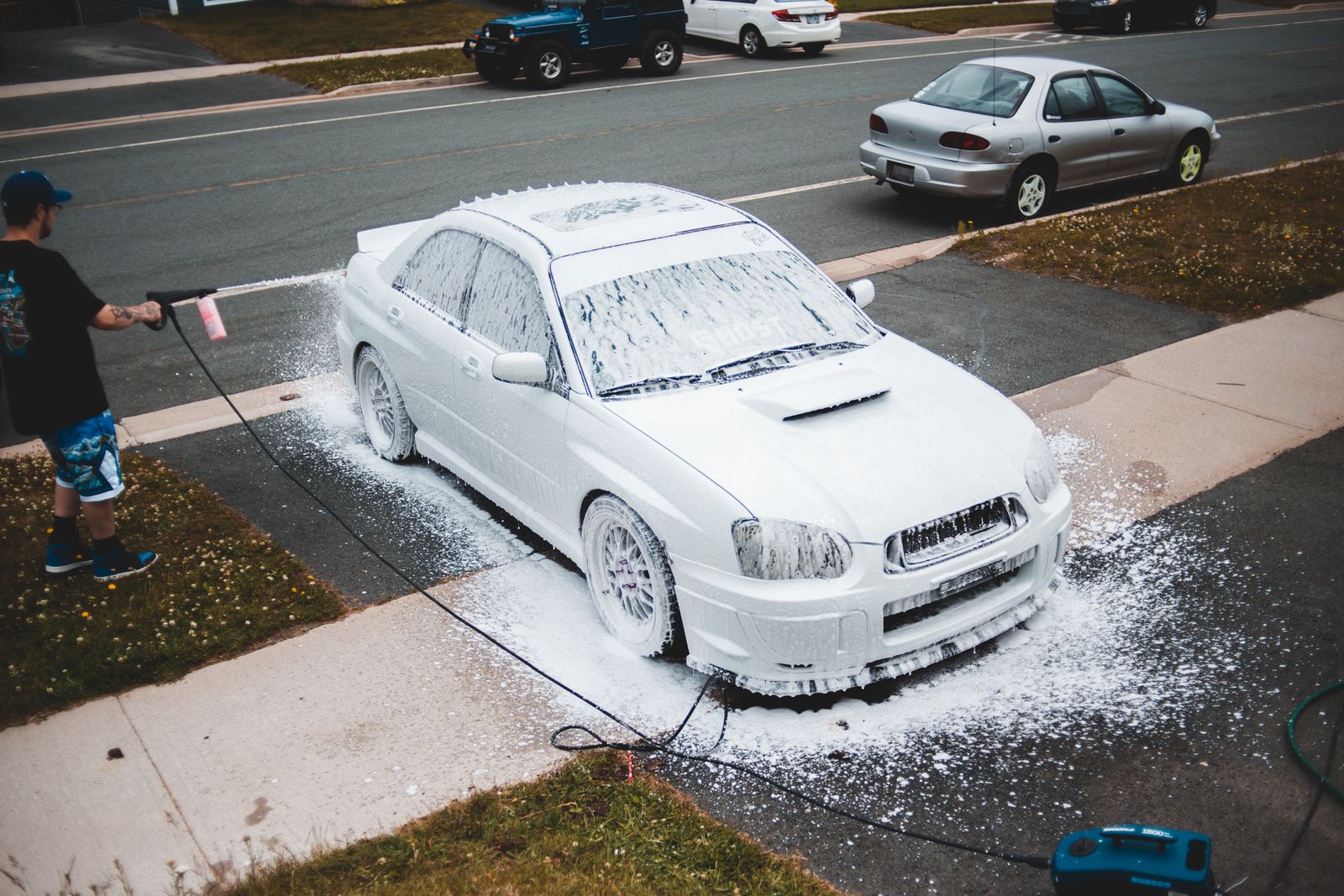
How to Attach and Use a Foam Cannon on a Cordless Pressure Washer
To generate thick snow foam with a cordless pressure washer operating under 800 PSI and 1.2 GPM, swap the factory 1.25mm foam cannon orifice with a 1.1mm low-GPM orifice. Mix 2 oz of high-foaming soap with 10 oz of warm water (a 1:5 ratio), and connect using a 1/4-inch brass quick-connect adapter.
Key Takeaways for Cordless Foam Cannon Setup
- Swap factory 1.25mm orifice for a 1.1mm nozzle to build sufficient backpressure under 800 PSI.
- Use a 1:4 or 1:5 dilution ratio (2-3 oz soap to 10-12 oz warm water) to compensate for low GPM.
- Verify wand-to-1/4-inch quick-connect brass adapter compatibility before mounting the foam cannon.
- Account for a 5-10% reduction in battery run time due to increased pump backpressure.
- Flush warm water through the foam cannon for 30 seconds after every wash to prevent mesh clogs.
- 1.1mm Orifice Swap Is Essential: Standard foam cannons ship with a 1.25mm orifice designed for 2,000+ PSI gas washers. Swapping to a 1.1mm orifice increases velocity and foam aeration at 300–800 PSI.
- Concentrated 1:4 to 1:5 Soap Ratio: Lower water flow rates (0.6–1.1 GPM) require richer soap mixtures (2–3 oz of soap to 10–12 oz of warm water) to yield clinging snow foam.
- Adapt Prop Adapter Fittings: Proprietary quick-connect wands require brand-specific 1/4-inch quick-disconnect brass fittings to eliminate pressure leaks.
- Expect 5–10% Higher Battery Load: Backpressure created by the 1.1mm restriction slightly increases motor load, reducing battery runtime by 2 to 4 minutes per 4.0Ah charge.
- Flush Clean Water Immediately: Stainless steel mesh filters clog quickly if soap residue dries inside the cannon head.
Orifice & Pressure Sizing Matrix for Battery Cleaners
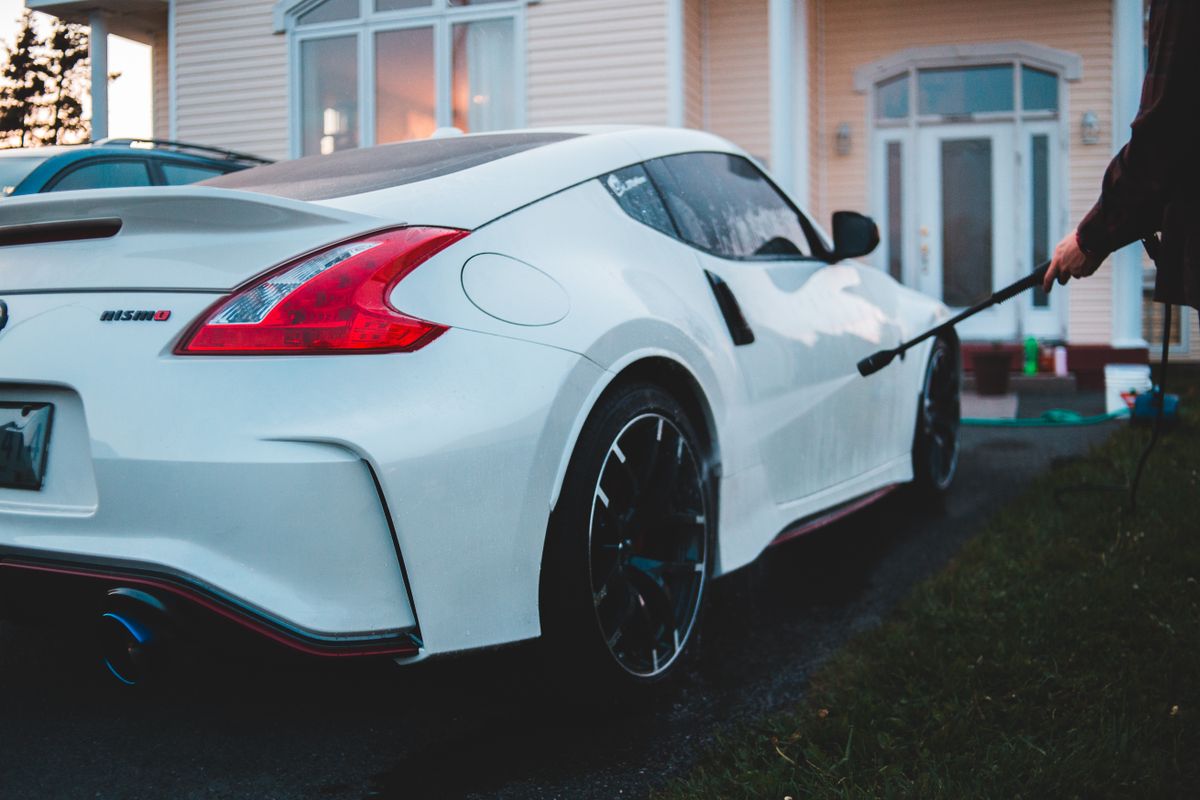
Photo by Erik Mclean on Pexels
| Washer Pressure Scenario | Water Flow Rate | Stock Orifice Size | Recommended Mod Orifice | Foam Density Outcome |
| --- | --- | --- | --- | --- |
| Compact 20V Battery Cleaner (300-500 PSI) | 0.5 - 0.8 GPM | 1.25 mm | 1.10 mm | Thick clinging foam layer |
| Mid-Range 24V-40V Cleaner (500-800 PSI) | 0.8 - 1.2 GPM | 1.25 mm | 1.10 mm | Dense professional snow foam |
| Heavy-Duty Dual 40V / Commercial (800-1200 PSI) | 1.2 - 1.5 GPM | 1.25 mm | 1.10 mm or 1.25 mm | Rich clinging shave-cream foam |
| Standard Gas Pressure Washer (2000-3000 PSI) | 2.0 - 3.0 GPM | 1.25 mm | 1.25 mm - 1.35 mm | Ultra-dense commercial snow foam |
Selecting the correct internal orifice size dictates whether your cordless washer sprays thick clinging foam or watery soap runoff.
Foam Cannon Adapter & Connection Assembly
This diagram illustrates how proprietary cordless wands interface with 1/4-inch quick-connect adapters and foam cannons.
Troubleshooting Weak or Watery Foam
| Symptom | Possible Cause | Diagnostic Step | Corrective Action |
| --- | --- | --- | --- |
| Watery, thin soap spray with fast runoff | Factory 1.25mm orifice installed on low-GPM machine | Unscrew foam cannon nozzle barrel and check orifice stamp | Replace 1.25mm orifice with 1.1mm brass orifice using a 7mm socket |
| Pulsing motor or intermittent pressure cutoff | 1.1mm orifice backpressure triggering unloader valve | Check battery charge level and unloader sensitivity | Slightly back off top soap knob toward (+) setting to lower restrictor resistance |
| No soap drawing from bottle | Clogged siphon tube or blocked air intake hole | Inspect suction tube connection and top breather pinhole | Clear debris from suction filter; clear top breather hole with a needle |
| Sputtering foam pattern with heavy pressure drops | Dried soap build-up inside stainless steel mesh tablet | Disassemble brass housing and inspect wire mesh mesh filter | Soak mesh tablet in warm vinegar bath for 30 minutes or replace mesh |
If your cordless setup produces runny suds instead of thick snow foam, use this step-by-step diagnostic matrix.
Pre-Wash Setup & Attachment Checklist
- Verify 1.1mm orifice is securely installed in the foam cannon brass body.
- Confirm correct quick-connect adapter is locked onto the cordless pressure washer wand.
- Pre-mix 2 oz foam soap with 10 oz warm water in the foam bottle (do not shake vigorously).
- Check that the washer battery is fully charged (minimum 80% recommended).
- Adjust foam knob to maximum soap (+) direction before pulling trigger.
- Test spray pattern on driveway ground prior to aiming at vehicle paint.
Pro Tip: Preserving Battery Voltage and Thermal Run Time
> Expert Insight: Running a restricted 1.1mm orifice increases pump head pressure by 15–20%, causing battery cell temperatures to rise faster than standard fan nozzles. To maximize total run time, apply your foam layer in swift, continuous sweeps across the vehicle in under 3 minutes, then immediately detach the cannon and switch to a high-flow 40-degree rinse nozzle. Avoid holding the trigger down while adjusting your soap knob to prevent thermal cutout on 20V battery packs.
Recommended Next Steps & Progression
Your decision: Determine whether your cordless pressure washer requires a 1.1mm orifice swap and select the correct wand adapter fitting.
Do this next: Order a 1.1mm brass orifice nozzle, swap it into your foam cannon, pre-mix 2 oz soap with 10 oz warm water, and test foam coverage.
Related resource: Explore technical guides on spray nozzle selection for post-foam vehicle rinsing.
Check out our all-in-one Portable Cordless Pressure Washer optimized for automotive detailing and low-GPM foam cannon attachment.
Take these actions to optimize your portable detailing workflow:
Selecting the Right Adapter & Orifice Size for Your Washer
To get thick snow foam from a cordless pressure washer (300-800 PSI), swap the factory 1.25mm orifice to a 1.1mm orifice and use warm water with high-foaming car shampoo.
Best choice for
- 1.1mm Orifice Nozzle Mod — Restricts water volume to build proper backpressure for thick foam at low GPM.
- Brand-Specific 1/4-inch Brass Adapter — Ensures leak-free connection between original wand and standard 1/4" quick-connect foam cannons.
- Using stock 1.25mm orifice nozzles on battery pressure washers rated below 1,000 PSI
- Pouring undiluted car soap directly into the foam cannon bottle without warm water pre-mixing
- Low-pressure Soap Sprayer Bottle Attachment — Requires no orifice swap but produces thin suds rather than thick clinging snow foam.
Recommended Cordless Pressure Washers & Foam Attachments
Photo by Srattha Nualsate on Pexels
These compact battery power cleaners pair perfectly with low-GPM foam cannons for efficient, hose-free car washing.
Connecting a professional foam cannon to a battery-powered pressure washer requires understanding fluid dynamics. Standard pressure washer foam cannons are optimized for gas units producing 2.0 to 3.0 GPM (gallons per minute) at 2,000+ PSI. When fed by a battery washer operating at 0.7 GPM and 500 PSI, the venturi effect inside the cannon fails to siphon sufficient soap solution, resulting in thin, watery suds.
The 1.1mm Orifice Modification
The internal orifice is a tiny threaded brass jet inside the cannon's rear housing. Standard cannons ship with a 1.25mm opening. By swapping this out for a 1.1mm orifice, you reduce the internal bypass volume by approximately 22%. This restriction forces the lower GPM flow into a high-velocity jet, restoring the vacuum pull needed to pull soap up the dip tube and thoroughly aerate it against the internal stainless steel mesh filter.
To perform the swap:
Optimal Soap Dilution Formulas
Because cordless pressure washers deliver less total water per minute, traditional 1:10 soap dilution ratios dilute too quickly when hitting the paint. For low-GPM battery cleaners, use a concentrated 1:4 or 1:5 ratio:
- 1:5 Ratio (Standard): 2 oz (60 ml) high-foaming car shampoo + 10 oz (300 ml) warm water (approx. 100°F / 38°C).
- 1:4 Ratio (Heavy Dirt/Winter Road Salt): 3 oz (90 ml) shampoo + 12 oz (360 ml) warm water.
Standard Gas Setup vs. Cordless Foam Cannon Setup
| Operating Scenario | Typical Pressure (PSI) | Flow Rate (GPM) | Recommended Orifice Size | Soap-to-Water Ratio |
| --- | --- | --- | --- | --- |
| Ultra-Light 20V Battery Cleaner | 300 - 450 PSI | 0.5 - 0.7 GPM | 1.10 mm | 1:4 (3 oz soap : 12 oz water) |
| Standard 24V-40V Battery Washer | 500 - 800 PSI | 0.8 - 1.1 GPM | 1.10 mm | 1:5 (2 oz soap : 10 oz water) |
| High-Output Commercial Cordless | 900 - 1200 PSI | 1.2 - 1.4 GPM | 1.10 mm or 1.25 mm | 1:7 (2 oz soap : 14 oz water) |
| Commercial Gas Pressure Washer | 2500 - 3500 PSI | 2.5 - 3.5 GPM | 1.25 mm - 1.35 mm | 1:10 (2 oz soap : 20 oz water) |
This comparative breakdown details the differences in operational parameters between gas-powered washers and portable battery cleaners.
5 Critical Mistakes to Avoid When Foaming with Battery Power
Avoid these common setup errors to preserve your equipment and achieve optimal cleaning performance.
Related Vehicle Detailing Concepts
- Best Foam Cannon Attachments for Cordless Pressure Washers: Buying Guide
- Fix Cordless Pressure Washer Foam Cannon Not Foaming (Step-by-Step)
- How to Use a Cordless Pressure Washer Drawing Water From a Bucket or Rain Barrel
Frequently Asked Questions
Answers to common queries regarding battery life, bucket drawing, soap ratios, and equipment maintenance.
Final Action Plan for High-Density Foam Detailing
Your decision: Determine whether your cordless pressure washer requires a 1.1mm orifice swap and select the correct wand adapter fitting.
Do this next: Order a 1.1mm brass orifice nozzle, swap it into your foam cannon, pre-mix 2 oz soap with 10 oz warm water, and test foam coverage.
Related resource: Explore technical guides on spray nozzle selection for post-foam vehicle rinsing.
Check out our all-in-one Portable Cordless Pressure Washer optimized for automotive detailing and low-GPM foam cannon attachment.
Ready to transform your car wash routine? Follow these final steps to get maximum performance out of your portable setup.
Cover photo by Erik Mclean on Pexels.