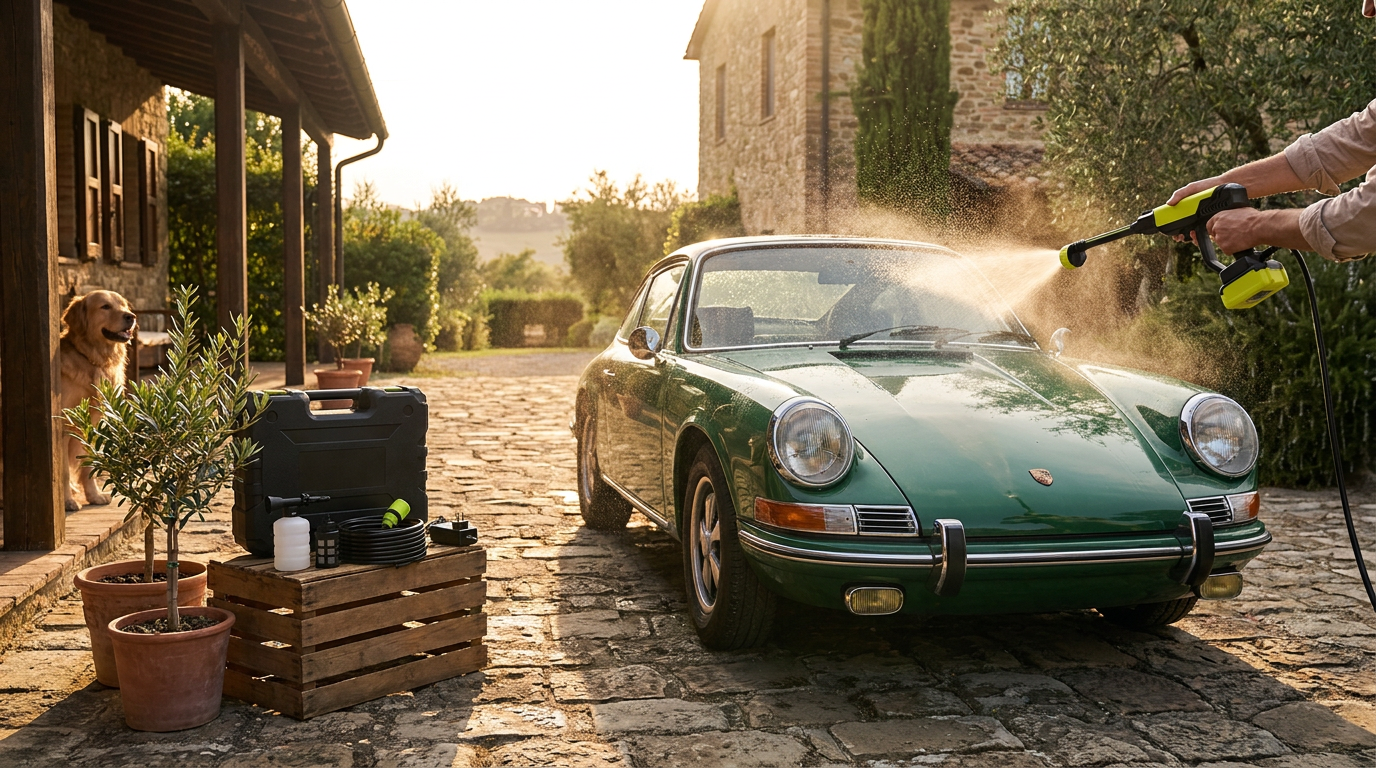
How do Cordless Pressure Washers clean cars effectively?
 Sam VasquezBuying Guide Lead
July 5, 2026 — Cordless Pressure Washers effectively clean vehicles by utilizing high-pressure nozzles and battery-powered pumps to displace surface contaminants without a tethered water or power source.
Mobile detailers and urban owners benefit from these systems because traditional gas units are often overkill for automotive paint. If you live in an apartment or use a storage facility, battery-operated systems provide a professional finish without the logistics of dragging hoses across parking lots.
Can a portable power washer for cars replace a professional car wash?
Yes, for maintenance washes and surface decontamination, a portable power washer provides sufficient pressure to remove road film and brake dust without damaging clear coats. Testing by Car and Driver on units like the Craftsman CMEPW2100 shows that electric pressure levels are the industry benchmark for vehicle care. In the cordless sector, success depends on balancing water flow and pressure. Between high-pressure corded and portable battery units, cordless is preferable for 90% of maintenance tasks due to lower setup times.
Avoid these units for stripping old wax or cleaning heavy industrial equipment, as battery-operated systems lack the raw PSI for those tasks. However, for running a foam cannon on a daily driver, portability is key. Teslong notes their mobile power washers function perfectly even without a fixed water source by drawing from a bucket or tank. Sequence is what separates a swirl-free result from a paint-correction appointment, and the battery workflow follows the same law as any wash: never rub a dry, dirty panel. The order that works — full-vehicle rinse first to float off the grit layer, foam or soap applied and given a few minutes of dwell time, then the rinse pass working strictly top-down so dirty water never crosses a cleaned panel. Wheels and lower rockers come last with their own mitt or brush, since they carry the abrasive brake dust and road grit that scratches everything they touch. Two environmental notes complete the technique: work in shade or in the cooler hours, because soap drying on a sun-hot panel leaves mineral spotting faster than a cordless unit can rinse it, and on hot days split the job into sides, rinsing each before moving on. The pressure washer replaces the hose, not the method — owners who bring drive-through-carwash impatience to a cordless unit get drive-through results.
Which battery operated car wash spray gun is best for detailing?

Photo by Tima Miroshnichenko on Pexels
Choosing the right spray gun depends on prioritizing raw power or ergonomics. Budget-friendly handheld units often include a 5-in-1 nozzle to swap between a wide fan for rinsing and a tight stream for wheels. Chemical Guys offers the ProFlow PM2000, which sets a 2030 PSI standard that many cordless manufacturers aim to emulate.
A mid-range cordless unit using a common 18V or 20V battery platform is the most practical choice for car washing. Integrated spray guns, housing the motor and pump in the handle, are the most convenient for quick rinses. These eliminate separate base units, making them the ultimate tool for mobile maintenance. Winter is when a cordless unit earns its keep and when it is easiest to kill. The case for: road salt is the most corrosive thing a daily driver wears, and a five-minute rinse of the lower panels, wheel arches, and underbody edges every week or two of salt season does more for the car's long-term body health than any summer detailing ritual — exactly the quick, low-setup job battery units excel at. The care side has two rules. First, water freezes: after any cold-weather session, run the pump for a few seconds with the intake out of the water to purge the lines, because residual water freezing inside the pump head is the most common winter death in this category — and store the unit somewhere that stays above freezing, not the unheated shed. Second, lithium batteries sulk in the cold: a battery that lives indoors and walks out to the job delivers full runtime, while one stored at freezing temperatures shows up at half strength. Ten seconds of purging and an indoor shelf are the whole winterization program.
Quick answers
Q: How much PSI is safe for washing a car? A: For most automotive surfaces, 1200 to 2000 PSI is ideal. Using a Cordless Pressure Washer within this range, as cited by Chemical Guys, removes dirt without risking damage to paint or trim.
Q: Can I use a bucket as a water source? A: Yes, most portable power washers include a suction hose with a filter. As noted by Teslong, these units allow you to wash a car anywhere using just five gallons of water.
Q: How long does the battery last during a car wash? A: Most high-quality spray guns provide 20 to 30 minutes of continuous runtime. This is typically enough for a full soap and rinse cycle on a sedan.
Q: Are cordless pressure washers powerful enough for foam cannons? A: Many modern cordless units can run a foam cannon, though foam may be thinner than with gas units. Use a foam cannon rated for lower PSI flow to maximize suds.
For more information, see our guide on Choosing Cordless Pressure Washers for Mobile Car Maintenance or explore the Battery Operated Car Wash Spray Gun. You can also read about the Cordless Pressure Washers and the Mobile Spray Gun Shift.
Learn more about Cordless Pressure Washers at https://cordlesspressurewasher.com.
Washing where you live: the apartment reality
The portability pitch collides with one unglamorous fact: many apartment complexes, HOAs, and municipalities restrict car washing in lots and driveways — usually a stormwater rule about soap runoff reaching drains rather than an arbitrary bylaw. Before building a routine, the two-minute homework is a look at the lease and a question to management, and the answer shapes the method. Where soap is the issue, a rinse-only decontamination pass (which handles road film and salt, the jobs that matter most) often stays within the rules; the full-soap wash then happens occasionally at a self-serve bay, with the cordless unit covering the maintenance rinses between. The hybrid approach — waterless or rinseless wash products for the paint, cordless washer for wheels and arches where the real grit lives — uses a couple of gallons total and produces next to no runoff, which keeps both the property manager and the storm drain satisfied. And wherever the wash happens, the courtesy rules are the same: mind the runoff path, skip the space next to a neighbor's open windows, and leave the shared spigot area cleaner than it was found.
Sources
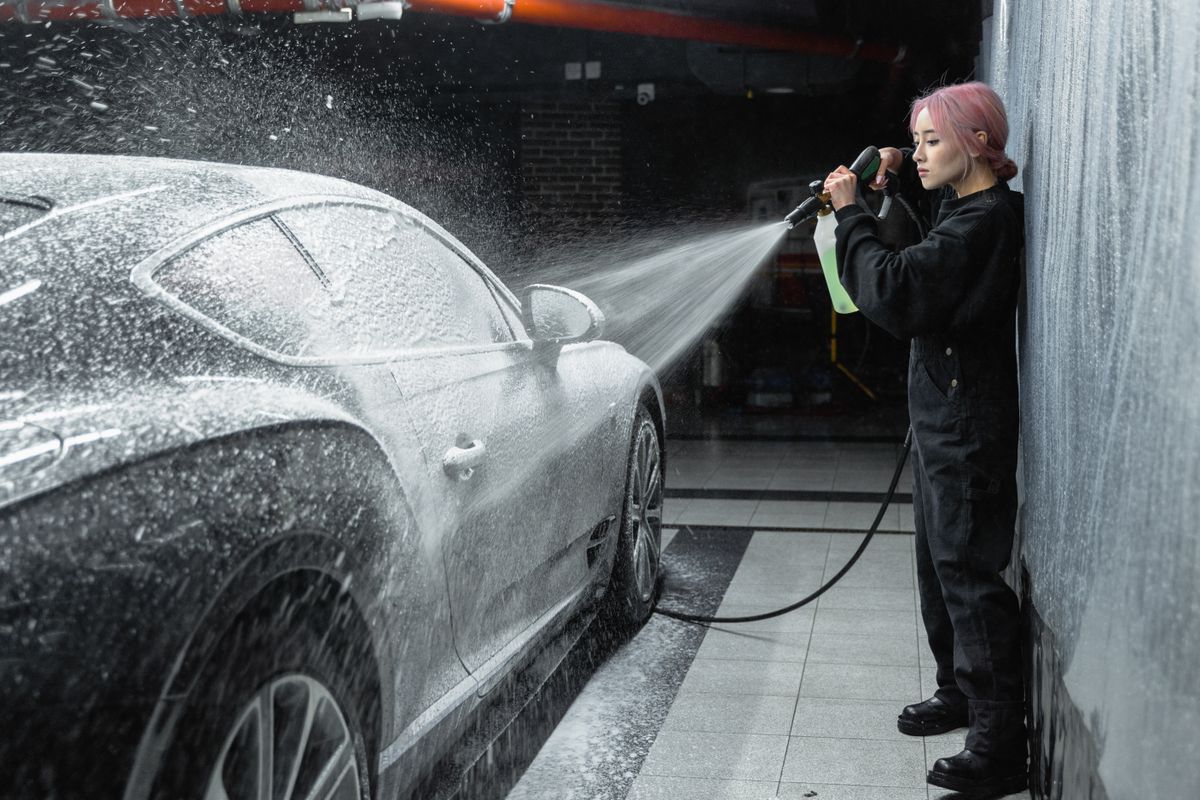
Photo by Tima Miroshnichenko on Pexels