40-Degree vs 25-Degree Spray Nozzles: Which Is Best for Car Detailing?
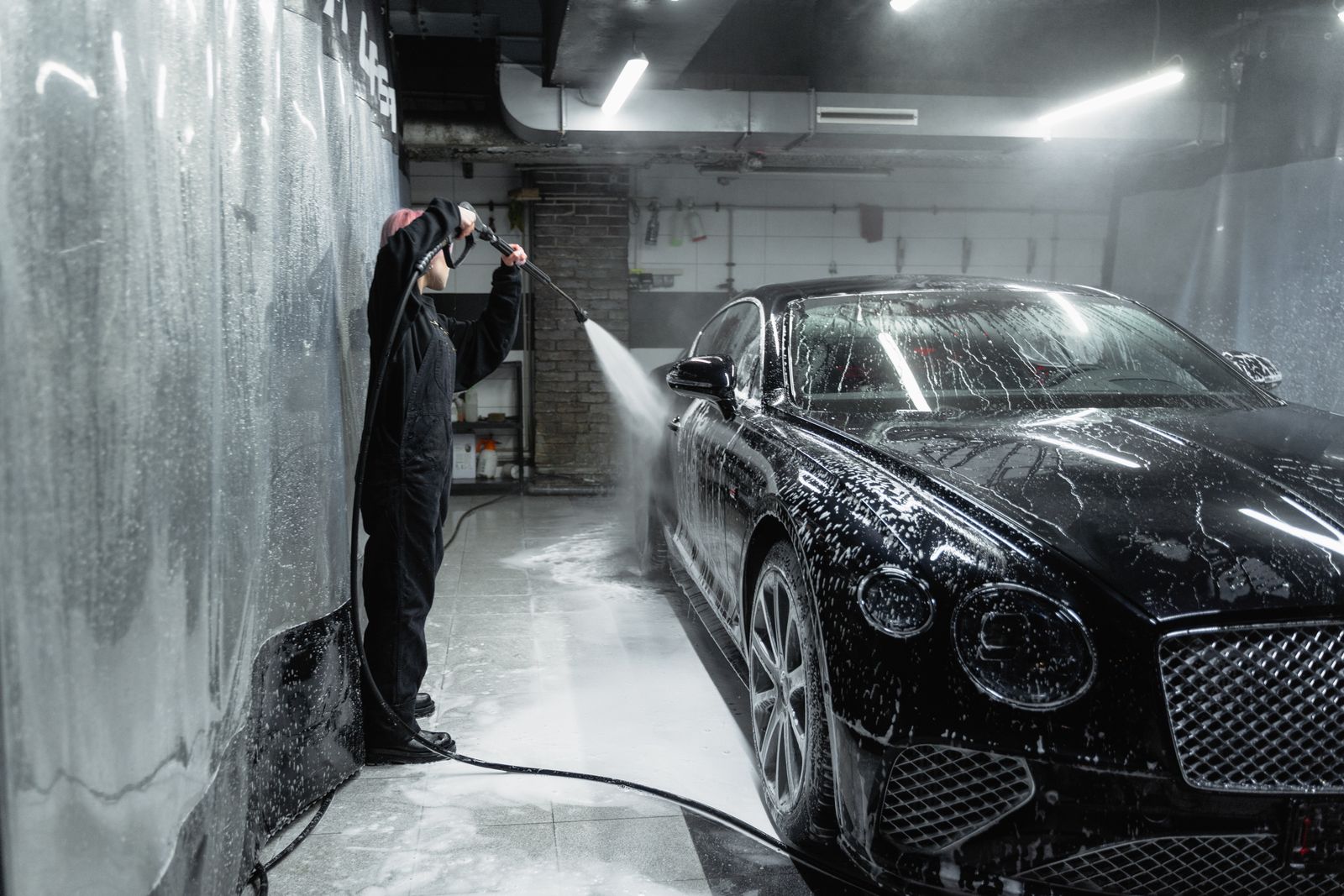
Which nozzle angle should you click onto your wand for car detailing? For standard vehicle paint, glass, clear coat, and vinyl wraps, always choose the 40-degree (white) nozzle. It provides wide, safe pressure dispersion to prevent costly clear coat etching, paint stripping, and decal peeling. Reserve the narrower 25-degree (green) nozzle strictly for durable alloy wheels, rubber tires, and mud-caked undercarriages where heavy soil requires deeper blasting force.
Nozzle Comparison by Vehicle Detailing Scenario
| Detailing Scenario / Surface | 40-Degree (White) Nozzle | 25-Degree (Green) Nozzle | Safe Distance (Inches) | Primary Risk / Failure Mode |
| --- | --- | --- | --- | --- |
| Clear Coat Paint Panels (Hood, Roof, Doors) | Recommended (Default choice) | Avoid on sensitive paint | 12 – 18 inches | 25° tip can etch clear coat and strip wax protection |
| Alloy Wheels & Heavy Brake Dust | Moderate (May require scrubbing) | Recommended for tough grime | 8 – 12 inches | Holding < 8" can chip painted wheel finishes |
| Tires & Wheel Wells / Undercarriage | Light mud removal only | Recommended for heavy caked mud | 8 – 10 inches | 0°/15° tips gouge rubber; 25° safe at 8"+ distance |
| Windshield, Windows & Side Mirrors | Recommended (Safe glass rinse) | Not Recommended | 12 – 18 inches | Concentrated pressure risks trim seal degradation |
| Vinyl Wraps, Stripes & Decals | Recommended (Spray parallel to edges) | Prohibited (High risk of lifting) | 14 – 18 inches | Narrow fan angle tears vinyl film and lifts graphic edges |
Trade-Off Analysis: Impact Force vs. Paint Safety
Photo by Helena Jankovičová Kováčová on Pexels
Pros
- 40-Degree Nozzle: Maximum surface area coverage per pass, significantly cutting overall wash time on large body panels.
- 40-Degree Nozzle: Safest pressure profile for preserving clear coat finish, spray waxes, sealants, and ceramic coatings.
- 25-Degree Nozzle: Superior cutting power for stripping caked mud, road salt crust, and baked brake dust off wheels.
- 40-Degree Nozzle: Struggles to dislodge stubborn, baked-on road tar or heavy wheel arch mud without chemical pretreatments.
- 25-Degree Nozzle: High risk of clear coat etching, paint chipping, or vinyl decal peeling if held closer than 12 inches.
- 25-Degree Nozzle: Strips protective wax and spray sealants off car paint due to concentrated impact force per square inch.
Pro Detailer Rule: The 12-Inch Paint Distance Buffer
Always establish a minimum 12-inch buffer distance between your spray tip and vehicle clear coat, even when using portable cordless pressure washers. Lower-PSI cordless units (typically 300 to 800 PSI) deliver safe cleaning force, but closer proximity concentrates water droplets into a pinpoint beam that can slice thin clear coat edges or force moisture behind door rubber seals.
Paint-Damaging Mistakes to Avoid During Car Detailing
Quick Selector: Which Nozzle Should You Click In Right Now?
- Are you cleaning main vehicle body panels, hood, roof, windows, or vinyl decals? → Yes: Select the 40-Degree (White) Nozzle. Maintain a 12 to 18-inch standoff distance.. No: Proceed to the next surface check.
- Are you cleaning metal alloy wheels, tires, suspension parts, or mud-caked undercarriage metal? → Yes: Select the 25-Degree (Green) Nozzle. Keep at least 8 to 10 inches from tire rubber and painted wheels.. No: Use the 40-Degree (White) Nozzle as your safe default for all unlisted exterior vehicle surfaces.
Visualizing Nozzle Fan Physics & Vehicle Safety Zones
Summary: Key Nozzle Safety Rules for Vehicle Care
Which Spray Angle Fits Your Detailing Setup?
Photo by Helena Jankovičová Kováčová on Pexels
For general auto detailing, the 40-degree (white) nozzle is the default standard for paint, body panels, and glass. The 25-degree (green) nozzle is a specialized tool reserved strictly for wheels, tires, and heavily caked undercarriage mud.
Best choice for
- 40-Degree (White) Nozzle — Disperses pressure over a wide area, removing dirt while protecting clear coat, ceramic coatings, and wax layers.
- 25-Degree (Green) Nozzle — Delivers higher impact force per square inch needed to break down dense grime on durable metal or rubber surfaces.
- Avoid using a 25-degree nozzle within 12 inches of chipped paint, cracked clear coat, or vinyl wraps, as concentrated PSI can cause peeling.
- Avoid using a 15-degree (yellow) or 0-degree (red) nozzle anywhere on vehicle exterior surfaces.
- Multi-Pattern 5-in-1 Quick-Connect Nozzle — Allows cordless pressure washer users to dial between 40°, 25°, and rinse patterns without swapping physical tips.
Recommended Cordless Washers & Attachments for Car Detailing
Real-World Washing Cases: Mud, Bugs, Brake Dust, and Paint Protection
Removing Dried Bug Splatters from Hood and Bumper — Use 40-degree white nozzle with pre-soak soap. Maintain a 12-inch distance to soften bugs without force-etching delicate clear coat.
Cleaning Baked Brake Dust Off Alloy Rims — Apply dedicated wheel cleaner, let dwell 3 minutes, then blast away loosened grime using the 25-degree green nozzle from 10 inches.
Rinsing Off Soap Foam After Hand Washing — Use the 40-degree white nozzle for swift, wide-angle rinsing that flushes suds out of door gaps without disturbing underlying sealants.
Washing Off Heavy Off-Road Undercarriage Mud — Use the 25-degree green nozzle directed at steel frame rails, suspension components, and inner plastic fender liners.
When water leaves a pressure washer wand, the total kinetic energy generated by the pump is dispersed across the spray fan width. A 40-degree nozzle spreads that energy over a wide arc, resulting in lower impact pressure per square inch (PSI per unit area). This gentle sweeping action lifts surface dust and road film without stressing clear coat bonds or stripping paint sealants.
In contrast, a 25-degree nozzle narrows the fan width by nearly half. This concentrates the water stream into a denser impact zone, increasing surface impact force significantly. While this added force is invaluable for chipping away baked brake dust from tough alloy rims or knocking clods of dried mud from steel wheel wells, that same concentrated impact makes it hazardous for delicate automotive clear coats.
How Cordless Pressure Washers Change the Equation
Traditional gas pressure washers often output 2,500 to 3,500 PSI, where even a 40-degree nozzle can damage paint if held too close. Portable cordless pressure washers operate in a safer, optimized band—typically between 300 and 800 PSI. This makes cordless washers far more forgiving for home car care. However, spray tip geometry still matters: holding a 25-degree nozzle just a few inches from a pre-existing paint chip on a cordless washer can still lift the paint edge or degrade wax protection. Using the right nozzle for the right zone ensures your vehicle stays pristine without unnecessary risk.
Further Reading on Safe Vehicle Pressure Washing
Explore our helpful detailing guides to keep your vehicle looking showroom-new without risking paint damage:
- Safe PSI for Car Washing: How to Clean Your Vehicle Without Damaging Paint
- Troubleshooting Car Wrap Cleaning: How to Pressure Wash Decals Without Peeling
- Can Pressure Washers Ruin Clear Coat? Car Paint Safety FAQ
Frequently Asked Questions About Car Wash Nozzles
Your Action Plan for Safe Car Detailing
Your decision: Choose the 40-degree white nozzle as your standard detailing attachment for body paint and glass, switching to 25-degree green only for wheels and mud.
Do this next: Equip your cordless pressure washer with a 40-degree nozzle, maintain a 12-inch distance from paint, and use a dedicated soap cannon for foaming.
Related resource: Explore our complete automotive detailing guide cluster for cordless pressure washer tips.Cordless Portable Water Cleaner For Everyday Home Use
Cover photo by Tima Miroshnichenko on Pexels.