Cordless Pressure Washer Battery Specs Explained: Volts vs. Amp-Hours (Ah)
Should you prioritize high battery voltage (V) or high amp-hours (Ah) for your cordless pressure washer?
Choose higher voltage (40V) if you need maximum water pressure (PSI) to strip stubborn dirt, mold, and grime from hard surfaces. Choose higher amp-hours (4.0Ah–6.0Ah) if you need extended continuous runtime to finish large jobs without stopping to recharge. Total usable cleaning energy is measured in Watt-Hours ($Wh = V \times Ah$). For light car washing, a 20V 4.0Ah (80Wh) battery provides the best balance of low weight and adequate runtime.
Battery Spec Matrix Across Common Cleaning Scenarios
| Cleaning Scenario | Battery Setup (V & Ah) | Total Energy (Wh) | Expected Runtime | Performance & Handling Trade-Off |
| --- | --- | --- | --- | --- |
| Weekly Vehicle Foam & Rinse | 20V 4.0Ah | 80 Wh | 18 – 22 mins | Lightweight wand handling; enough runtime for 1 sedan without wrist strain. |
| 2-Car Driveway Mud & Grime | 40V 4.0Ah | 160 Wh | 25 – 30 mins | High cleaning pressure (500+ PSI); heavier overall tool weight requiring two-handed grip. |
| Patio Furniture & Deck Spot Cleaning | 20V 2.5Ah | 50 Wh | 10 – 12 mins | Ultra-compact and easy to maneuver; limited runtime requires quick task execution. |
| Deep House Siding & Gutter Rinse | 40V (Dual 20V 5.0Ah) | 200 Wh | 35 – 45 mins | Maximum continuous power output; heavier battery footprint best suited for low-speed ECO mode. |
Compare how different voltage and amp-hour configurations handle real-world home and vehicle cleaning tasks.
High Voltage vs. High Amp-Hours: Trade-Offs & Failure Modes
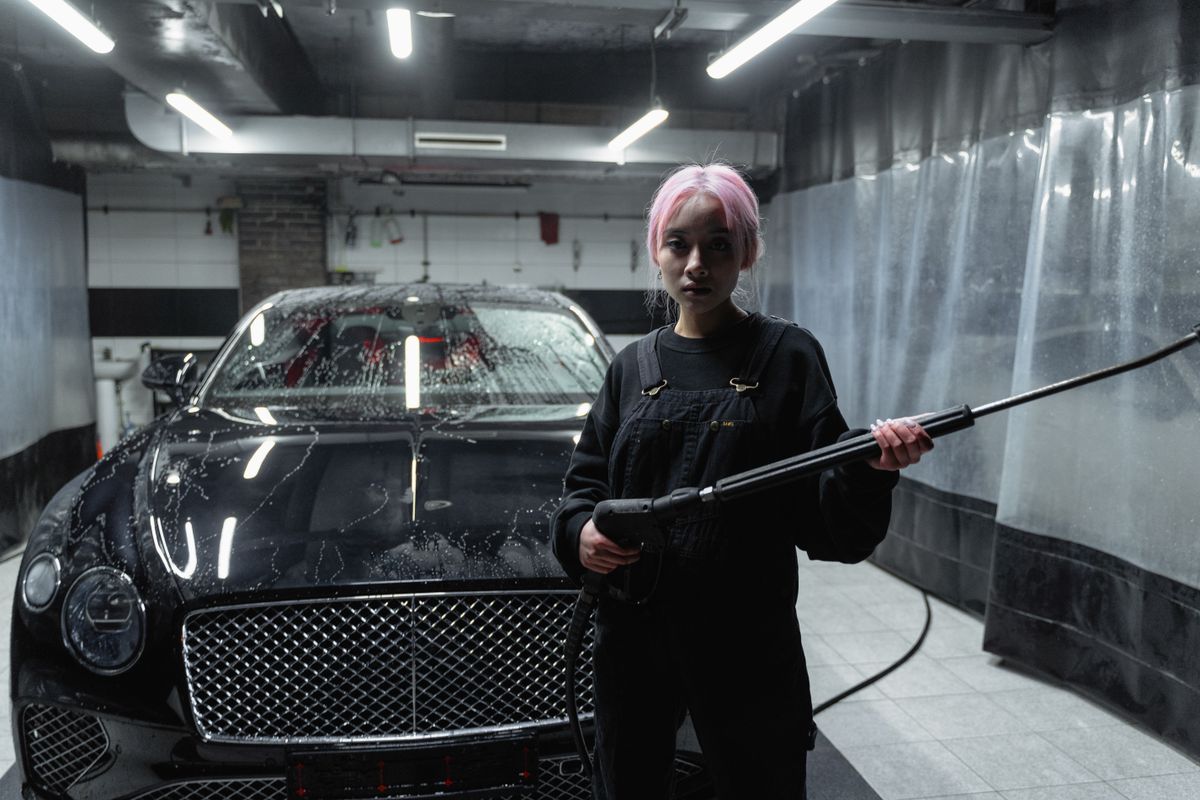
Photo by Tima Miroshnichenko on Pexels
Pros
- High Voltage (36V–40V) delivers true high-PSI water spray capable of lifting baked-on mud and grime.
- High Amp-Hours (4.0Ah–6.0Ah) double or triple uninterrupted spray time on a single charge.
- Higher Watt-Hour (Wh) packs maintain consistent power output without steep mid-job voltage sag.
- Failure Mode: High-voltage, low-Ah packs (e.g., 40V 2.0Ah) experience severe thermal throttling under heavy load, shutting down in under 8 minutes.
- Failure Mode: High-Ah battery packs (6.0Ah+) add excessive weight (up to 2.5 lbs extra) directly to portable spray wands, causing severe wrist fatigue.
- High-voltage systems require dedicated chargers and typically carry higher initial replacement costs.
The 4 Biggest Battery Selection Mistakes Homeowners Make
Avoid these frequent missteps when evaluating battery ratings for portable pressure washers.
Estimating Total Usable Energy (Watt-Hours)
Use the formula $Wh = Volts \times Amp-Hours$ to calculate true battery energy reserve before purchasing.
Essential Battery Spec Takeaways
- Voltage = Motor Muscle / PSI Output. Higher voltage allows the motor to push water through restrictive nozzles at higher pressure.
- Amp-Hours = Gas Tank Size / Runtime. Higher Ah ratings store more electrical charge, allowing the motor to run longer.
- Watt-Hours = True Energy. Always multiply V x Ah to compare total work capacity across different voltage systems.
- For one-handed vehicle washing, target 20V 4.0Ah (80Wh) for ideal power-to-weight balance.
- For hardscape and patio cleaning, target 40V (or dual 20V) with at least 4.0Ah per battery pack.
Detailed Technical Battery Specification Breakdown
| Battery Class Label | Nominal Voltage | Capacity (Ah) | Energy (Wh) | Avg Pack Weight | Best Application Fit |
| --- | --- | --- | --- | --- | --- |
| 20V Compact | 18 V continuous | 2.0 Ah | 36 Wh | 0.9 lbs | Light garden watering, outdoor gear rinse, quick shoe cleaning. |
| 20V Extended Capacity | 18 V continuous | 4.0 Ah | 72 – 80 Wh | 1.4 lbs | Car washing, foam cannon application, patio furniture cleaning. |
| 20V Maximum Runtime | 18 V continuous | 6.0 Ah | 108 Wh | 2.1 lbs | Extended boat or RV rinses where tool is set down frequently. |
| 40V Heavy-Duty | 36 V continuous | 4.0 Ah | 144 – 160 Wh | 2.8 lbs | Stained decks, brick walkways, heavy mud on truck undercarriages. |
Technical comparison of popular battery tier classes used in modern portable water pressure cleaners.
Lithium-Ion Battery Care & Storage Schedule
- Before Every Cleaning Session — Ensure battery casing is fully dry and standard room temperature. Never charge or attach a battery that has been sitting in freezing outdoor weather.
- Immediately After Use — Allow battery pack to cool down for 15 minutes before placing it on the fast charger. Charging hot lithium cells accelerates permanent capacity degradation.
- Monthly During Off-Season — Check charge level. Store batteries at roughly 40%–60% charge (2 out of 4 indicator LEDs) in a cool, dry climate (50°F–70°F). Avoid leaving batteries at 100% full charge for months.
- Annually / Pre-Spring — Inspect copper contacts for corrosion or debris. Clean terminal pins with dry micro-fiber cloth and isopropyl alcohol if needed.
Decision Framework: Matching Battery Specs to Tasks
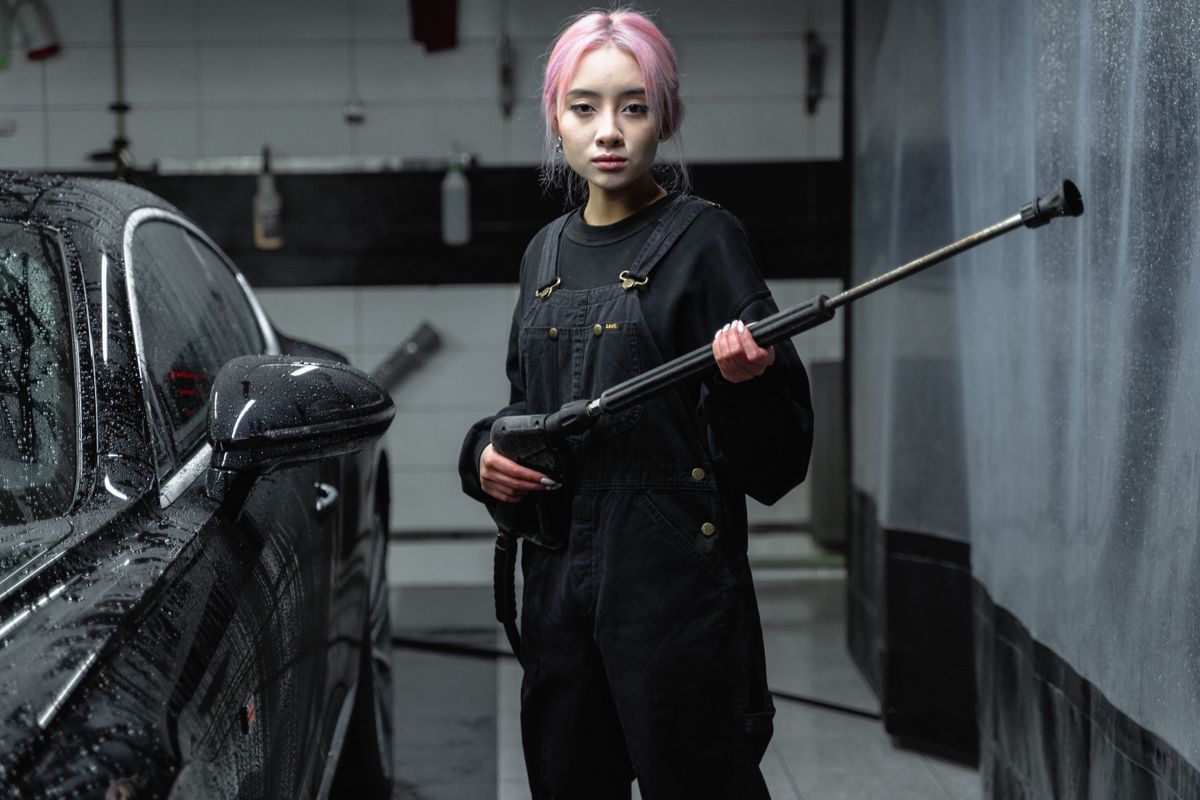
Photo by Tima Miroshnichenko on Pexels
Choose higher voltage (40V+) if raw water pressure (PSI) for hard surfaces is critical. Prioritize amp-hours (4.0Ah–6.0Ah) if continuous cleaning runtime is your biggest obstacle.
Best choice for
- 20V with 4.0Ah Battery Pack — Offers an optimal balance of low wand weight (under 4.5 lbs overall) and 20 minutes of continuous foam and rinse capacity.
- 40V System with 4.0Ah+ Battery — Higher voltage drives the motor hard enough to hit 500+ PSI while 4.0Ah prevents mid-job shutdowns.
- Avoid 2.0Ah batteries for high-pressure jobs—they drain in under 10 minutes under continuous motor load.
- Avoid 40V 6.0Ah battery packs on handheld top-mount sprayers if single-handed maneuverability is required.
- Dual-Battery 20V System (40V Combined) — Allows sharing standard 20V batteries from existing power tools while obtaining high-voltage output when both batteries are docked.
Recommended Cordless Pressure Washers & Battery Systems
Explore portable water cleaning setups optimized for capacity, ergonomics, and home cleaning needs.
Real-World Task Runtime Scenarios
Washing a 4-Door SUV & Wheels — Use a 20V 4.0Ah battery. Expect approximately 20 minutes of trigger time in High mode, giving you enough water coverage to pre-rinse, soap-foam, and final-rinse the entire body and all four wheels.
Scrubbing a 250 sq ft Concrete Patio — Use a 40V 4.0Ah battery (or dual 20V 4.0Ah packs). High voltage is necessary to maintain pressure through a surface cleaning nozzle, yielding around 25 minutes of intense cleaning.
Rinsing Camping Gear & Mountain Bikes at Trailhead — Use a 20V 2.5Ah battery. The compact footprint makes transport easy, providing 12 minutes of quick rinse time using siphon water from a bucket or jerrycan.
Here is how different battery setups perform on common weekend tasks around the house.
To understand cordless pressure washer performance, it helps to separate Voltage from Amp-Hours using a simple automotive analogy:
- Voltage (V) = Engine Size. Voltage represents electrical potential or force. In a pressure washer pump motor, higher voltage acts like a bigger engine. It dictates how hard the pump can push water through small nozzle orifices—translating directly into pounds per square inch (PSI).
- Amp-Hours (Ah) = Gas Tank Capacity. Amp-hours measure current volume over time. A 4.0Ah battery can deliver 4 amps of current for 1 hour, or 8 amps for 30 minutes. It represents the size of your fuel tank.
The True Benchmark: Watt-Hours (Wh)
When comparing different tools, looking at Voltage or Amp-Hours in isolation can be misleading. A 40V 2.0Ah battery might sound more powerful than a 20V 4.0Ah battery, but both hold the exact same total energy reserve: $$\text{Total Energy (Wh)} = \text{Volts (V)} \times \text{Amp-Hours (Ah)}$$ $$\text{40V} \times \text{2.0Ah} = \text{80 Watt-Hours}$$ $$\text{20V} \times \text{4.0Ah} = \text{80 Watt-Hours}$$While both deliver 80 Watt-Hours of energy, the 40V system expends that energy faster to deliver stronger spray force (higher PSI), whereas the 20V system expends it more slowly, giving you lower pressure but longer spray time.
Frequently Asked Questions About Battery Volts and Amp-Hours
Direct answers to common technical questions regarding cordless pressure washer battery packs.
Your Battery Setup Action Plan
Your decision: Determine whether your priority is light weight for quick jobs (20V 4.0Ah) or max pressure for heavy outdoor cleaning (40V 4.0Ah+).
Do this next: Calculate your total job time and pick a battery pack that delivers at least 25% more Watt-Hours than your estimated task duration.
Related resource: Explore our full catalog to see how portable cordless pressure washers streamline everyday cleaning around your home and garden.
Ready to upgrade to a smarter, portable cleaning routine? Explore our full line of compact Cordless Pressure Washers designed for maximum efficiency and hassle-free home and auto care at cordlesspressurewasher.com.
Take these steps to select the right battery configuration for your pressure washer setup.
Further Reading on Cordless Pressure Washer Power
Connect reader to relevant cluster and pillar pages.
Cover photo by Tima Miroshnichenko on Pexels.