Handheld Pressure Washer for Boat Cleaning Guide
 Priya RamanSenior Analyst
May 19, 2026. This technical overview examines the most effective methods for maintaining marine vessels using portable, battery-operated cleaning equipment. It is designed for boat owners who require an efficient, cord-free solution for dockside or offshore maintenance.
The Challenges of Marine Growth and Salt Accumulation
Marine environments present a unique set of challenges that traditional cleaning tools often fail to address without significant effort. Unlike a car or a patio, a boat is constantly exposed to salt spray, which, if left to dry, crystallizes and can abrade delicate surfaces like gel coats and polished brightwork. According to Motor Boat & Yachting (MBY), the best pressure washers for boats must have an adjustable range that allows the operator to dial back the pressure to protect older gel coats, fiberglass, and wood. High-pressure streams intended for concrete can inadvertently strip away protective waxes or even force water into the fiberglass laminate, leading to osmotic blistering over time. Furthermore, traditional corded pressure washers are often impractical on the water. Dragging a 120V power cable across a wet dock or attempting to find a GFCI outlet near a slip creates safety hazards and logistical bottlenecks. For owners of smaller craft, such as catamarans or center consoles, the bulk of a standard unit makes storage nearly impossible. This is why many sailors, such as those in the Sailing and Cruising community, have noted that compact units like the Karcher K1800PS are favored specifically because they are easy to store while remaining powerful enough for a thorough clean. Beyond the hull, specialized equipment like cordless power washers for mountain bikes share similar requirements for portability and gentle pressure, though marine applications must specifically account for salt. When cleaning near sensitive materials, it is also helpful to understand safe PSI levels for carbon fiber bike frames, as many of the same material safety principles apply to high-end carbon fiber masts or racing hulls.
Leveraging Cordless Pressure Washers for On-Board Maintenance
Photo by Max Grakov on Pexels
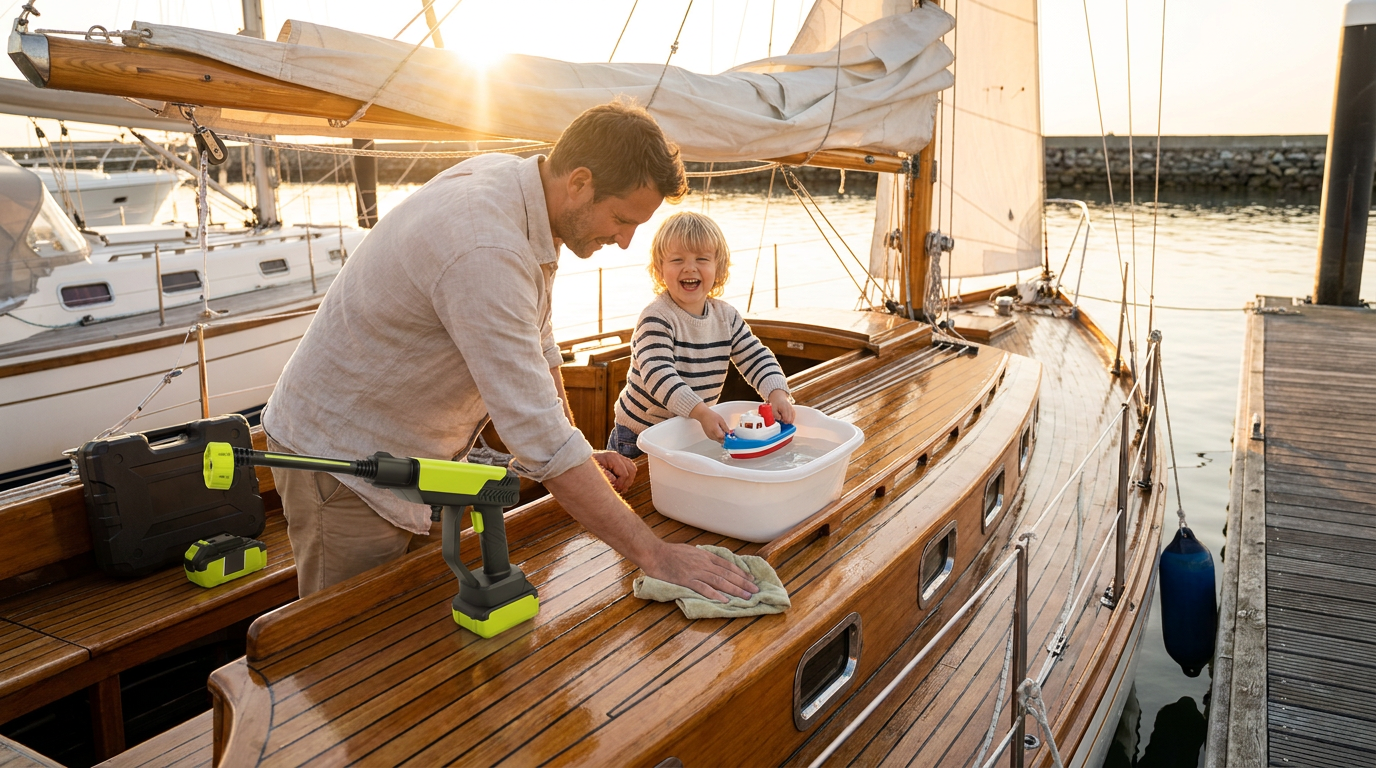
The primary advantage of modern cordless pressure washers in a nautical context is their ability to draw water from any source, including a bucket or the body of water the boat is floating in. Power Boating Magazine highlights that a compact, lightweight cordless powered water nozzle—weighing as little as 3.7 lbs.—can connect to a standard .625 inch garden hose or draw from a remote source. This functionality is a game-changer for cleaning the deck after a day of fishing or rinsing off the anchor locker. These battery-operated jet wash units typically offer around 300 to 600 PSI, which is the "sweet spot" for marine use—strong enough to lift fish scales and dried salt, but gentle enough to avoid damaging teak or vinyl upholstery. Because these units are rechargeable, they eliminate the need for an onboard generator or shore power. When using these tools, it is vital to follow specific saltwater removal tips for portable washers to ensure that the internal components of the pump do not corrode. Most handheld units are designed with portability in mind, fitting into small lockers or under-seat storage areas that would never accommodate a gas-powered alternative. As seen in practical testing by independent reviewers on platforms like YouTube, a portable jet wash is often evaluated not just on its raw power, but on its ability to reach tight corners around the outboard motor or the swim platform where grime accumulates. For those who also use their equipment for land-based tasks, these devices function effectively as a rechargeable power cleaner for patio furniture or a cordless spray cleaner for car wash duties, making them a versatile investment for any boat owner who also manages a home or a fleet of vehicles.
Selecting and Operating the Right Handheld Unit
Choosing the correct cordless pressure washer for a boat requires balancing runtime with physical weight. A unit that is too heavy will cause fatigue during a full hull rinse, while one with a small battery might die before the task is complete. When operating on a boat, always start with the widest spray pattern—usually the 40-degree nozzle—to test the surface's resilience. This is particularly important on wooden trim or older fiberglass where the bond between the gel coat and the laminate may have weakened. If you are cleaning a mountain bike or other recreational gear on the dock, remember that a cordless power washer for mountain bikes is often the same tool you'll use for your boat's interior, provided you manage the pressure correctly. Always ensure you are following saltwater removal tips for portable washers by flushing the unit with fresh water after every use in a marine environment. This prevents the salt from seizing the motor or clogging the spray tips. Additionally, if your boat features carbon fiber components, refer to the guidelines for safe PSI levels for carbon fiber bike frames to avoid delamination.
Before purchasing, use this decision framework to ensure the model fits your specific marine needs:
- Total Weight: Ensure the unit is under 5 lbs. for one-handed operation while balancing on a moving deck.
- Self-Priming Capability: Verify the pump can draw water from a bucket or the lake if a pressurized hose is unavailable.
- Nozzle Versatility: Look for a 5-in-1 nozzle that includes a low-pressure rinse setting for delicate vinyl seats.
- Battery Compatibility: Select a brand where the battery is interchangeable with your other cordless tools to ensure you always have a spare.
- Storage Size: Confirm the unit and its collapsible hosing will fit into your boat's specific storage lockers.
Shop Cordless Pressure Washers here
Sources
Photo by Tima Miroshnichenko on Pexels
- Portable Pressure Washer - Power Boating Magazine
- Boat Cleaning with a Battery Powered Portable Pressure Washer
- Best pressure washers for boats: 8 top options for a thorough clean ...