
How to Store Your Cordless Pressure Washer Battery in Winter to Prevent Capacity Loss
Contrary to the myth that batteries should be stored fully charged or kept on active chargers all winter, storing lithium-ion cells at 100% accelerates permanent chemical degradation. Store your cordless pressure washer battery indoors between 50°F and 70°F at roughly 50% state of charge (2 to 3 LEDs) to prevent cell damage and maintain maximum runtime for spring.
Winterization Timeline: When to Prep Your Battery
- Late Autumn (First Freeze Alert) — Detach the lithium-ion battery pack from your portable pressure washer immediately after your final autumn cleaning task.
- Storage Day (1-2 Hours Post-Use) — Allow the battery pack to cool down to ambient room temperature. Clean the casing and contacts, adjust state of charge to 50% (2 out of 4 indicator lights), and relocate indoors.
- Mid-Winter Check-In (60 Days Post-Storage) — Inspect the fuel gauge indicator. If self-discharge has dropped the state of charge below 25% (1 LED), top off the pack back up to 50% before returning to storage.
- Early Spring Wake-Up (Pre-Season Prep) — Bring the battery to room temperature if stored cool, charge fully to 100% right before your first outdoor cleaning project, and inspect contacts for corrosion.
Off-Season Battery Maintenance Cadence
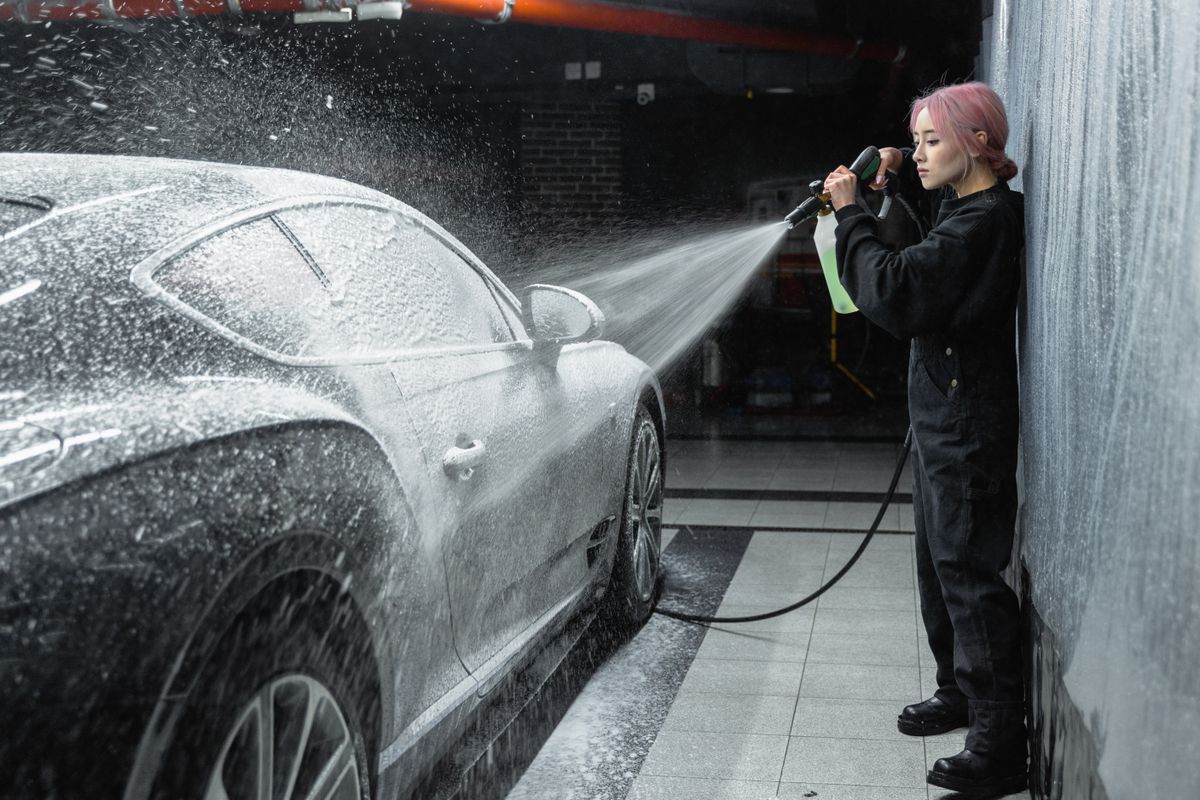
Photo by Tima Miroshnichenko on Pexels
- Month 1 (November) — Confirm battery is stored off the floor on a dry shelf in a climate-controlled room (50°F to 70°F). Verify charger is unplugged.
- Month 2 (December) — Visual inspection: Check terminal contacts for dust or oxidation. Ensure storage area remains free of ambient moisture or water leaks.
- Month 3 (January) — Mid-winter state of charge check: Press fuel gauge button. If reading 1 bar or below 30%, plug into charger until 2-3 bars illuminate, then disconnect immediately.
- Month 4 (February) — Verify ambient temperature stability. Ensure storage area hasn't dipped below 40°F during cold snaps.
- Month 5 (March) — Spring readiness check: Fully charge to 100% on the day before your planned first outdoor patio or vehicle washing session.
Expert Storage Insights: Lithium Chemistry Rules
Lithium-ion power tool and pressure washer batteries rely on chemical reactions that slow down dramatically in cold weather and degrade under high voltage stress.
Storing a battery at 100% charge places maximum stress on the cathode, leading to accelerated capacity loss over time. Conversely, storing a battery completely empty (0%) can cause individual cells to drop into a deep-discharge sleep state from which the factory charger cannot safely recover them.
Maintaining a 40% to 60% charge level strikes the ideal chemical equilibrium. At room temperature, this optimal state of charge preserves electrode integrity and prevents micro-fracturing inside the cells during months of non-use.
5 Deadly Winter Storage Mistakes That Ruin Batteries
Avoid these common traps to ensure your cordless pressure washer battery delivers full power spring after spring.
Seasonal Care Calendar: Autumn Prep to Spring Wake-Up
| Season / Month | Primary Battery Action | Target State of Charge (SOC) | Recommended Storage Location |
| --- | --- | --- | --- |
| Late Autumn (Oct - Nov) | Final wash down, disconnect pack, wipe terminals dry | 40% - 60% (2 LEDs) | Indoor climate-controlled closet or utility room |
| Mid-Winter (Dec - Jan) | 60-day voltage check, press fuel gauge indicator | 30% - 50% (Top off if below 25%) | Indoor dry shelf (50°F to 70°F) |
| Late Winter (Feb - Mar) | Pre-season inspection, check casing for damage | 40% - 60% | Indoor dry shelf |
| Early Spring (Apr - May) | Full spring wake-up, initial spring charge | 100% (Day before first use) | Mounted on cordless pressure washer |
Use this seasonal timeline matrix to coordinate outdoor cleaning equipment winterization across the year.
Frequently Asked Questions About Winter Battery Storage
Here are direct solutions to the most frequent questions homeowners ask about off-season cordless pressure washer battery care.
Next Steps for Total Equipment Care
Your decision: Store your battery indoors at 50% charge in a temperature-stable room between 50°F and 70°F.
Do this next: Detach battery today, check charge gauge, adjust to 50%, and bring inside to an interior shelf.
- Read next: How to Winterize Your Cordless Pressure Washer for Cold Weather Storage
- Read next: Why Is My Cordless Pressure Washer Battery Dying So Fast?
High-Capacity Cordless Pressure Washer Replacement Battery Pack
Once your battery is safely tucked away in climate-controlled indoor storage, turn your attention to winterizing the rest of your portable cleaning system. Draining leftover water from the internal pump assembly, high-pressure hose, and spray wand is essential to prevent freeze-expansion cracking.
Core Rules for Winter Battery Preservation
Keep these essential principles in mind when packing away your portable outdoor cleaning tools.
Storage Specifications: Ideal vs. Harmful Conditions
| Parameter | Ideal Storage Zone | Acceptable Limit | Critical Danger Zone |
| --- | --- | --- | --- |
| Storage Temperature | 50°F to 70°F (10°C to 21°C) | 40°F to 80°F (4°C to 27°C) | Below 32°F (<0°C) or Above 104°F (>40°C) |
| State of Charge (SOC) | 40% to 60% (2-3 LEDs) | 30% to 70% | 0% (Deep Discharge) or Continuous 100% |
| Ambient Humidity | 30% to 50% RH | Below 70% RH (Non-condensing) | >85% RH (Risk of circuit shorting) |
| Charging Temperature | 60°F to 75°F (15°C to 24°C) | 50°F to 85°F | Below 32°F (0°C) or Above 113°F (45°C) |
| Check Interval | Every 60 Days | Every 90 Days | Left unattended >6 months at 0% SOC |
Operating and storing your high-capacity lithium-ion pack within safe environmental boundaries prevents premature capacity fade and hardware safety trips.
Storage Locations Evaluated by Safety Criteria

Photo by Quang Nguyen Vinh on Pexels
| Evaluation Criteria | Detached Unheated Shed | Attached Unheated Garage | Climate-Controlled Basement / Interior Closet |
| --- | --- | --- | --- |
| Temperature Stability (32°F - 70°F) | Poor: Exposed to extreme sub-zero freezing and thermal spikes. | Moderate: Subject to cold drafts and freezing during severe winter storms. | Excellent: Stays consistently within safe ambient thermal range year-round. |
| Moisture & Condensation Risk | High: Rain, snow, and humidity fluctuations cause terminal oxidation. | Moderate: Vehicle melt-off and humidity changes create micro-moisture. | Low: Controlled indoor air keeps contacts completely dry. |
| Risk of Parasitic Freeze Damage | Severe: Liquid electrolyte can freeze, causing irreversible structural cell cracks. | High: Prolonged sub-zero snaps can drop temperatures past safety limits. | Zero: Ambient temperature never drops to liquid electrolyte freezing point. |
| Overall Safety Recommendation | Not Recommended: High risk of permanent capacity loss or complete battery failure. | Conditional: Only safe if placed in thermal battery box with heat monitoring. | Highly Recommended: The ideal home environment for long-term battery storage. |
Not all household storage spots offer equal protection. Review how common household spaces compare when housing lithium-ion battery packs over winter.
Regional Winter Care: Mild Zones vs. Deep Freeze Regions
Winter conditions vary greatly across North America. Adjust your storage plan based on local weather severity:
Deep Freeze Regions (USDA Zones 3–6: Midwest, Northern US, Mountain States)
In regions experiencing extended sub-zero temperatures, never leave pressure washer batteries in unheated garages, outdoor sheds, or vehicles. Cold soaking at temperatures below 0°F (-18°C) leads to permanent cell degradation and high internal resistance. Bring packs inside fully climate-controlled living quarters by late October.Moderate Transition Zones (USDA Zones 7–8: Pacific Northwest, Mid-Atlantic, Ohio Valley)
While severe freezes are shorter, rapid temperature swings create moisture condensation inside battery housings. Store batteries on interior shelving away from exterior walls and crawl spaces. Perform a 60-day voltage check to offset self-discharge caused by minor temperature fluctuations.Mild Southern Climates (USDA Zones 9–11: Sunbelt, Deep South, Southwest)
Although freezing temperatures are rare, heat remains a factor during warm late-autumn or early-spring days. Avoid storing batteries in attics or south-facing storage sheds where sun exposure can push ambient temperatures above 85°F. Maintain storage in cool, dry interior pantries or laundry rooms.Optimal Battery Winter Storage Environment Checklist
- Disconnect battery from pressure washer unit and unplug charger from wall outlet.
- Clean terminal contacts with dry microfiber cloth to remove dirt, grease, and water spots.
- Check LED fuel gauge to ensure charge is at approximately 50% (2 out of 4 lights).
- Place battery in clean, dry indoor room on wooden or plastic shelf between 50°F and 70°F.
- Set calendar reminder for a 60-day voltage re-check to maintain partial state of charge.
Recommended Battery & Maintenance Guides
Expand your equipment maintenance knowledge with these complementary guides:
- How to Winterize Your Cordless Pressure Washer for Cold Weather Storage
- Why Is My Cordless Pressure Washer Battery Dying So Fast? (And How to Fix It)
- Pressure Washer Battery Capacity Guide: Ah Ratings Explained for Homeowners
- Cordless Pressure Washer Routine Maintenance: 5 Steps to Extend Equipment Life
Essential Gear for Off-Season Equipment Care
Ensure your cleaning equipment stays protected and ready for spring with these recommended accessories.
Final Steps: Protect Your Cleaning Investment Today
Your decision: Store your battery indoors at 50% charge in a temperature-stable room between 50°F and 70°F.
Do this next: Detach battery today, check charge gauge, adjust to 50%, and bring inside to an interior shelf.
- Read next: How to Winterize Your Cordless Pressure Washer for Cold Weather Storage
- Read next: Why Is My Cordless Pressure Washer Battery Dying So Fast?
High-Capacity Cordless Pressure Washer Replacement Battery Pack
Taking ten minutes today to properly winterize your lithium-ion battery ensures your cordless pressure washer powers up smoothly on the very first warm day of spring.
Cover photo by Tima Miroshnichenko on Pexels.