Cordless Pressure Washers for Mountain Bike Cleaning
 Sam VasquezBuying Guide Lead
June 28, 2026. This guide details the practical application of portable water systems for cleaning mountain bikes at the trailhead. It is intended for cyclists who need to remove grit and mud before loading equipment into a vehicle.
The Problem with Trailhead Grime
Leaving a trail with a bike covered in abrasive mud is a recipe for mechanical failure and a ruined car interior. Grit works its way into the drivetrain, suspension seals, and pivot bearings, causing premature wear that a simple garden hose at home cannot always fix once the mud has dried and hardened. According to Beach Soul, dedicated portable showers for mountain bikers allow riders to blast away stubborn dirt, dust, and grit using lightweight and reliable systems before the debris sets. For those of us who travel to remote trailheads, finding a water source is the first hurdle. Most riders end up using a gallon jug, which lacks the pressure to clear a cassette, or they wait until they get home, by which time the mud has turned into a concrete-like substance.
I have seen plenty of DIY solutions in the Mountain Bike Reviews Forum, where users mention that Tractor Supply sells budget sprayers for less than $15 that work for basic needs, while others prefer more robust battery-powered camp showers that function similarly to a water flosser by pulling water from a container. However, these low-pressure options often struggle with the thick clay found on technical trails. If you are dealing with salt spray from coastal rides, the urgency is even higher. Much like the requirements for a cordless pressure washer for boat cleaning boat slip, mountain bike cleaning requires a balance of portability and enough mechanical force to dislodge salt and sand without destroying sensitive gaskets. If you don't address the grime at the source, you're just transporting the problem into your garage.
How Cordless Pressure Washers Solve the Mess
Photo by https://kaboompics.com/ on Pexels
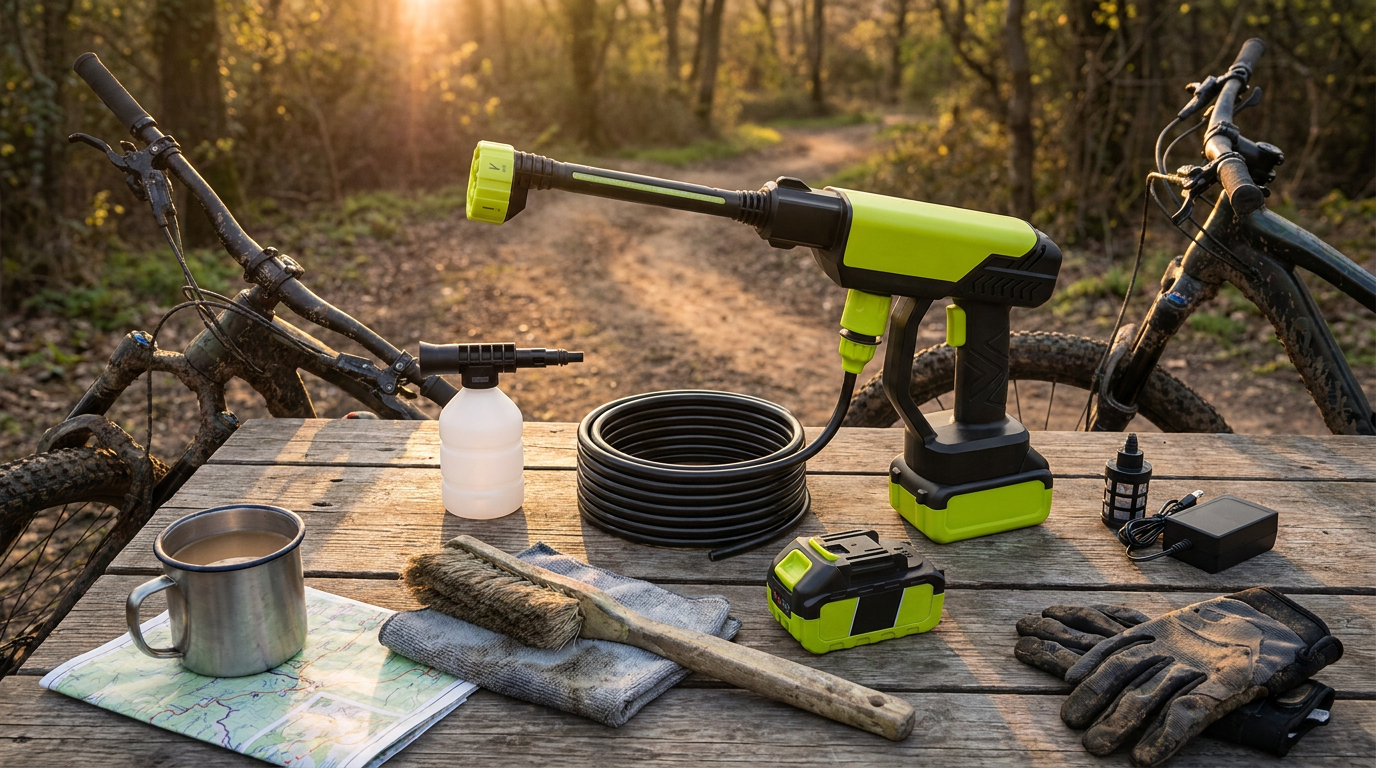
Cordless pressure washers occupy the middle ground between a weak gravity-fed shower and a commercial car wash that can actually damage bike bearings. These units typically utilize a rechargeable lithium-ion battery, making them entirely independent of a power grid. The primary advantage for a mountain biker is the ability to use a pressure washer that pulls from a bucket, a stream, or a specialized water tank. This means you can carry a five-gallon jerry can in your trunk and have a fully functional cleaning station anywhere.
In the current market, these handheld water sprayers are trending for everything from cleaning windows to balcony maintenance because they offer a "handheld pressure washer battery" configuration that is easy to store. When you are looking at specific specs, you want to focus on the PSI (pounds per square inch). For a bike, you rarely need more than 300 to 500 PSI; anything higher risks forcing water past the seals of your bottom bracket or headset. A battery-operated jet wash provides a controlled stream that is far more effective than a manual pump sprayer but safer than a gas-powered unit.
Between these two—a manual pump shower and a battery-powered pressure washer—I’d go with the cordless pressure washer every time. The manual pumps require constant re-pressurizing and rarely have the flow rate to get mud out of knobby tires. A battery-operated water cleaner for balcony or patio use is often the exact same tool marketed for bikes, providing a versatile, rechargeable power cleaner for patio furniture or your car during the off-season. If you're on a budget, a simple $25 manual sprayer from a hardware store will get the dust off, but it won't touch the heavy stuff. For serious riders, the investment in a dedicated battery-powered pressure washer saves hours of scrubbing later.
Choosing the Right Portable System
Finding the right setup depends on your vehicle and how many bikes you are cleaning. Some integrated systems, like the RinseKit Tailgate Shower, are designed specifically with mountain bikers in mind and feature molded bike slots and thick padding for the tailgate. However, if you already have a rack system, a standalone cordless pressure washer is more flexible.
Here is what I’d actually buy: a handheld cordless unit with a collapsible bucket. This setup takes up almost no room in the trunk and allows you to source water from anywhere. Skip this if you only ride in bone-dry, sandy conditions where a simple brush is enough to clean your frame. For everyone else, use this framework to evaluate your purchase:
- Water Source Compatibility: Ensure the unit includes a suction hose with a filter so you can pull from a bucket or a lake without clogging the internals.
- Adjustable Nozzles: Look for a 4-in-1 or 6-in-1 nozzle head. The 40-degree spray is perfect for the frame, while the 0-degree stream is necessary for cleaning the tire treads.
- Battery Ecosystem: If you already own cordless tools for home maintenance, try to find a washer that shares the same battery platform to save on costs.
- Portability vs. Capacity: Decide if you want a self-contained tank or a draw-hose model. Draw-hose models are smaller to store but require a separate water container.
- Pressure Control: Verify the unit has a low-pressure mode to protect sensitive electronics on e-bikes and suspension components.
Shop Cordless Pressure Washers here
Sources

Photo by Tima Miroshnichenko on Pexels
- The Camp Shower That Cyclists + Runners Will LOVE | Consummate
- Looking for a portable shower? - Mountain Bike Reviews Forum
- 10 Gallon RinseKit Tailgate Shower