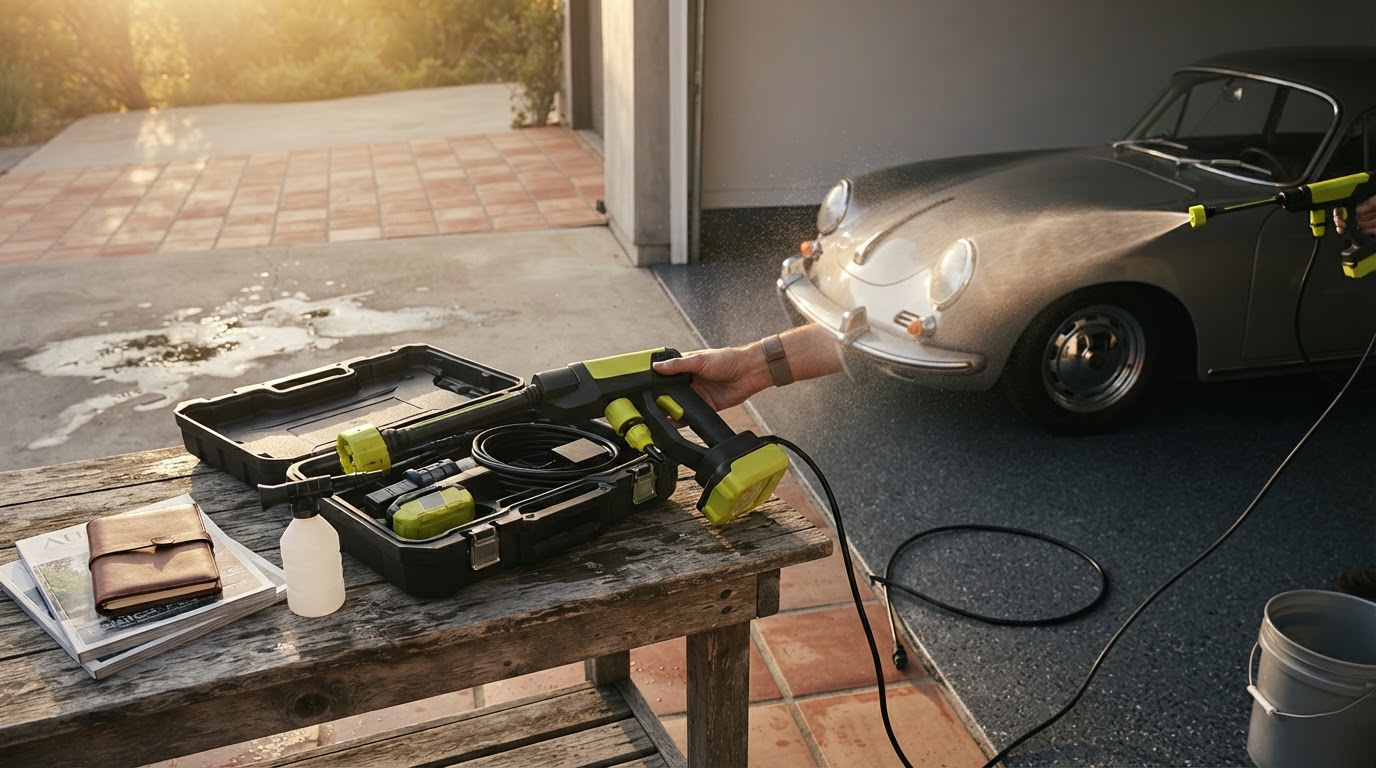
Selecting Cordless Pressure Washers for Home and Transit
 Sam VasquezBuying Guide Lead
November 14, 2026. This assessment identifies the most effective battery-powered cleaning tools for users transitioning away from gas-powered equipment. It is written for homeowners and outdoor enthusiasts who require high-pressure water delivery without the restriction of a power cord.
The Shift to Battery-Powered Cleaning
For years, the choice for outdoor cleaning was limited to heavy gas engines or electric units tethered to a wall outlet. The rise of lithium-ion technology has changed that, specifically for tasks like rinsing mud off a mountain bike after a trail ride or cleaning an apartment balcony where no spigot exists. I have found that most people looking for these tools aren't trying to strip paint off a deck; they are trying to maintain their gear without the setup time of a traditional machine. According to The Drive, the Ryobi 40V Brushless Whisper Series stands out as a top-tier option because it manages to balance the necessary PSI with a noise profile that won't alienate your neighbors.
However, the market is flooded with "spray guns" that barely put out more pressure than a thumb over a garden hose. If you are cleaning a second-story window or a salt-crusted vehicle, that lack of power becomes a frustration rather than a convenience. This is where the distinction between a "power cleaner" and a true pressure washer matters. Many users are looking for a cordless pressure washer for boat cleaning to handle marine growth before it hardens, or perhaps a portable pressure washer with water tank for camping to manage site cleanup. In both scenarios, the ability to draw from a bucket or a lake is the primary selling point. Skip this if you are looking to deep-clean a 2,000-square-foot driveway; for that, you still need a gas engine or a high-amperage corded unit.
Comparing the Lead Contenders
When I look at the current landscape, three models dominate the conversation based on their specific utility. The Worx WG644 is often cited by Popular Mechanics as the best overall choice due to its 2x20V configuration, which provides a meaningful boost in runtime and pressure over single-battery handhelds. It is a solid middle-ground tool. If you're on a budget, the Black & Decker BCPW350C1 offers a lower entry point, though you sacrifice the sheer volume of water (GPM) that more expensive brushless motors provide.
Then there is the DeWalt 20V Max Cordless Power Cleaner. Pro Tool Reviews highlights this model for its professional design and higher flow rate. Between these two—the Worx and the DeWalt—I’d go with the DeWalt if you already own their 20V battery platform. The ergonomics are superior for long sessions, such as when you are performing a portable pressure washer for camping and mtb field test on multiple bikes. For those who need extreme power, the EGO Power+ HPW2105 56-Volt unit enters the territory of traditional electric washers, though it comes with a significantly larger battery footprint.
Here’s what I’d actually buy: the Ryobi 40V Whisper Series. It is the most refined experience currently available. It doesn't feel like a toy, and it has enough reach to clean siding without a ladder. While the Worx is great for light balcony work, the Ryobi handles the tougher grit found on vehicle undercarriages more effectively. If you are already invested in a battery ecosystem, that should drive 80% of your decision, but if you are starting from scratch, the Ryobi 40V platform is the one to beat for outdoor power equipment.
A Decision Framework for Portable Power
Choosing the right unit requires looking past the peak PSI numbers often plastered on the box. Manufacturers frequently measure PSI at the nozzle tip with zero flow, which doesn't reflect real-world performance. Instead, focus on the GPM (Gallons Per Minute) and the source of your water. If you plan on using a portable pressure washer with water tank for camping, ensure the unit has a self-priming pump. Some cheaper models struggle to pull water upward from a bucket and require the water source to be elevated.
Before purchasing, run through this checklist to ensure the tool fits your specific use case:
- Battery Compatibility: Do you already own 18V or 20V batteries from a specific brand like DeWalt, Milwaukee, or Makita?
- Water Source: Does the kit include a suction hose with a filter for drawing from buckets or lakes?
- Nozzle Versatility: Look for a 5-in-1 multi-spray nozzle to quickly switch between a 0-degree stream and a wide 40-degree rinse.
- Weight Distribution: Handheld units can cause wrist fatigue; check if the motor weight is balanced over the grip.
- Runtime: High-pressure modes will drain a standard 2.0Ah battery in under 15 minutes; consider a 4.0Ah or 5.0Ah upgrade for car detailing.
Shop Cordless Pressure Washers here
Sources
- The Best Battery-Powered Pressure Washers
- The Best Cordless Pressure Washer?
- Best Power Cleaner Reviews