Which Cordless Pressure Washers Work for Camping and MTB?
 Jordan HaleStaff Writer
September 9, 2026 — The most effective cordless pressure washers for camping and mountain biking are those featuring integrated water tanks or self-priming siphons that operate between 300 and 950 PSI to avoid damaging sensitive bearings.
The first thing I noticed was the silence of the trailhead after a particularly muddy descent through the pines. Usually, the post-ride ritual involves the clatter of loading bikes, but I was focused on the grit grinding into my drivetrain. For those of us who live in vans or spend weekends at remote campsites, the ability to rinse off gear without a garden hose isn't a luxury; it’s the difference between a clean tent and a gritty sleeping bag.
Can a portable unit handle dried mountain bike mud?
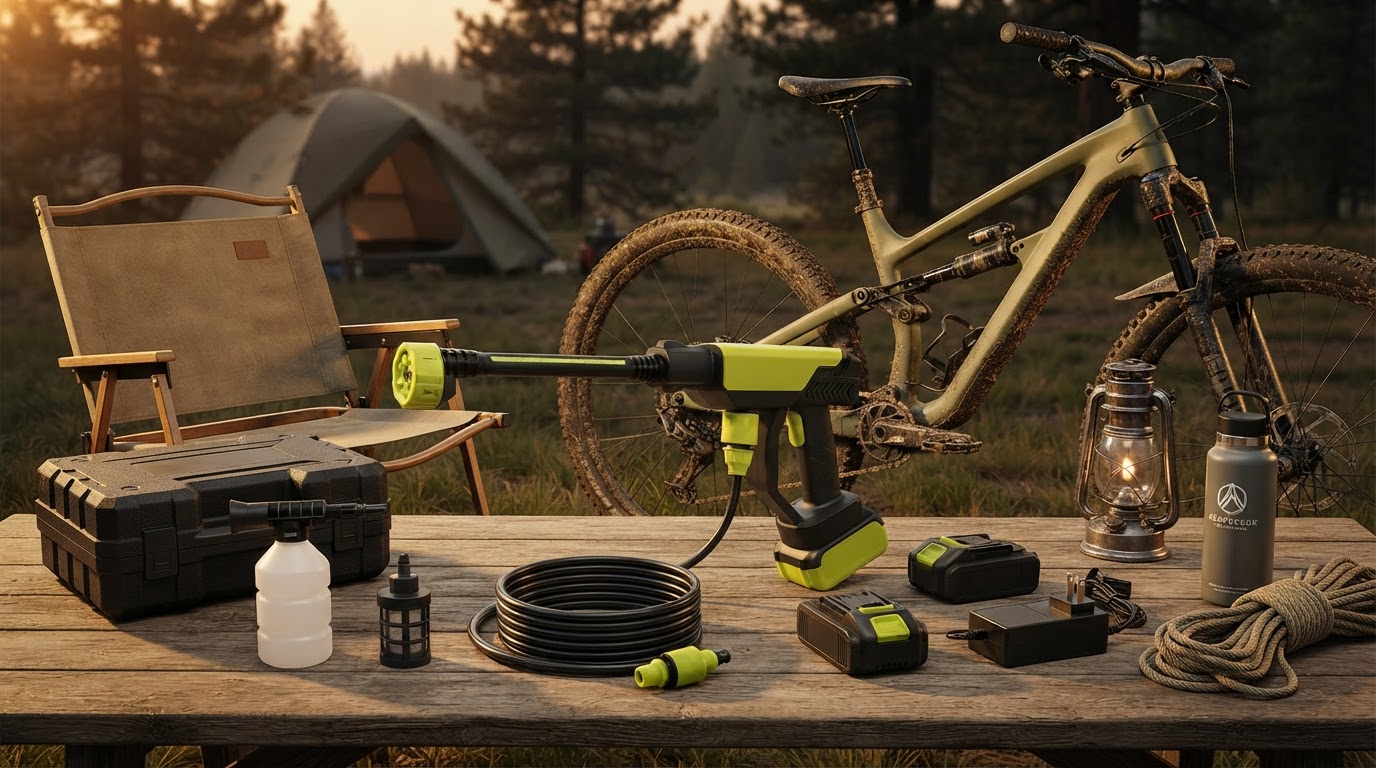
Yes, modern cordless units provide sufficient pressure to clear frame mud without the risk of stripping grease from pivot bearings that high-powered gas units pose. It turns out that a mid-range pressure setting is actually safer for high-end carbon frames and suspension seals. According to a review by MBR, the Ryobi Cordless Power Washer is noted as a great product for winter mountain biking due to its reliable power and battery capacity. When I used a similar handheld unit at the trailhead, I found that the 18V system provided just enough bite to lift wet clay from my tires before it could harden into concrete. The weight in my hand felt substantial but balanced, a far cry from the bulky electric units I leave in the garage. For riders who don't have access to a spigot, the ability to use cordless pressure washers with a bucket source is a game-changer for cleaning up before the drive home.
Which integrated tank models are best for remote camping?
Integrated tank models are the most efficient choice for campers because they eliminate the need for external hoses and separate water containers. I keep coming back to the convenience of a self-contained system that fits in the trunk alongside my cooler. The Muc-Off Mobile Pressure Washer, for instance, features a 20L integrated water tank and a 500W brushless motor capable of reaching up to 942 PSI. This volume of water is typically enough to clean two bikes or a set of muddy camping chairs without a refill. If you are planning to rely on these units for multi-day trips, performing four essential checks for portable tanks and cordless units ensures you don't end up with a leak in your cargo area. For those who prefer a more minimalist setup, many users find that cordless pressure washers can draw from a bucket or even a nearby stream, provided the intake filter is clear of debris.
Quick answers
Q: How much water do I need to clean one mountain bike? A: Most riders find that a 20L tank, like the one found on the Muc-Off Mobile Pressure Washer, provides enough volume for 24 minutes of runtime, which is sufficient for two heavily soiled bikes.
Q: Will a cordless pressure washer damage my bike's suspension seals? A: While gas-powered washers can exceed 3000 PSI, most portable units like the Ryobi 18V or Muc-Off models operate under 1000 PSI, which is generally considered safe for bikes when sprayed from a distance of at least 12 inches.
Q: Can I use lake water with my portable pressure washer while camping? A: Yes, most units are self-priming and can draw from open water sources, but you must ensure the suction hose has a fine-mesh filter to prevent silt from damaging the internal pump.
Learn more about Cordless Pressure Washers at https://cordlesspressurewasher.com.
Sources
- Best pressure washers for bikes 2026: best bike cleaners
- Mobile Pressure Washer | Muc-Off USA
- Best mobile pressure washers reviewed and rated by experts - MBR