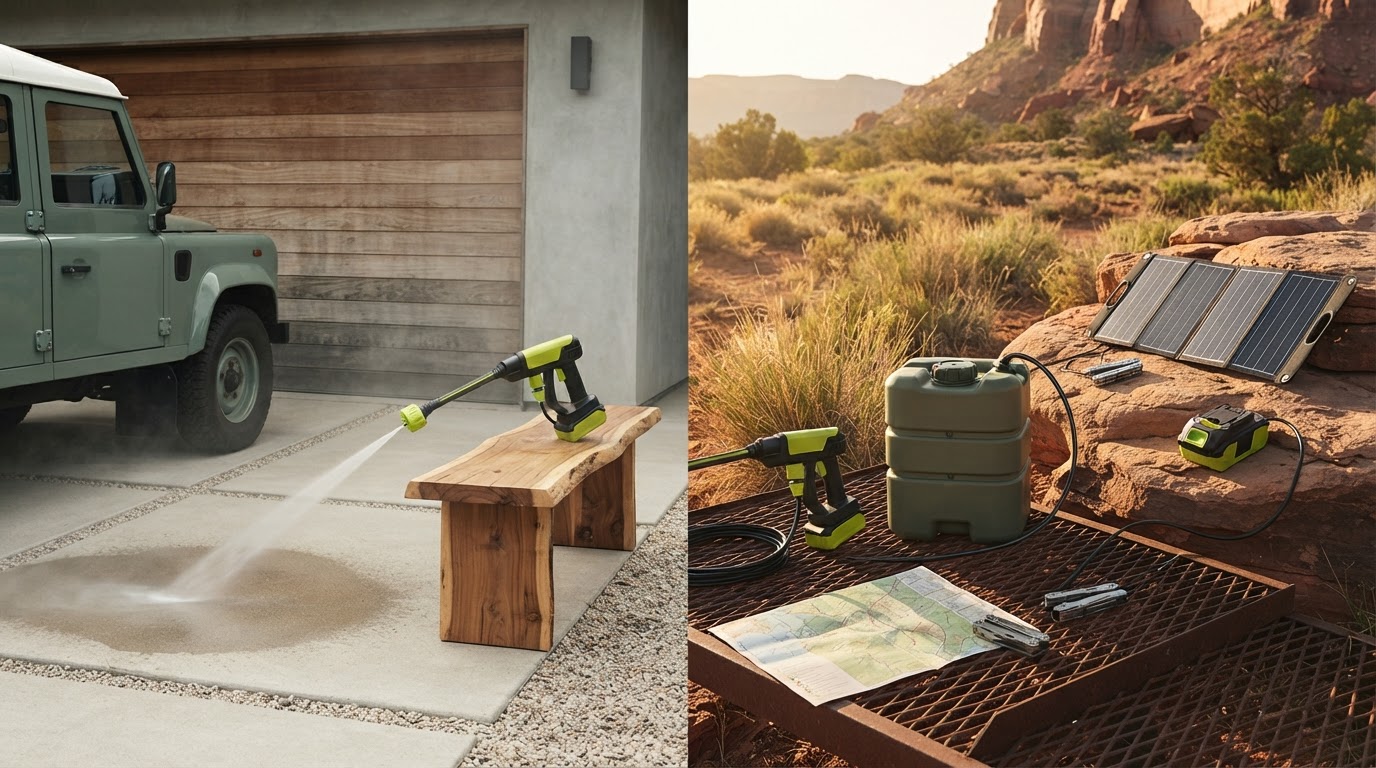
Four Essential Checks for Portable Tanks and Cordless Units
 Daniel OkaforField Tester
September 7, 2026 — The shift toward total off-grid mobility is accelerating as new Cordless Pressure Washers integrated with dedicated water tanks reach the consumer market. I recently spent time evaluating how these self-contained systems handle the transition from suburban driveways to remote job sites where a garden hose isn't an option. According to product specifications from Koblenz, modern portable units like the HLT-380 V now feature 8-gallon onboard tanks capable of handling water up to 104°F, which effectively bridges the gap between light rinsing and heavy-duty cleaning. This evolution means we are no longer tethered to a spigot, provided the tank capacity matches the task at hand.
The 4 Capacity Checks
I tested this for a week in various environments to see where the weight-to-water ratio actually makes sense. What surprised me was how quickly a 12L tank, like the one found on the Teslong XS-MINI, disappears when you are running at a constant 72 PSI; it is perfect for bikes and outdoor gear but requires a refill for a full vehicle. On the other end of the spectrum, I looked at the Kings Skid Mount system which carries a massive 100-gallon tank and pushes 2500 PSI, though that setup is strictly for truck-bed mounting rather than handheld portablity. For most users, the sweet spot lies in the 20L range. Muc-off has addressed this with their Mobile Pressure Washer Explorer Bundle, which utilizes a 20L external tank to extend runtimes without making the primary unit too heavy to carry. Day three is where I noticed the importance of seal quality; when you are transporting 40 to 60 pounds of water in a vehicle, a folding tank that doesn't leak under vibration is mandatory. I found that while a handheld power washer with bucket draw offers the most lightweight experience, the integrated tank models provide a much more stable, one-handed operation because you aren't managing a trailing suction hose. If you are planning a portable pressure washer for camping and mtb trip, the 20L capacity is the minimum I would recommend for two muddy bikes. Here's the moment it earned its place: cleaning a salt-covered SUV at a trailhead where the nearest water source was five miles away. The 8-gallon Koblenz unit had just enough volume to finish the job without a second trip to the tap.
Expert tip: If you find yourself running out of water too quickly, try using a 15-degree nozzle rather than the turbo setting; it concentrates the stream to strip grime faster, effectively lowering your total water consumption per square foot.
When you don't have a built-in tank, using cordless pressure washers with a bucket source is a viable backup, though it lacks the grab-and-go convenience of a tanked unit. For those cleaning smaller areas like an apartment balcony, a pressure washer that runs off a bucket might be sufficient, but for true mobility, the integrated tank is superior. What I’d do differently next time is invest in a collapsible 20L bladder to supplement the main tank for longer sessions.
Shop Cordless Pressure Washers.