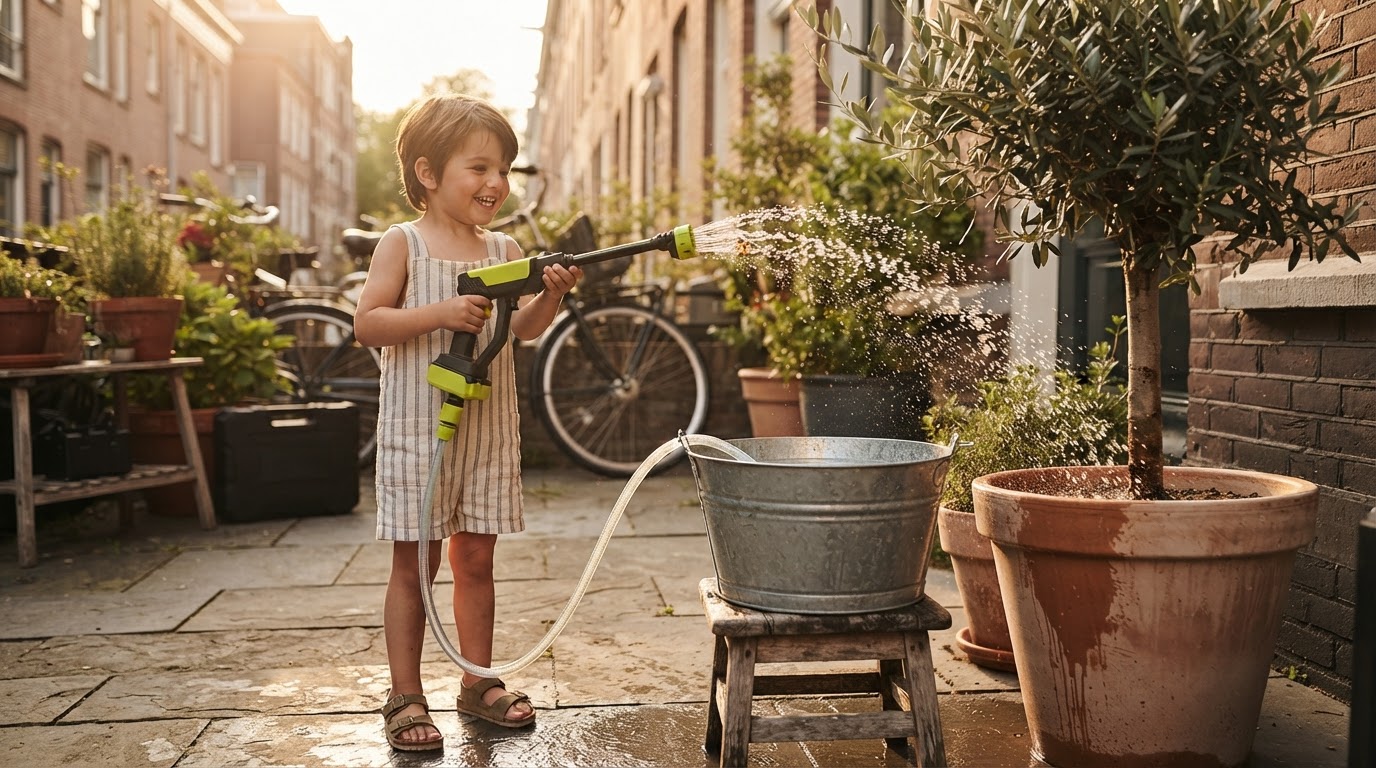
Using Cordless Pressure Washers With A Bucket Source
 Maya ChenContributing Editor
September 6, 2026. This analysis explores the technical requirements for operating high-pressure cleaning equipment without a fixed water connection. It is intended for urban residents and mobile detailers who must rely on static water supplies.
The Efficiency Gap in Static Water Sources
The conventional wisdom says that any portable cleaner can simply be dropped into a five-gallon container to achieve professional results. However, the physics of suction-fed systems tells a different story. When a machine draws from a bucket rather than a pressurized tap, it must overcome atmospheric pressure to pull the fluid through the intake hose. According to the enthusiast community at PistonHeads, a powerful pressure washer will empty a bucket quite quickly, specifically noting that machines like the Ryobi 36V 41Bar model demand significantly more volume than entry-level 18V alternatives. This creates a logistical bottleneck: you are no longer limited by your battery life, but by the physical volume of water you can carry. For those managing apartment balconies or tight urban spaces, this often means three to four trips to a sink just to rinse a single mid-sized sedan. While a [handheld power washer with bucket draw](/blog/handheld-power-washer-with-bucket-draw) offers the most compact form factor, the trade-off is often a lower flow rate that struggles to move heavy mud or thick salt crusts. The assumption that "portable" equals "effortless" ignores the labor of water transport.
Mechanical Constraints of Cordless Pressure Washers
Cordless pressure washers solve the proximity problem by eliminating the tether to a garden hose, but they introduce a new set of variables regarding pump priming and vertical lift. Most units utilize a self-priming pump, yet the efficiency of these pumps drops sharply if the water source is located more than a few feet below the intake valve. Here’s the part nobody talks about: the air trapped in a dry siphon hose often causes the pump to run hot for the first 30 to 60 seconds of operation. If you are using a [portable pressure washer for camping and mtb](/blog/portable-pressure-washer-for-camping-and-mtb), the height of the bucket relative to the tool determines whether you get a steady stream or a sputtering mist. A [portable pressure washer with water tank](/blog/portable-pressure-washer-with-water-tank) attempts to mitigate this by using gravity-fed designs, but for those committed to the bucket method, the hose length is the primary enemy of pressure. Research shared by TheBurbBilly on YouTube indicates that while running a pressure washer off a bucket is entirely functional for light tasks, the user must ensure the filter at the end of the suction hose remains fully submerged and clear of debris. Without a pressurized feed, the pump has no protection against cavitation, which can lead to premature motor failure in budget-tier units. For users specifically looking for a portable pressure washer solution, understanding that these are low-volume tools is critical; they are designed for precision, not the high-volume flooding used in commercial car washes.
Technical Requirements for Bucket-Fed Operations
To determine if a bucket-fed system is viable for your specific cleaning task, run the math: a standard 2.0 GPM (gallons per minute) gas unit would drain a standard bucket in 150 seconds, whereas a cordless unit typically operates between 0.5 and 0.8 GPM, extending your work time to roughly six minutes per bucket. This makes a handheld power washer with bucket draw significantly more practical for spot cleaning than for large-scale projects. Before committing to a bucket-only workflow, verify the following specifications:
- Self-Priming Capability: Ensure the motor is rated for suction draw rather than just pressurized intake.
- Total Dynamic Head: Check the maximum height the pump can pull water upward from the bucket.
- Filtration Grade: A weighted pre-filter is mandatory to prevent silt from the bottom of the bucket from entering the pump.
- Hose Rigidity: Use a reinforced siphon hose that will not collapse under the vacuum pressure generated by the pump.
- Battery Amp-Hours: High-draw pumps require at least a 4.0Ah battery to maintain consistent pressure as the water level drops.
Shop Cordless Pressure Washers here
Sources
- Best Pressure Washer If You Live In An Apartment: EGO Battery Powered
- Portable Pressure Washer! You just need a bucket of water ... - Instagram
- Running a pressure washer off a bucket of water - YouTube