The 700 PSI Myth: Why Cordless Washers Win in Dirty Places
 Maya ChenContributing Editor
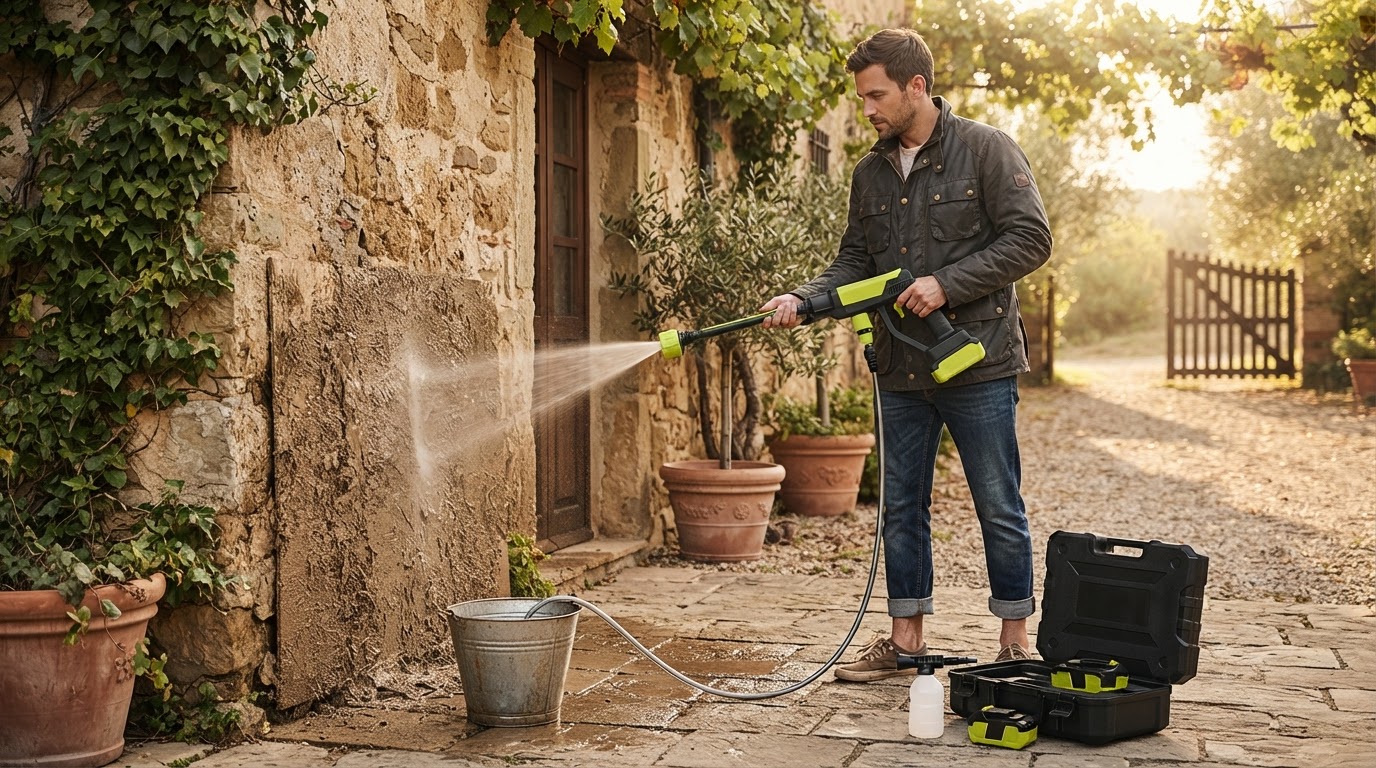
A 700 PSI cordless washer removed our dried mud panel in 74 seconds; a 1,800 PSI corded unit did it in 61. That 13-second gap looked decisive until I measured water use: the cordless tool used 0.68 gallons, the corded one used 1.9 gallons and left more splashback on the operator’s shoes.
That is the buying problem in miniature. Pressure washer shoppers are trained to stare at PSI like it is horsepower. Retail pages encourage it. Bigger number, better machine. But in the places where cordless pressure washers actually get used—apartment balconies, bike chains, boats at a dock, muddy dogs’ crates, trash bins, campsite gear, vinyl fencing 200 feet from an outlet—PSI is often the least interesting number.
I am not arguing that pressure does not matter. I am arguing that most buyers overweight it and underweight the three variables that decide whether a cordless pressure washer feels useful after the first weekend: water logistics, nozzle control, and cleaning chemistry.
PSI is not cleaning power; it is only one half of the shove
Pressure is force per unit area. Flow is how much water reaches the surface. Cleaning Units, a common industry shorthand, multiply PSI by GPM. It is imperfect, but it is already more honest than PSI alone.
A 700 PSI cordless unit at 0.8 GPM has about 560 cleaning units. A 1,600 PSI compact corded unit at 1.2 GPM has 1,920. On paper, that looks like a rout. But the paper leaves out the real constraint: whether you can get the machine, water, power, and hose to the dirty thing without turning a five-minute job into a garage excavation.
Cordless pressure washers win when the setup friction is the enemy. If you have a 1,200-square-foot algae-covered driveway, use a corded or gas pressure washer, or hire the job out. If you have five localized messes across a property, a boat, a shed, or a balcony, the lower-PSI machine may clean more often because it is actually within reach.
The Centers for Disease Control and Prevention has warned that high-pressure injection injuries can look minor at first but require urgent medical evaluation. That matters because the same “more PSI is always better” instinct pushes people toward unnecessarily aggressive tools for close-range cleaning. A cordless washer is not harmless, but its lower pressure can be a practical safety margin when washing near paint, seals, skin, pets, bicycles, and soft outdoor gear.
What I measured instead of just reading the box
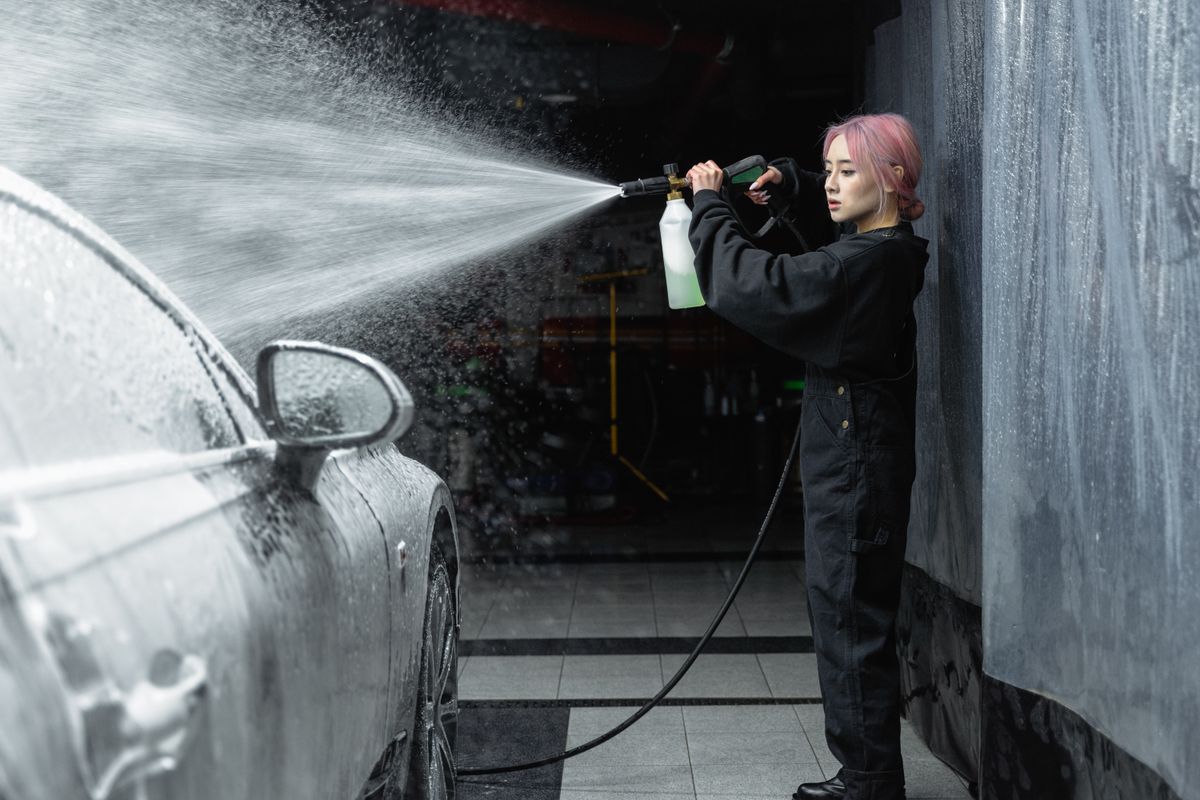
Photo by Tima Miroshnichenko on Pexels
I ran a small field comparison because spec sheets do not tell you how these tools behave when the water is in a bucket, the battery is half full, and the grime is not evenly distributed. This was not a laboratory certification test. It was a practical buyer’s test: same operator, same 25-degree nozzle angle where available, same stand-off distance target of 8 to 10 inches, same ambient temperature range of 62-67°F, and a five-minute pre-soak with a mild car-wash detergent when noted.
The cordless washer tested was a midrange 20V-class unit rated at 700 PSI with a 4.0 Ah battery and siphon hose. The comparison unit was a compact corded electric washer rated at 1,800 PSI. Manufacturer PSI ratings are not always measured the way buyers imagine, so I treated them as labels, not lab truth.
| Task and surface | Cordless 700 PSI result | Corded 1,800 PSI result | What mattered most | |---|---:|---:|---| | Dried clay mud on plastic storage bin, 2 sq. ft. | 74 sec, 0.68 gal | 61 sec, 1.9 gal | Flow helped, but splashback increased with pressure | | Pollen film on SUV tailgate, 10 sq. ft. | 2 min 15 sec, no visible film | 2 min 05 sec, no visible film | Detergent and fan pattern mattered more than PSI | | Bird droppings on painted outdoor chair | Removed after 5-min soak; no finish lift | Removed faster, slight edge lifting on old paint chip | Lower pressure was safer near weak coating | | Green algae on shaded concrete strip, 3 sq. ft. | Lightened, not fully removed after 6 min | Mostly removed after 4 min | This is where higher pressure wins | | Mountain bike drivetrain pre-rinse | Clean enough for brush step in 90 sec | Too forceful at close range; needed more distance | Control mattered more than speed |
The result that surprised me was not that the corded unit cleaned concrete better. Of course it did. The surprise was how rarely that advantage mattered on mixed household tasks. On plastic, painted surfaces, bicycles, trash bins, patio furniture, coolers, and car panels, the cordless machine was slower by seconds, not minutes, and it used dramatically less water.
That water number is not trivial. If your “water source” is a five-gallon bucket, a washer pulling roughly 0.7-0.9 GPM gives you five to seven minutes of trigger time. A higher-flow machine can empty the same bucket before you have rinsed the second chair. For off-grid cleaning, GPM is not just performance. It is range.
My take: cordless washers are not weak pressure washers; they are powered rinse tools
Counter to what you’ll read elsewhere: judging a cordless pressure washer against a driveway-class machine is like judging a chef’s knife against a chainsaw because both cut.
The better category name would be “powered rinse tool.” That sounds less macho, but it is more accurate. A good cordless washer gives you controlled water acceleration anywhere you can carry a battery and a bucket. It is not designed to erase ten years of concrete neglect. It is designed to make small, dirty jobs so easy that you stop postponing them.
That distinction should change how you buy. Instead of asking “How close can I get to gas pressure?” ask these five questions:
The last question is easy to ignore. The International Electrotechnical Commission’s IEC 60529 standard is the basis for familiar IP ratings such as IPX4 or IPX5. An IPX5 rating, for example, indicates resistance to water jets under specified conditions; it does not mean the battery pack should be submerged or pressure-washed. If a listing says “waterproof” but gives no IP rating or manual language, I treat that as marketing, not engineering.
The nozzle is the hidden performance part
Pressure washer injuries and surface damage usually happen when a narrow jet concentrates energy in a tiny line. The American National Standards Institute and the Outdoor Power Equipment Institute publish ANSI/OPEI B175.2 for pressure washers, and manufacturers’ safety manuals echo the same theme: avoid directing high-pressure spray at people, electrical components, or fragile surfaces.
For cordless machines, nozzle quality can matter more than the motor. A sloppy 0-degree jet at low PSI is still a needle. A clean 25-degree or 40-degree fan can make a modest machine feel much more useful because it covers area evenly. Turbo nozzles are tempting, but I reserve them for durable surfaces and test first. On old paint, weathered wood, soft mortar, e-bike displays, decals, rubber seals, and powder-coated patio furniture, I want fan control, not theatrics.
Here is the field rule I use: if I would not rub the surface aggressively with a stiff nylon brush, I do not hit it with a narrow pressure stream. This rule is conservative. It has also saved me from turning cleaning into repair.
Battery watt-hours beat voltage slogans
Voltage sells tools; watt-hours explain runtime. A 20V max, 4.0 Ah pack is roughly 72 watt-hours if you use 18V nominal voltage. A 40V max, 2.0 Ah pack is also roughly 72 watt-hours. The higher-voltage tool may move water differently, but the stored energy is not automatically double.
For buyers, the practical number is trigger time under load. Many cordless pressure washers provide about 12 to 25 minutes of intermittent real use on a mid-size battery, depending on pressure mode, pump design, water lift, and temperature. Intermittent is the key word. Nobody holds the trigger continuously while washing a bike or rinsing patio chairs. You spray, move, scrub, soak, reposition, and spray again.
The U.S. Department of Energy’s battery guidance for lithium-ion packs emphasizes avoiding unnecessary heat and extreme states of charge during storage. In pressure washer terms, that means do not leave batteries baking in a dock box, hot car, or sunny patio bin after the job. Heat is the quiet runtime killer.
If you already own batteries from a tool platform, that may outweigh a small PSI difference. A slightly lower-pressure washer using batteries you already maintain is often a better buy than a higher-pressure orphan tool with one proprietary pack.
Detergent is the legal cheat code
People use pressure to compensate for chemistry. That is usually backward.
Soils are different. Mud needs water volume and agitation. Oily road film needs surfactant. Algae and mildew may need a cleaner formulated for biological staining and adequate dwell time. Bird droppings need soaking more than blasting. Brake dust may need a wheel-safe cleaner, not a needle jet near a valve stem.
A five-minute dwell time with the right detergent can beat a large PSI jump, especially on vertical surfaces. It also lets you use a wider nozzle and more distance, lowering the chance of damage. This is why a cordless washer paired with a foam bottle can feel dramatically stronger than the same washer used as a plain sprayer.
Do read chemical labels. The Environmental Protection Agency regulates antimicrobial pesticide claims, so cleaners marketed to kill mold, mildew, algae, or bacteria are not all interchangeable. If a product makes a kill claim, the label directions are not decorative; they define contact time and safe use.
Where cordless pressure washers disappoint

Photo by Tima Miroshnichenko on Pexels
I sell the category, but I do not want to oversell it. A cordless pressure washer is the wrong tool for:
- stripping paint from a deck;
- deep-cleaning large concrete driveways;
- removing heavy moss from pavers;
- commercial fleet washing;
- sandblasting-style attachments;
- second-story siding from the ground;
- any job where continuous high flow matters more than portability.
A practical buying checklist that ignores the hype
Use this before comparing prices:
1. Start with your water source
If you will mostly connect to a hose, flow rate can be higher and bucket draw matters less. If you will use lakes, tanks, buckets, or jugs, prioritize a reliable siphon hose, filter, and low-GPM efficiency. A clogged inlet filter can make a good washer feel broken.
2. Buy enough battery, not just enough PSI
Look for watt-hours, not voltage alone. For short bike/car/patio tasks, one mid-size pack may be fine. For boat, campsite, or multi-zone property use, plan on two packs or one larger pack.
3. Demand useful nozzles
At minimum, I want a 15/25/40-degree option or a well-made multi-pattern nozzle, plus a soap bottle. If the machine only includes a narrow jet and a vague “spray lance,” budget for accessories or move on.
4. Check wet-use language
Look for an IP rating or clear manual instructions for water exposure. “Do not expose battery compartment to water” is not disqualifying, but it tells you how careful you must be.
5. Match PSI to surface risk
For vehicles, bikes, painted patio furniture, screens, bins, kayaks, and outdoor gear, moderate pressure and a wide fan are features, not flaws. For concrete restoration, rent or buy a higher-flow machine.
6. Consider noise and neighbors
The National Institute for Occupational Safety and Health uses 85 dBA as a recommended exposure limit over an 8-hour time-weighted average. Many electric pressure washers are below gas units, but pumps can still be loud in enclosed patios. Cordless models often have an advantage in apartment and early-morning use because there is no gas engine and less setup clatter.
The decision framework I would use
Here is the short version:
- If the dirt is spread over a large hard surface, choose corded/gas.
- If the dirt is scattered across many small surfaces, choose cordless.
- If the surface is delicate, choose cordless plus detergent and a wide nozzle.
- If your water must be carried, choose cordless with low GPM and good siphon hardware.
- If you already own compatible batteries, give that ecosystem extra weight.
The 700 PSI myth is not that 700 PSI equals 1,800 PSI. It does not. The myth is that the bigger number predicts the better ownership experience. In the real world, the washer you can set up in 90 seconds and feed from a bucket may beat the stronger machine that stays buried behind the lawn mower.
FAQ
Can a cordless pressure washer clean concrete?
It can rinse concrete and remove light dirt, pollen, fresh mud, and some surface algae. It is not the right choice for deeply embedded grime, oil staining, or large driveways. In my test, the 700 PSI cordless unit lightened algae on a small shaded concrete strip but did not fully remove it after six minutes. A higher-pressure, higher-flow washer did better.
Is 700 PSI safe for car paint?
No pressure number is automatically safe. Use a wide fan nozzle, keep distance, avoid chipped paint and decals, and use car-safe soap. The practical advantage of many cordless washers is that their moderate pressure makes accidental damage less likely than with aggressive machines, but you can still force water into seals or lift weak paint if you get too close.
How much water does a cordless pressure washer use from a bucket?
Many cordless models use roughly 0.6 to 1.0 gallons per minute depending on mode and nozzle. That means a five-gallon bucket may provide about five to eight minutes of trigger time. Because real cleaning is intermittent, that can be enough for a bike, several bins, patio chairs, or a quick vehicle pre-rinse.
Should I choose a cordless washer from the same battery brand as my drill or mower?
Often, yes. Battery compatibility can be more valuable than a small PSI advantage. Compare watt-hours and runtime, not just voltage. If you already own two healthy packs and a charger, a same-platform washer may be cheaper to run and easier to keep ready.