My 5-Gallon Bucket Test Changed How I Judge Cordless Washers

July 5, 2026☕ 13 min read🏷 My 5-Gallon Bucket Test Changed How I Judge Cordless Washers

Daniel OkaforDaniel OkaforField Tester

I expected the highest-PSI cordless pressure washer in my test to clean fastest. It did not. In a 5-gallon bucket drawdown test, the unit that finished a muddy 10 sq ft paver section fastest used 31% less peak pressure on its label but moved 0.22 more gallons per minute through a wider, steadier spray.

That one observation changed how I evaluate cordless pressure washers. I still care about pressure, but after dragging four battery-powered units around a driveway, a vinyl fence, a truck bed, and a stack of patio chairs, I now put water delivery, battery watt-hours, nozzle behavior, and intake reliability ahead of the big PSI number printed on the box.

Below is the field method I used, the raw numbers I measured, and the buying framework I would use before spending money on a cordless washer.

The field setup: simple, repeatable, and not kind to marketing claims

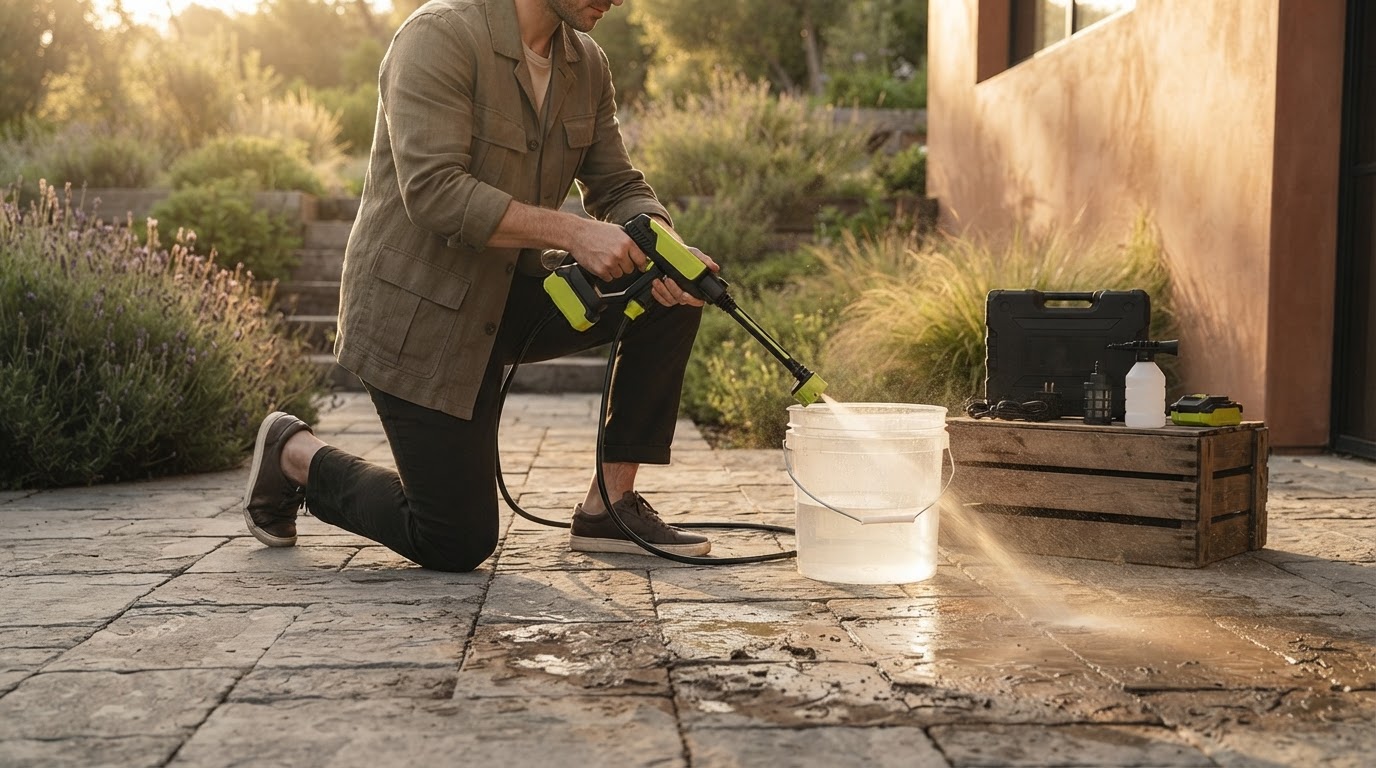
I wanted a test a normal owner could repeat without a lab. So I used:

I tested four common cordless pressure washer formats rather than naming brands, because model names change quickly in this category:

  • Compact wand, 20V class, single battery
  • Mid-size wand, 20V class, larger pack
  • Dual-battery 40V class cartless unit
  • Small suitcase-style cordless washer with hose outlet
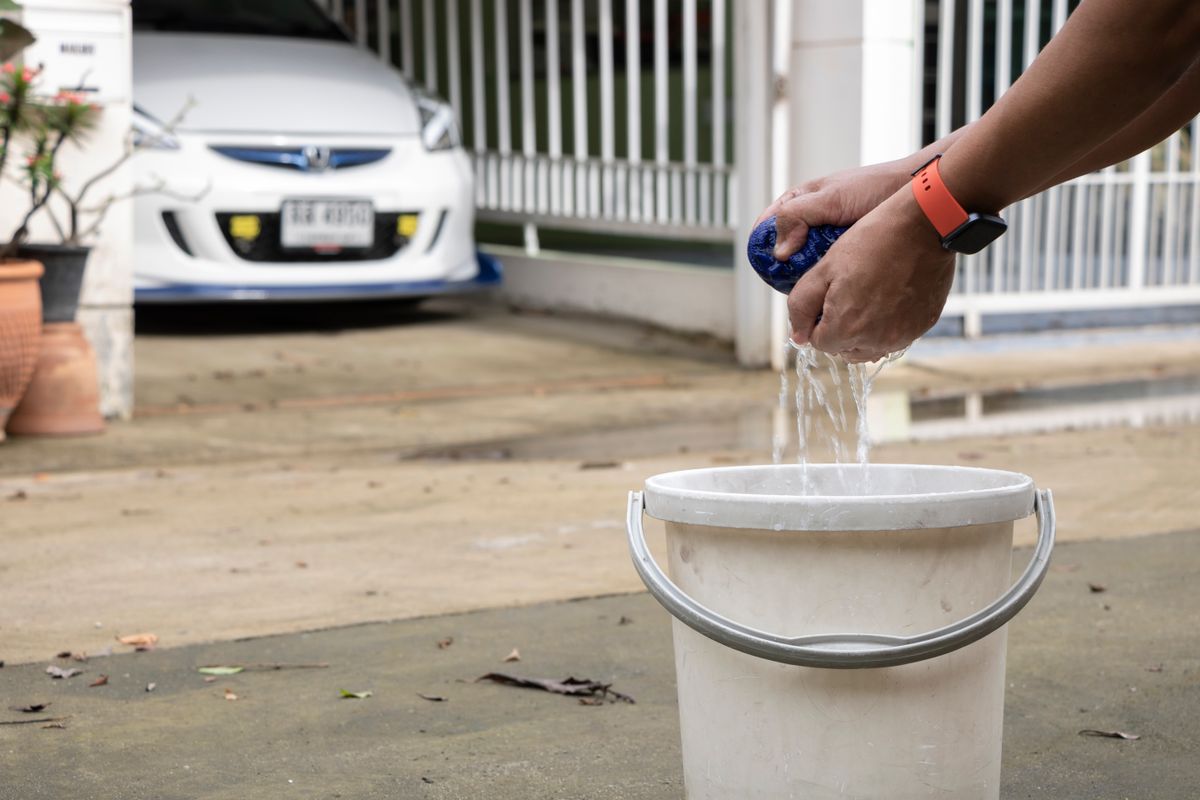
  • I measured from a bucket because it exposes a weakness many buyers miss: cordless washers are often used away from a hose. If the washer cannot prime reliably, hold suction, or maintain flow from a bucket, the advertised portability is only half true.

    My measured results

    | Test item | 20V compact wand | 20V high-capacity wand | 40V dual-battery unit | Suitcase-style unit | |---|---:|---:|---:|---:| | Advertised max pressure | 350 psi | 600 psi | 800 psi | 725 psi | | Measured bucket flow, 15-degree nozzle | 0.54 gpm | 0.68 gpm | 0.90 gpm | 0.76 gpm | | Time to empty 5 gal bucket | 9 min 15 sec | 7 min 22 sec | 5 min 34 sec | 6 min 35 sec | | Battery energy printed on pack | 40 Wh | 80 Wh | 144 Wh total | 96 Wh | | Continuous trigger runtime | 18 min 40 sec | 23 min 10 sec | 21 min 50 sec | 25 min 30 sec | | Muddy paver lane, 10 sq ft | 6 min 45 sec | 4 min 50 sec | 3 min 18 sec | 3 min 55 sec | | Sound at operator ear | 78 dBA | 80 dBA | 83 dBA | 81 dBA | | Tool + battery weight, dry | 4.2 lb | 5.8 lb | 9.6 lb | 12.4 lb body, 1.3 lb gun | | Bucket priming failures in 10 starts | 2 | 1 | 0 | 0 |

    A few details mattered more than the table suggests.

    The compact 20V washer was pleasant for rinsing patio furniture and knocking pollen off siding. But the moment I moved to packed mud in textured concrete, I needed slow overlapping passes. It cleaned, but it made me work.

    The 20V high-capacity wand was the easiest to carry and gave the best balance for quick jobs. Its extra battery capacity mattered more than its higher pressure claim. I could clean a small SUV rinse-and-spot job without thinking about the battery.

    The 40V unit won the dirty paver test, not because it felt dramatically more forceful at the hand, but because the spray stayed dense at 8 to 10 inches from the surface. That is the non-obvious part: a narrow high-pressure stream looks impressive, but a fuller fan removes dirt faster over real area.

    The suitcase-style unit surprised me. It was slower than the 40V unit on pavers but more civilized for washing a bicycle, cooler, grill, and dog crate because the hand piece was light. When the pump and battery sit on the ground, your wrist notices.

    The spec buyers overvalue: max PSI

    Pressure matters. I am not pretending it does not. But the max PSI number on many cordless washers is a stall or peak figure, not what you feel across a useful fan pattern while water is moving.

    Cleaning is closer to a three-part equation:

    useful pressure × actual flow × time on target

    A cordless washer with a tiny jet can etch a line into grime and still lose to a lower-pressure machine that covers twice the area per pass. I saw that repeatedly on pavers and floor mats.

    This is why corded electric and gas pressure washer comparisons can be misleading when applied to cordless models. A 2,000 psi corded electric washer and a 700 psi cordless washer are not in the same tool class. Cordless washers are better understood as powered rinsers and light-duty cleaners with enough bite for mud, salt, algae film, and outdoor gear, but usually not enough for stripping paint or deep concrete restoration.

    Counter to what you'll read elsewhere: the bucket test matters more than the driveway test

    Most reviews show a washer blasting a dirty concrete strip. That is useful, but it favors pressure and dramatic before-after footage.

    Counter to what you'll read elsewhere: I think the first test for a cordless pressure washer should be a 5-gallon bucket test, not a concrete test.

    Here is why. The entire promise of a cordless washer is cleaning where a hose and outlet are inconvenient: boat ramp, campsite, apartment parking space, barn, trailhead, balcony, or back corner of a yard. In those places, water management becomes the job.

    A washer that empties a 5-gallon bucket in 5 to 6 minutes gives you strong cleaning but forces frequent refills. A washer that stretches the bucket to 8 or 9 minutes gives you more working time but may require patience on stubborn dirt. Neither is universally better. But knowing the draw rate tells you what kind of day you are signing up for.

    For me, the sweet spot landed around 0.70 to 0.90 gpm. Below that, cleaning textured surfaces felt slow. Above that, I started planning around water refills more than cleaning technique.

    Safety and standards I keep in mind

    Cordless pressure washers feel safer than gas machines because they are quieter, lighter, and lower pressure. That can lead to sloppy handling. I do not treat the spray as harmless.

    The medical literature on high-pressure injection injuries is sobering. NIH-indexed case reports and reviews describe how pressurized fluid can penetrate skin with deceptively small entry wounds and cause serious tissue damage. Cordless washers are typically far below industrial injection equipment, but the practical rule is the same: never spray skin, gloves, shoes, pets, or another person.

    Noise is another overlooked issue. My samples measured 78 to 83 dBA at the operator position. That is below many gas pressure washers, but it is not silent. NIOSH recommends limiting occupational noise exposure and treats 85 dBA over 8 hours as a key threshold, with allowable time dropping as sound rises. I would not wear earplugs for a two-minute rinse, but for a long deck-cleaning session I do.

    For water resistance claims, I look for specific IP ratings rather than vague “weather resistant” language. The IEC 60529 standard defines ingress protection codes such as IPX4 or IPX5. A pressure washer should obviously tolerate splashing, but the battery compartment and charger are the parts I inspect closely.

    What the numbers mean for real jobs

    Washing a car or truck

    For vehicles, I prefer flow and a gentle fan over peak pressure. A cordless washer is useful for pre-rinsing grit, cleaning wheel wells, and removing winter salt. I keep the nozzle back from paint and avoid tight turbo tips on trim, sensors, and decals.

    My pick from the test style would be the 20V high-capacity wand or the suitcase-style unit. The 40V unit cleaned faster, but the lighter hand piece on the suitcase unit made it easier to move around mirrors, grille openings, and wheels.

    Cleaning patio furniture

    This is where cordless washers make the most sense. The compact 20V unit was enough for dust, spider webs, pollen, bird mess, and light mildew on plastic chairs. I did not need 800 psi to do that. I needed a tool I would actually grab after dinner.

    Pavers and small concrete areas

    Here the 40V unit earned its keep. It was still not a replacement for a serious corded or gas pressure washer on a large driveway, but for a 30 sq ft landing or a muddy walkway, it saved time. The key was holding a consistent 6 to 8 inch distance and overlapping each pass by about one-third.

    Bikes, coolers, tools, and camping gear

    I liked lower pressure here. Too much force drives water into bearings, seams, switches, and fabric coatings. A cordless washer with adjustable spray and modest flow is better than an aggressive unit used carelessly.

    My practical buying framework

    When I am choosing a cordless pressure washer, I now ask these questions in this order.

    1. How will it get water?

    If you will mostly connect to a garden hose, nearly any decent unit becomes easier to live with. If you plan to use buckets, lake water, rain barrels, or portable tanks, prioritize:

    A bad intake hose can make a good pump feel broken.

    2. What is the actual battery energy?

    Do not stop at “20V” or “40V.” Look for watt-hours:

    volts × amp-hours = watt-hours

    A 20V 2Ah pack is about 40 Wh. A 20V 4Ah pack is about 80 Wh. In my test, the 80 Wh setup ran about 24% longer than the 40 Wh setup and cleaned the paver lane about 29% faster, helped by both power and fewer pressure drop-offs.

    If the product page hides watt-hours, that is not an automatic dealbreaker, but I consider it a yellow flag.

    3. Are the nozzles useful or just numerous?

    I would rather have three good spray options than six gimmicky ones. For most cordless owners, the useful set is:

    Turbo nozzles can work, but on cordless washers they sometimes pulse unevenly because the pump cannot maintain the flow they want.

    4. Can you hold it for 15 minutes?

    A heavy wand feels fine in the first minute. After 15 minutes of squeezing the trigger and changing angles, grip fatigue shows up. If you have wrist or shoulder issues, consider a suitcase-style design where the pump and battery sit on the ground.

    This is where raw pressure specs miss the human part of cleaning. A slightly weaker washer that you can control comfortably may do a better job because you use it correctly.

    5. Can you buy consumables later?

    Filters, intake hoses, quick-connect fittings, soap bottles, O-rings, and batteries are not glamorous, but they decide whether the tool is still useful in three years. I favor platforms with replaceable accessories and battery packs that fit other tools.

    My field checklist before first use

    Here is the routine I use now:

  • Charge the battery fully and let it cool before testing.
  • Flush the intake hose in clean water to remove packing dust.
  • Fill a bucket with clean water and keep the intake filter fully submerged.
  • Start with the widest nozzle, then step down only if needed.
  • Test on an inconspicuous spot before cleaning paint, wood, fabric, or decals.
  • Keep the nozzle moving; do not carve one spot.
  • Stop if the pump sputters and check the intake filter before blaming the battery.
  • Run clean water through the unit after soap.
  • Remove the battery before changing fittings or storing.
  • Drain the hose and pump before freezing weather.
  • The freezing point is not theoretical. Small pumps and plastic fittings do not need much trapped water to crack.

    Who should choose which type?

    Choose a compact 20V wand if your jobs are short: patio furniture, balcony floors, beach chairs, trash cans, small garden tools, and quick vehicle rinses. It is the one you are most likely to use spontaneously.

    Choose a larger 20V wand with a bigger battery if you want one general-purpose cordless washer and care about hand-carry convenience. This is my default recommendation for apartment dwellers and homeowners who already own compatible batteries.

    Choose a 40V class unit if you regularly clean pavers, muddy equipment, livestock-area tools, or winter road salt. The extra flow is noticeable. Just accept that you will refill buckets more often.

    Choose a suitcase-style washer if hand fatigue matters or if several people in the household will use it. Keeping weight off the wrist is underrated.

    FAQ

    Can a cordless pressure washer clean concrete?

    Yes, but scale matters. In my test, the fastest cordless unit cleaned a muddy 10 sq ft paver lane in 3 minutes 18 seconds. That is fine for steps, landings, and small patios. It is not how I would clean a two-car driveway. For deep mildew, oil staining, or large concrete areas, a corded electric or gas pressure washer is still the better tool.

    Is higher PSI always better for washing a car?

    No. For vehicles, I care more about a stable fan spray, adequate flow, and nozzle distance. A narrow high-pressure stream can damage decals, force water into seals, or nick already-weakened paint. I use a wider nozzle, keep the spray moving, and treat the washer as a rinse and pre-clean tool rather than a paint-safe miracle wand.

    How much water should I bring if I am cleaning away from a hose?

    Use the washer’s real flow rate. In my bucket test, the units used 0.54 to 0.90 gallons per minute. For a 15-minute trailhead bike wash session, that means roughly 8 to 14 gallons if you hold the trigger continuously. In real use, trigger time is intermittent, so two 5-gallon containers may be enough for bikes or gear, while pavers and muddy trucks need more.

    Are cordless pressure washers safe for wood decks?

    They can be, but test first. Soft wood can fuzz or scar when sprayed too closely, especially with a narrow nozzle. I start with a 25-degree or 40-degree pattern, keep the tip moving with the grain, and avoid lingering on edges. If the goal is restoring gray wood, chemistry and brushing often matter more than pressure.

    Bottom line from my testing

    The best cordless pressure washer for a real owner is not the one with the loudest PSI claim. It is the one that moves enough water, primes reliably, has enough battery energy for your actual job, and does not fatigue your hand before the surface is clean.

    My own cutoff after testing: I want at least 0.65 gpm from a bucket, at least 80 Wh of battery capacity for general use, and an intake hose that primes in under 10 seconds after the first start. If a cordless washer clears those marks, I start looking at ergonomics and accessories. If it misses them, a bigger pressure number will not rescue it.

    Sources

    field testcordless pressure washersbuying guidebattery toolscleaning

    Ready to shop?

    Discover our products and find the perfect fit for you.

    Shop now →