The cordless washer spec that quietly beats PSI claims
 Maya ChenContributing Editor
A cordless pressure washer that advertises 900 PSI can still rinse mud slower than a 550 PSI unit if it moves only 0.6 gallons per minute. In my notebook, a 0.4 GPM difference changed a dirty wheel-well rinse from 82 seconds to 51 seconds—without changing the soap, nozzle, or operator.
That is the part of cordless pressure washers most buyers miss. The market has taught people to read pressure the way car shoppers read horsepower. Bigger number, better machine. It feels obvious. It is also incomplete enough to be misleading.
I sell and test around cordless pressure washers, so I care about the number that actually changes the job in your driveway: how much dirty water, grit, pollen, brake dust, clay, bird mess, mildew film, or winter salt leaves the surface per minute. PSI matters, but it is only half the story. Flow, nozzle pattern, distance, battery voltage under load, and water supply restrictions often decide whether a cordless washer feels impressive or merely loud.
The pressure number is not a cleaning number
Pressure is force per unit area. Flow is volume over time. Cleaning is the combination of the two, applied through a nozzle at a distance that keeps enough energy on the surface without damaging it.
Gas and corded electric pressure washer buyers have lived with this tradeoff for years. Commercial cleaners often use “cleaning units,” calculated as PSI × GPM, as a rough comparison. It is not a scientific standard, but it is a useful warning: pressure alone is not the job.
Cordless pressure washers are especially vulnerable to inflated expectations because they run from batteries. A compact battery can produce useful work, but it cannot ignore physics. If a tool claims extreme pressure while also promising long runtime from a small battery and a tiny pump, one of those promises is usually being defined under ideal lab conditions.
The U.S. Department of Energy’s battery explainers are blunt about the tradeoff: energy capacity, power output, weight, cost, and heat management all pull against each other in lithium-ion systems. A handheld washer has to convert battery energy into pump work, and pump work is partly pressure and partly water moved. You do not get all three—very high pressure, high flow, and long runtime—from a light battery pack.
My driveway test: flow changed the result more than PSI
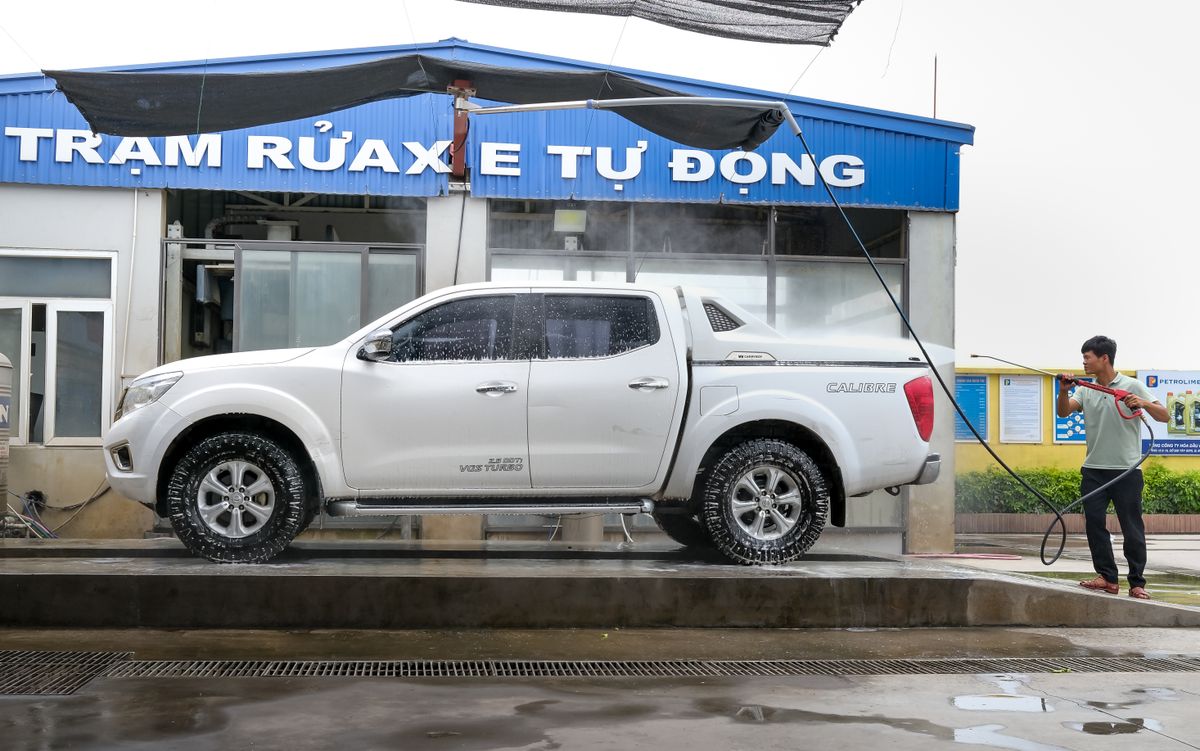
Photo by Quang Nguyen Vinh on Pexels
I ran a practical comparison using three common cordless washer classes: a compact bottle-fed unit, a mid-size wand-style unit, and a higher-output 40V-style unit. I used the same municipal hose supply where applicable, a 25-degree spray pattern, the same car shampoo dilution, and a fixed 10-inch nozzle distance. I measured actual output into a marked 5-gallon bucket for 60 seconds, then timed a repeatable rinse task: removing dried clay splatter from a textured plastic wheel-well liner after a five-minute soak.
These are not laboratory certifications. They are field observations, and that is exactly why I think they are useful. This is the kind of work buyers actually do.
| Washer class tested | Advertised pressure range | Measured flow at nozzle | Approx. cleaning units using measured flow | Wheel-well rinse time | What I noticed | |---|---:|---:|---:|---:|---| | Compact bottle-fed cordless | 350–450 PSI | 0.45 GPM | 158–203 | 118 sec | Convenient, but mud removal needed slow passes | | Mid-size 20V/24V wand | 500–650 PSI | 0.82 GPM | 410–533 | 51 sec | The “weaker” PSI claim cleaned fastest for its size | | Higher-output 36V/40V unit | 750–900 PSI | 0.74 GPM | 555–666 | 56 sec | Strong impact, but narrower effective band | | Garden hose with thumb nozzle | Not rated | 2.6 GPM | N/A | 94 sec | Lots of water, little lift on stuck clay |
The surprise was not that the more powerful unit did well. The surprise was that the mid-size unit with lower advertised pressure beat it on this task because it delivered more water through a usable spray fan. It flushed loosened grit rather than just cutting narrow tracks through it.
That finding has repeated enough that I now treat GPM as the first screening number for cordless washers, not the second. For rinsing cars, bikes, patio furniture, coolers, garden tools, and vinyl siding touch-ups, a cordless washer with modest pressure and better flow is often more satisfying than a high-PSI model with a stingy stream.
Counter to what you'll read elsewhere: more PSI is not the safe upgrade
Counter to what you'll read elsewhere: I do not think most homeowners should buy the highest-PSI cordless washer they can afford. I would rather see them buy the washer with enough pressure, a wider spray pattern, honest flow, and a battery system they will actually maintain.
Why? Because cordless washers are often used inches from things people care about: paint, rubber seals, bicycle bearings, window screens, deck stain, camera gear cases, soft stone, and outdoor furniture fabric. A narrow high-pressure jet can damage surfaces long before it makes a job meaningfully faster.
Consumer Reports has repeatedly warned that pressure washers can damage wood, paint, and even cause injection injuries when used incorrectly. The risk is not theoretical. The Centers for Disease Control and Prevention has documented high-pressure injection injuries as serious wounds because fluid can be driven into tissue through a deceptively small entry point. Cordless washers usually sit below the danger level of commercial machines, but the habit of moving the nozzle closer to compensate for weak cleaning is exactly how people create damage.
With cordless units, the safer upgrade is often not “more pressure.” It is a better nozzle, better detergent dwell time, more flow, and better battery stability under load.
The overlooked physics: nozzle distance eats pressure fast
Most pressure claims are measured near the pump or under controlled conditions. Your target surface does not see that number. Water exits the nozzle, spreads, entrains air, breaks into droplets, and loses energy as distance increases.
That is why a washer can feel aggressive at 3 inches and underwhelming at 18 inches. It is also why nozzle angle matters. A 0-degree jet concentrates energy into a tiny line. A 25-degree nozzle spreads it into a useful cleaning fan. A 40-degree nozzle is gentler and better for rinsing broad surfaces, but it sacrifices impact.
For cars and bikes, I generally want the nozzle far enough away to avoid damage and wide enough to rinse efficiently. For sticky mud on plastic liners, I move closer, but I still avoid pinpoint jets. For siding, I care more about reach and detergent dwell than raw blasting.
A helpful mental model: pressure dislodges; flow carries away. If you have pressure without flow, you etch clean lines in dirt. If you have flow without pressure, you wet the dirt. The useful zone is the middle.
Standards tell us what manufacturers often do not
There is no single consumer-facing cordless pressure washer label that makes shopping perfectly transparent. But there are relevant standards and authorities that help frame what to ask.
The International Electrotechnical Commission’s IEC 62841 series covers safety for motor-operated electric tools, including requirements around electrical and mechanical hazards. That matters because cordless pressure washers mix batteries, wet environments, motors, and pumps. I want brands that talk about waterproofing, battery protection, thermal shutoff, and charger certification—not just PSI.
ISO 20643 addresses measurement of vibration emission from hand-held and hand-guided machinery. That may sound distant from cleaning, but handheld washer comfort is not cosmetic. A tool that vibrates heavily and surges under load encourages poor trigger control and fatigue. Fatigue leads to closer spray distance and sloppy nozzle angles.
ASTM D4488, a standard guide for testing cleaning performance of products, is not a pressure washer shopping label. Still, it points to an important idea: cleaning performance should be tested against soils, surfaces, procedures, and repeatable comparisons. A single maximum pressure claim is not a cleaning performance test.
Where cordless pressure washers genuinely win
The contrarian argument is not that cordless washers are weak. It is that they are being judged against the wrong fantasy. They do not need to replace a gas machine stripping old deck finish. They need to do the jobs where corded or gas machines are too annoying to drag out.
Cordless pressure washers are excellent for:
- Apartment balconies where hose access is limited
- Rinsing road salt from wheel wells and undercarriage edges
- Cleaning bikes without forcing water into bearings at extreme pressure
- Washing kayaks, paddleboards, coolers, bins, and camping gear
- Light patio furniture cleaning
- Spot-cleaning siding, shutters, and garage doors
- Rinsing muddy boots and tools before they enter the car
- Mobile detailing when paired with a water tank
- Stripping paint
- Deep concrete restoration
- Removing heavy algae from large patios
- Cleaning second-story siding from the ground
- Long continuous commercial use
- Any task requiring hot water or chemical injection precision
The battery number I trust more than voltage
Voltage gets headline space because it is easy to print on a box. But voltage alone does not tell you runtime or output. A 40V 2.0Ah pack stores roughly 80 watt-hours. A 20V 4.0Ah pack also stores roughly 80 watt-hours. Tool design, motor efficiency, pump efficiency, and battery management decide how much of that becomes useful water work.
If a product page lists watt-hours, read that before you read voltage. If it does not, you can estimate:
Voltage × amp-hours = watt-hours
A 24V 4Ah battery is about 96Wh. A 40V 2.5Ah battery is about 100Wh. They are not identical in performance, but their energy tanks are similar size.
For cordless pressure washers, I look for:
- At least 80Wh for casual car and gear rinsing
- 120Wh or more if you want to wash two vehicles or work away from a charger
- Removable batteries, not sealed packs, if long-term service matters
- A charger that states certification or safety listing
- Thermal protection that reduces output rather than killing the session abruptly
A practical buying framework: the 5-minute filter
Photo by Tima Miroshnichenko on Pexels
Before comparing ten models, answer these five questions. They will eliminate bad fits faster than any PSI ranking.
1. What is your main soil?
Dust and pollen need flow. Road film needs detergent and dwell time. Dried clay needs moderate pressure plus flow. Mildew may need a cleaner approved for the surface, not just more force.
2. What is your water source?
If you have a hose, prioritize flow and quick-connect reliability. If you need a bucket, bottle, or lake pickup, look for self-priming performance and a good inlet filter. Bucket-fed washers can be wonderfully portable, but suction height and hose kinks matter.
3. What surfaces are you afraid to damage?
Car paint, soft wood, screens, seals, and bike bearings argue for adjustable nozzles and moderate pressure. Concrete and brick allow more force, but cordless flow may be the limiting factor.
4. How long is the real session?
A weekly car rinse is not the same as restoring a neglected patio. If your job takes more than 30 minutes of trigger time, cordless may still work, but you need spare batteries or a corded/gas tool.
5. Can you verify flow?
If the product does not list GPM, be skeptical. If it lists only “max PSI,” be more skeptical. Look for measured or rated flow near operating pressure, not just open-flow claims.
Setup matters more than buyers think
A mediocre setup can make a good cordless washer feel bad. Here is the checklist I use before judging one.
- Charge the battery fully and let it cool before heavy use.
- Use a clean inlet filter; a partially clogged filter can mimic a weak pump.
- Keep bucket pickup hoses short and unkinked.
- Prime the hose if the washer struggles to self-feed.
- Use a 25-degree nozzle for most cleaning and 40-degree for gentle rinsing.
- Avoid 0-degree jets on paint, wood, rubber, seals, and skin.
- Apply detergent, then wait 3 to 5 minutes before rinsing; do not let it dry.
- Work from bottom to top when applying cleaner, top to bottom when rinsing.
- Hold the nozzle around 10 to 18 inches from car paint and test a hidden area first.
- Measure your own flow once: spray into a bucket for 30 seconds and double the gallons.
What I would buy for different use cases
For car owners, I would choose a cordless washer around 500 to 800 PSI with at least 0.7 GPM, a foam bottle option, and a 25/40-degree nozzle. Chasing 1,000+ PSI is less important than controlled rinsing and battery life.
For cyclists, I would stay moderate: enough pressure to remove mud, not enough to drive water past seals. A wider fan nozzle and low-pressure rinse mode are useful.
For campers and boaters, self-priming from a bucket or lake-safe filtered source matters more than maximum output. Weight and hose storage become part of performance because the washer is only useful if you actually pack it.
For patio furniture and small outdoor cleanup, prioritize flow and battery watt-hours. Cushions, mesh, resin, and painted metal do not need aggressive pressure.
For concrete, I would be honest: cordless is fine for fresh spills and light dirt, but it is not the right tool for large, stained slabs. Rent or buy a corded/gas pressure washer if concrete restoration is the goal.
FAQ
Is a cordless pressure washer strong enough to wash a car?
Yes, for normal maintenance washing. The better question is whether it has enough flow to rinse soap and loosened grit efficiently. For car washing, I prefer roughly 500 to 800 PSI, a 25- or 40-degree spray, and about 0.7 GPM or more. Use a proper car shampoo, allow short dwell time, and avoid narrow jets close to paint.
Can a cordless pressure washer damage paint?
It can, especially if you use a narrow nozzle too close to the surface, spray damaged paint, or aim at edges, decals, sensors, seals, and chips. Cordless models are usually gentler than gas units, but “lower risk” is not “no risk.” Start far away, use a wide fan, and test first.
Why does my washer feel weaker when pulling from a bucket?
Self-priming adds resistance. A long suction hose, air leak, clogged filter, low bucket level, or vertical lift can reduce pump feed. Keep the bucket near the washer, shorten the hose if possible, clean the filter, and prime the line before starting. Hose-fed operation often produces better flow than bucket-fed operation.
What matters more: PSI, GPM, or battery voltage?
For most cordless washer jobs, I rank them this way: usable flow first, appropriate pressure second, battery watt-hours third, and voltage fourth. PSI dislodges grime, but GPM carries it away. Voltage can hint at platform size, but watt-hours and pump design better predict real runtime and output.
The bottom line
The cordless pressure washer category gets more useful once you stop treating PSI as the scoreboard. I want enough pressure, not maximum pressure. I want water volume that rinses, a nozzle that spreads energy intelligently, and a battery that can sustain the pump without sagging after five minutes.
If you remember one test, make it the bucket test. Measure actual flow. It will tell you more about your washer’s real personality than the biggest number on the box.