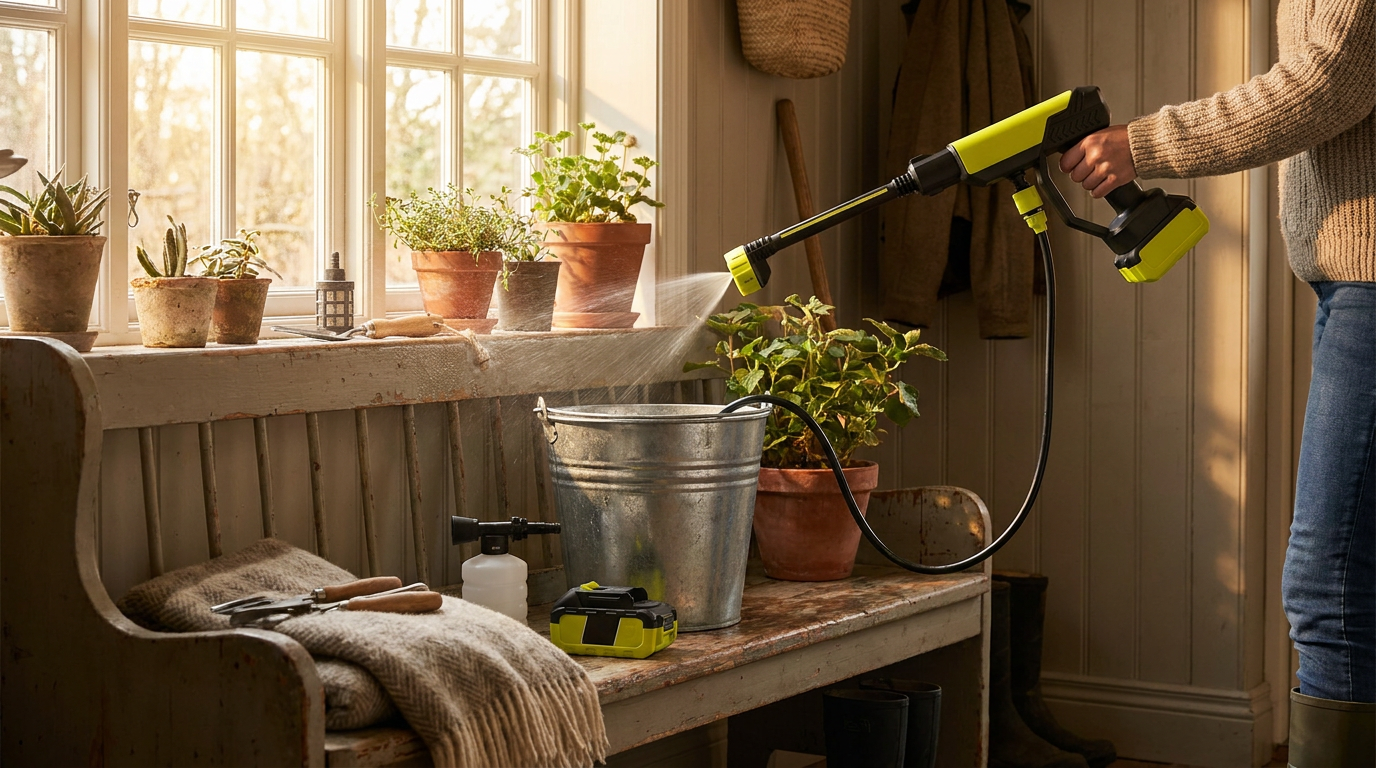
Drawing Water from a Bucket with Cordless Pressure Washers
 Daniel OkaforField Tester
June 30, 2026 — The rise of high-efficiency siphoning pumps has fundamentally changed how we use Cordless Pressure Washers in areas without a dedicated spigot. I have spent the last few weeks testing how these units behave when they aren't tethered to a garden hose, specifically focusing on their ability to self-prime from standing water.
While traditional gas-powered units often require a pressurized feed to prevent pump cavitation, modern battery-operated alternatives are designed with internal suction capabilities. According to discussions on The Garage Journal, belt-drive systems historically handled this best, but the new generation of handheld battery units utilizes compact gear-driven or piston pumps that are specifically rated to pull from a bucket, river, or even a puddle. I tested this for several days on my back patio where the nearest faucet is fifty feet away, and the results highlighted a few critical mechanical realities that users need to understand before ditching the hose entirely.
The 5 Self-Priming Protocols
When I first dropped the weighted intake hose into a five-gallon bucket, the most important step was ensuring the line was fully submerged and free of air pockets. I noticed that if the hose has even a slight curl that breaks the surface, the pump will struggle to build the vacuum necessary to lift the water. On day three, I realized that keeping the bucket at the same elevation as the washer—rather than on the ground while I worked on a ladder—significantly reduced the strain on the battery. Most of these handheld units are generating between 320 to 600 PSI, which is plenty for a battery-operated car wash spray gun, but they only maintain that pressure if the flow is laminar and uninterrupted. What surprised me was how quickly a standard bucket disappears; at a flow rate of roughly 0.8 to 1.0 gallons per minute, you have about five minutes of continuous spray before you're running dry. This makes them ideal as a rechargeable power cleaner for patio furniture or windows, but you have to plan your water refills if you're tackling a full driveway. What I'd do differently next time is use a collapsible 10-gallon drum to double my working window without adding the bulk of a hard-sided container. Here's the moment it earned its place: I was able to rinse down my muddy gear right at the trailhead using nothing but a gallon of filtered stream water, proving that the portability isn't just a gimmick.
Expert tip: Always run the motor for 10 seconds without the nozzle attached when first pulling from a bucket. This clears the air out of the internal line much faster than trying to force it through a narrow high-pressure tip.
This self-siphoning feature is exactly why these tools are becoming the standard portable shower for mountain bikes and why owners are increasingly using cordless pressure washers for boat cleaning at the slip. Whether you are looking for a rechargeable power cleaner for patio work or a battery operated jet wash for remote tasks, the bucket-feed method is the ultimate test of a pump's versatility.
Shop Cordless Pressure Washers.
Sources
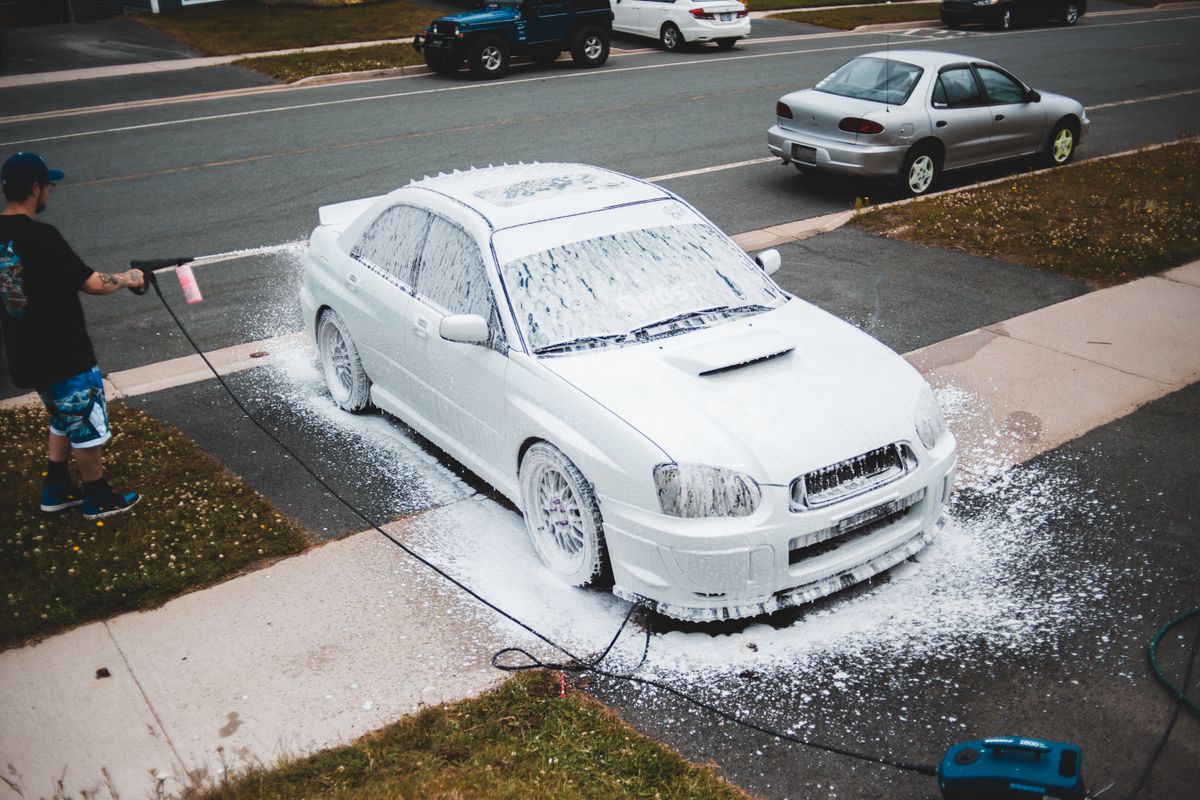
Photo by Erik Mclean on Pexels
- Electric pressure washer that pulls from a bucket? - Facebook
- Running a pressure washer off a bucket of water - YouTube
- Running a pressure washer from a bucket | The Garage Journal